
For most, the Negroni is a classic with a recipe set in stone. But several riffs over the years would beg to differ.

There are several factors that contribute to the timeless nature of the Negroni. It’s an incredibly simple recipe, has its dedicated puritan fanbase, and is versatile to a fault. It’s these very variations, in fact, that are better known as the aforementioned riffs.
If stories are to be believed, the Negroni was created from the classic Americano. In the long drink/lower ABV combination of Campari, vermouth and soda water, someone asked for the soda water to be replaced with gin for a stronger cocktail. This also kept the Negroni fairly dry, and less sweet. Whatever the truth may be, it certainly worked out for the cocktail community. It also helps that the drink only calls for three ingredients, all in the same ratio – making it hard to forget.
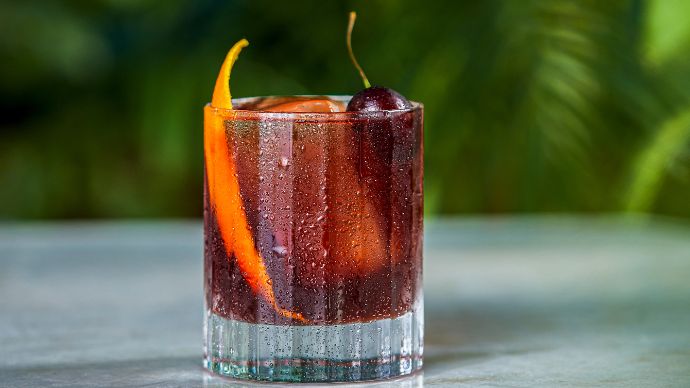
While the Negroni is a remarkably simple recipe, the riffs on it are neither new nor surprising given its adaptability. You can sub in practically any base spirit and the cocktail will still make sense. The gin-based version may always be the classic, but anything from whiskey and rum, to tequila, goes. As it stands, the most common riff is one that uses a whiskey of any kind, mostly alternating between scotch and bourbon.
As measurements go, specs of the scotch Negroni vary. Some might simply swap out the gin for scotch, keeping the Campari and vermouth at a one-to-one-to-one ratio with the whisky. For others, the switch requires further adjustments. At its heart, though, the Negroni is a strong, bitter, bracing drink that primarily appeals to those who enjoy aperitivo-type, pre-dinner appetite stimulators, and those whose palates have been trained to appreciate the bitter complexities of Campari in particular.

There’s also the Boulevardier (substituting rye for gin), the Negroski (vodka for gin) and an endless number of rum and agave-spirit-based Negronis. It’s only perhaps the association of scotch with men in leather chairs that keeps this particular version from going anywhere.
For those who prefer their Negronis less dry or in-your-face bitter, the Boulevardier is a perfect riff. It’s inherently richer, sweeter, and seemingly more balanced than the classic. Rye whiskey can also be used to make a classic Negroni riff, i.e, The Old Pal. It uses equal parts of rye whiskey, dry vermouth, and Campari. It’s worth noting, however, that this variation often calls for an increased proportion of whiskey in order to make the other ingredients more subtle.
If you like your wine, or simply have some leftover, the Negroni Sbagliato is a lighter and more refreshing Negroni spin that substitutes champagne or prosecco in for the gin. Which, of course, adds a pleasantly bubbly component while also reducing the overall ABV by a decent margin. Basically, think of a summer version of the cocktail.

There are also riffs like the White Negroni which doesn’t use vermouth or Campari. Instead, French Lillet blanc steps in for the sweet vermouth, and the herbal liqueur Suze stands in for the Campari. Essentially, what you need for a Negroni riff is gin, aromatised wine, and some kind of bitter herbal liqueur, typically used in equal measures.
Smack in the middle of International Negroni Week, it’s interesting to discover how many potential riffs a classic can witness and still stand strong. So go ahead and add your own spin. Who knows, you might end up making one that gains its own fan base!
Read more.
Negroni week: scoping out Florence -the negroni mecca
8 classic and twisted Negroni recipes you need to try now
Serve up sustainability with 2 Flor de Caña-based cocktail recipes