
Mumbai’s Ratan Tata Institute — the bastion of Parsi food — is offering long-forgotten Parsi delicacies with its unique Rewind Menu.
Have you heard of kan-ni-ghari, a flaky pastry stuffed with sweet potato, rose water, and dry fruit? Or chicken maivala, a dish that has chicken baked with nuts, cheese, and egg? Have you tasted kerwai, a fried plantain patty rolled in poppy seeds and stuffed with dried fruit? Or audh, a blancmange-like dessert made with coconut milk?
Chances are you haven’t. Like so many other traditional Parsi dishes, these have all but disappeared from kitchens and collective imagination. And it’s only in the last few years that efforts have been made to reverse the trend and keep these unique dishes alive and accessible.
A culinary walk down memory lane with the Ratan Tata Institute
Nowhere is this resolve more evident than in the Mumbai-based Ratan Tata Institute, the beloved Mumbai bastion of Parsi snacks and dishes. “I love doing R&D to revive dishes like sadra, a steamed dumpling which is a cross between a sweet idli and a dhokla. Or popatji, which is batter-fried dumplings,” says Hooma Billimoria, head of the cakes and confectionery department. “It was the old aunties who used to keep these dishes alive. But now we are working to re-introduce them.”
The outcome is the unique Rewind Menu that RTI has begun to offer for short spells during the year. This menu — born out of Billimoria’s love for research and the requests of old-time customers — features forgotten Parsi delicacies as well as cakes and treats made decades ago by RTI. Like keri kanda ma gosht, which is mutton cooked with mango, pista paak and the meringue-topped “Religious Cake” that nostalgic customers described so wistfully.
“A lot of what RTI is about is keeping traditions alive,” says Shernaz Buhariwala, head of operations, who believes that given the role that RTI has played in the city’s flavour-scape, it’s only fitting that it should lead the movement to preserve Parsi cuisine.
Turn the clock back, Parsi style
“Many recipes have faded over time. Audh, kummas, Parsi pickles are fading. Which is why I teach these in my online classes, my videos, and through my cookbooks,” says Rita Kapadia, a Boston-based cookbook-writer who runs a website — ParsiCuisine.com — and is part of a growing band of home cooks who are rediscovering dishes that vanished along with their grandmother’s Navsari or Sanjan kitchens. Adds cookbook-writer Niloufer Mavalvala, who conducted a hugely popular online cooking club during the lockdown from her home in Canada, “There was a lot of interest in unexpected dishes like bhakra.”
For many Mumbaikars, the RTI lemon rolls and jam tarts, patrels and sandwiches are inextricably linked with memories of long-ago tea parties and post-school treats. The nine RTI shops across the city feature glass counters heaped with Parsi standards like frill chops and mutton cutlets, bhakra and patrel. The RTI vans trundle to the Parsi baugs across the city, packed with the orders of the day — redolent dhansaaks, spicy-sweet fish patias, and pulao-daar. And the weekly meal menu is not just a mainstay for many senior citizens but also a mechanism for keeping alive lesser-known Parsi dishes (the less flashy brethren of the wedding and navjote stars).
Parsi philanthropy plants an idea
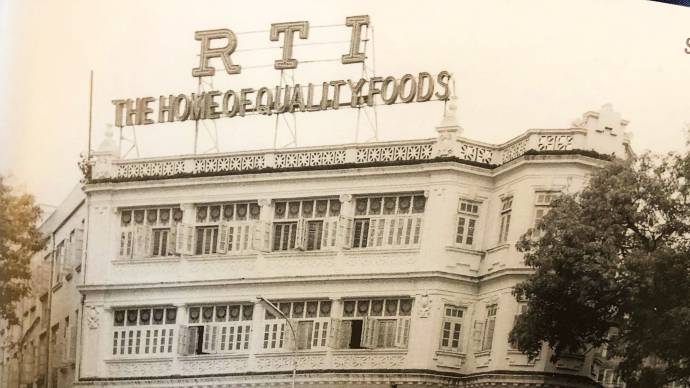
The story of RTI began in 1928 when the Stri Zartosti Mandal — an organisation formed to help women whose families had been devastated by the plague epidemic in (then) Bombay — approached Navajbai Tata for help. Impressed by their work, Navajbai Tata donated the entire building on Hughes Road that still houses the flagship store and legendary kitchen. The garment and food businesses run by the Mandal were reborn as the Ratan Tata Institute, meant as a tribute to Navajbai’s husband. “We have functioned more or less in the same way since then,” says Buhariwala. “The things we sell today are what I ate as a child 40 years ago. There’s something special in knowing that your grandparents must have eaten here, and your grandchildren will eat here, and that so little has changed.”
This includes members of the staff. Famed cooks like Maneck Pithawalla — who arrived here as a teenager in 1985 after failing her SSC — continue to work their magic. “Just yesterday, 22 of Maneck’s patrels went to Germany,” says Kaiyosh Keravala, head of sales. “People are routinely ordering four-five kilos of daal poli or packets of pickles and carrying them around the world. Then we have a customer who, every six months, orders 24 mutton cutlets, 24 chicken cutlets, and 1,000 chapatis and takes them to London.”
Power of the Parsi cuisine crusaders
Clearly, for many Parsis, RTI encapsulates the taste of home and childhood. No wonder, then, that the chefs remain true to the original, handwritten Gujarati recipes that have governed the kitchen for so long. “Some old aunties even went abroad to train under French chefs,” says Keravala, pointing out that the techniques they acquired live on in RTI’s famed shortbread biscuits. Adds Billimoria, “Some of the recipes have been lost over time but often customers describe the cake or the dish and — through trial and error — we manage to recreate them.”

Food-lovers like Kapadia too rely on age-old family recipes — and on Vividh Vani, that beloved cookbook published in 1867 by Meherbai Wadia. “This cookbook is an antique and many Zoroastrian Parsis hold it dearly as a family heirloom,” says Kapadia, about the tome which holds over 2,000 recipes. “My original copy is now falling apart like cracker paper and is kept in sealed plastic bags.”
The good news is, however, that thanks to a handful of Parsi cuisine crusaders, the flavours in those faded, crumbling recipes live on.
Read more.
The hunt for Parsi food beyond Mumbai
Not without my sarko – what makes Parsis loyal towards their favourite brands of vinegar?