
The official state festival of Kerala, Onam marks the harvest season for some, the birth of Vamana for some, and the homecoming of legendary King Mahabali for others. Harvest or homecoming, the celebration always comes with some good food and snacks.

When I was little, Onam meant nothing but the sight of fresh flowers, the sound of Yesudas’s Malayalam songs and the smell of Mother’s Palakkadan sambar wafting through the air.
It also meant that my cousins would come home, or that I would visit my grand uncles and grand aunts — sweet old people who fed me cups of warm payasam topped with crunchy cashew nuts.

And if you think the only food we feast on is the sadya on banana leaves, here are a few traditional dishes and snacks that are offered to the gods or simply passed around to mark this festival:
Ottappam
Meaning a pancake full of holes, Ottappam is made out of ground rice flour and spices. The batter is spread out on cut banana leaves that are then folded and roasted in a clay pot. When the leaves separate from the flour, the appams — spongy with little holes on them — are ready!
Boli
Similar to Maharashtrian poli, the Keralite Boli uses refined flour, lentils, sugar and ghee. These soft delicious rotis are yellow in colour because of turmeric added to the dough.
Unniappam

Fried and crunchy, sweet unniappams could easily compete with any Malayali’s craze for newspapers or strong tea. Unniappams are found everywhere in the state, from homes and restaurants to bakeries and tea stalls.
Malar Avil

Puffed rice and beaten rice are mixed together in this simple treat that is usually specific to temples. It can also be found at housewarming ceremonies. The mixture includes slices of ripe bananas, fried bits of coconut and black sesame seeds.
Alanga

These round little munchies are made out of rice flour mixed with cumin seeds, sesame seeds and jaggery syrup. The batter is rolled into balls before it is deep fried in coconut oil.
Kaliyadakka
Also known as seedai in Tamil Nadu, the Kaliyadakka is a close cousin of the Alanga. While the Alanga batter is sweetened with jaggery, the Kaliyadakka is salty to taste but just as crunchy and flavourful.
Paalum Pazhamum
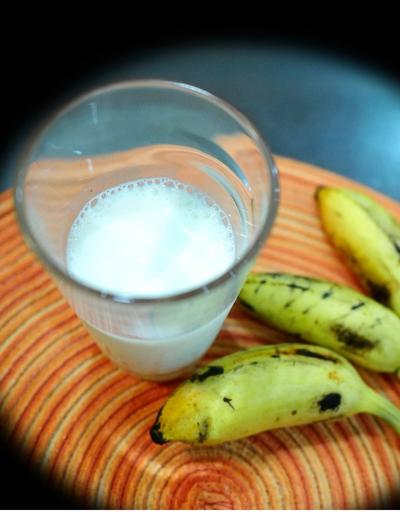
There is nothing to beat this very simple offering though all it takes is milk and ripe bananas cut into small pieces. Many homes offer a glass of paal (milk) with pazham (bananas) to a Maveli or King Mahabali made out of wood or clay. The milk is sweetened with sugar sometimes. Milk and fruit have always been considered auspicious in many Malayali homes, which is why this treat is also offered to newly weds as part of post-wedding rituals.
I am not little anymore but Onam is still all about smiles and food and cousins and flowers. We have little choice but to see that we can’t prove history, not fully or precisely. Whether it originated from a good harvest, or from the good deeds of a great king, or from the birth of a god who humbled a demon is not the point. The point is Onam today must bring together an entire state, regardless of religion, caste, political polarities or class. Those that see the point of this are the ones that truly embrace a festival as beautiful as Onam.
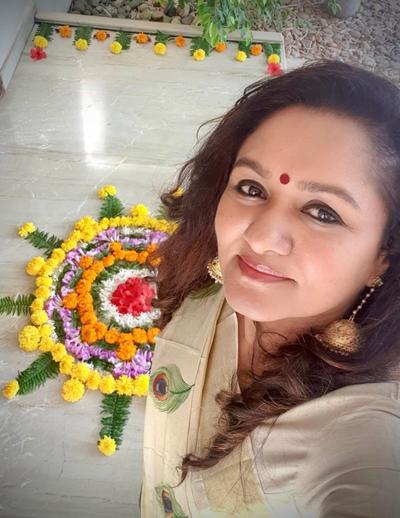
Wish you all a happy Onam!
Read more.