
The newest entrant to the SoBo restaurant and bar scene believes less is more, focusing on indigenous ingredients and punchy flavours to create a refined experience.
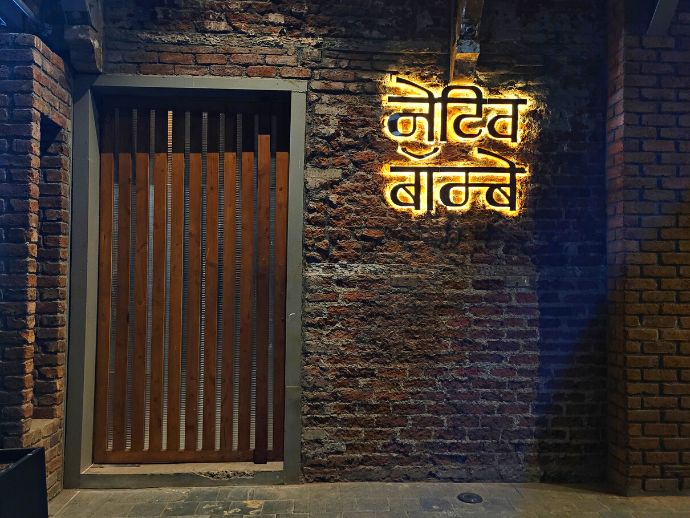
The lit-up sign on the exposed brick walls along Cochin Street proclaims we’ve reached Native Bombay. Plumb in the midst of the old dock-adjacent business district in Mumbai’s Fort area, this is the newest offering along the stretch that started with The Clearing House and, more recently, the stunning, 10,000 sq ft events and exhibition space that is IF.BE (Ice Factory Ballard Estate).
A regular at the Banyan Tree café at IF.BE, I’ve been curious about Native Bombay ever since I saw it in its work-in-progress stage in early 2022, especially since it has the hospitality heft of hotelier Amardeep ‘Tony’ Singh (the man behind the legacy brand Pritam Hotel) and Abhayraj Singh Kohli (Grandmama’s Cafe, Tori, MRP, etc) as well as the architectural acumen of partner Kamal Malik, Founder, Malik Architecture.
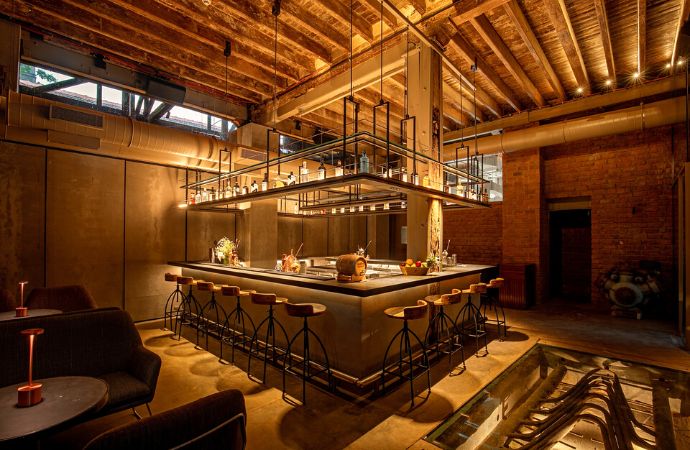
Native Bombay, just as IF.BE on the other side, is housed inside what was once an ice factory almost 150 years ago. Malik’s design has stripped it down to its basic beauty, exposing the exquisite brick and wood structure underlying all the paint, plaster, and patina of the decades, giving it renewed life while preserving the heritage story.
Bar bar dekho
As we enter the ground floor level Native Bombay Bar, I’m struck by its starkness, a very welcome change from the over-the-top opulence of interiors seemingly created for Instagram that everyone seems to be going for these days. The almost museum-like feel continues as we choose from the menu, a Negroni-only concept which has been curated by Head Mixologist Denzil Franklin.
The bittersweet Italian cocktail, typically made with gin, sweet vermouth, and Campari for more than a century, has been regaining popularity in the last few years. We enjoy choosing from the seven riffs that are on offer apart from the classic Negroni. Franklin gauges our tastes and recommends the Kaapi (an extremely potent one with aromatised wine and Chikmagalur filter coffee!) and the Pandan, which is deeply infused with the flavour and fragrance of South Asian pandanus leaf.

Their ice programme is on point, with ice that doesn’t bleed into your drink even if you’re a slow sipper like I am. As the pandan punch hits my palate, I muse on how it’s rather apt that the bar is housed in the premises of what was an ice factory almost a century and half ago!
Everyone wants to do a Negroni bar. But to do one and get it right, that takes skill, innovation, and planning. The team behind Native Bombay certainly knows its Negronis. But while they use all the modern techniques, their best trick is that they understand that less is more. They neither overwhelm you with details, nor with elaborate presentation. The focus is on giving you a great drink, one that you’ll want to come back for.
The most unique one in my book at the Native Bombay Bar would be the one named Marmite, which checks all the boxes that those in the know want these days — using barrel-aged alcohol, offering a big umami punch, and referencing something that takes one back to one’s childhood.
Of course, just as you either love or hate the original British spread (branded Vegemite in Australia) made from brewer’s yeast, you’ll either love or hate this Marmite-infused Negroni. Probably less polarising but almost equally interesting is their crystal clear White Negroni, which fuses the aromatic India vetiver (khus) with its cooling properties and housemade Suze (bitters made using the Himalayan herb called chirata akin to the alpine gentian) along with gin.
Khaana khazana
The food menu too, bears the pared-down quality of the interior design and drinks menu, where the frippery has been peeled away to reveal the core of each dish, with a focus on big flavours and none of the fussy presentation with edible flowers and micro greens that everyone has overdosed on of late. It’s regional Indian expressions with dishes drawn from across the country and, as they say, it’s ‘anything but bland’.
They have a dedicated tapas menu at the bar downstairs that’s all kinds of delightful. We order the Paan Paneer Tikka and love how the semi-sweet gulkand is sandwiched between slices of delicate cottage cheese and topped with fennel chutney and betel leaf paste that all-in-all gives you the mouthfeel of paan. The bite-sized Rogan Josh lamb tacos that follow are pops of intense flavour and a very satisfying crunch. The tasty Mini Naan Bombs bursting with smokey cheese are irresistible and go very well with drinks.

We move upstairs for the full Native Bombay experience. Here, under exposed wooden beams and mood lighting (and the gaze of a slightly alarming sculpture of an undefinable but rather aroused animal!), we settle into comfortable highchairs and scan the sizeable menu.

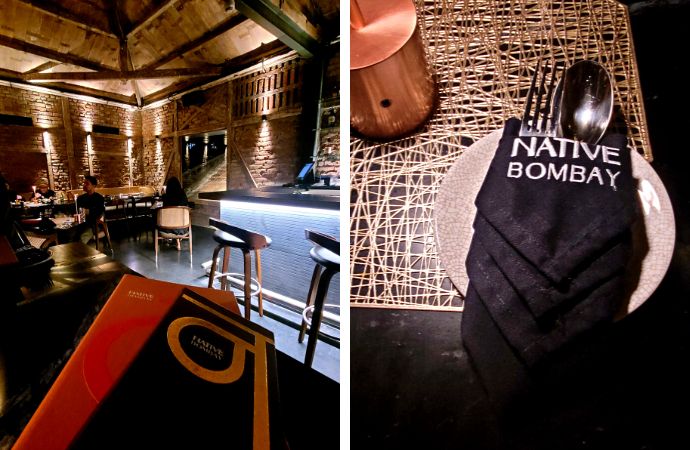
Of the nine Native cocktails featured on this menu, I pick The Kadha, an Indian take on a Hot Toddy, featuring whisky, spice mix, dry ginger powder, and saffron jaggery. This can be had chilled as well, but since it’s one of the two days of ‘Mumbai winter’, I enjoy the concoction steaming hot. My dining companion seems to be in another climate zone and enjoys The Townie, a lip-smacking blend of sweet-spicy jeera soda and dark rum.


The Chaat Bar beckons while we wait for our drinks, and our Nagpur ka Kullad Chaat has interesting elements like a moong wadi and pieces of orange. When I spot the Parsi perennial Patra Ni Macchi as an appetiser, I know I want to see if they do it like, well, a native Bombayite. Serving the fish deboned is clever and makes it accessible. The presentation is perfect, as it arrives at table still encased in the banana leaf it was steamed in.

You have to open up the package and cut into the tender filet coated with green chutney. So far, so good. But as I eat it, while the fish is fresh, I know the chutney needs a little more seasoning and perhaps a little more garlic and cumin to give it that familiar flavour that anyone who has eaten the authentic version craves. Managing Partner Shahrom Oshtori tells me they consulted with one of the top Parsi caterers to get the recipe, so I’m assuming it just needs a bit of tweaking until it’s pure perfection, along with the traditional sago chips called saria and the sweet-sour lagan nu achaar.
The Kerala Buff Roast, redolent with curry leaf, is a zinger, and best paired with the rich and flaky Malabari Paratha, even though it’s in the Small Plates section. The food we try is tasty, portions large, and the menu is vast. We don’t make it to the mains because we’re so stuffed and satisfied already. But we’re happy to have something to look forward to on return visits.
Geography on our plate
What I love about Native Bombay is the fact that the highly experienced Chef Bhairav Singh brings his deep understanding of Indian spices and ingredients to the table and ensures that each one’s nuance and provenance are conveyed to diners. For example, few restaurants tell you that the chillies in this preparation are Dalle Khursani or the cloves in that one from Kottayam in Kerala.

With a regional repertoire of favourites as rich as Singh’s the name of the restaurant could have easily been Native India instead of Native Bombay! But yes, while there are dishes from every direction in India, I would like to see some more from the eastern and northeastern states in the next iteration of the menu, and perhaps more that delver even deeper into the cuisine of various communities and tribes.
For now, I’m pleased that South Mumbai has a quality restaurant presenting a variety of regional Indian that goes beyond Butter Chicken (although their must-have Pritam da Dhaba Butter Chicken is on the menu too) and even set menus for those who want to indulge in Indian to the hilt.
Native Bombay
Overall rating: ⭐⭐⭐ (Max: 5 stars)
Food: 7/10 | Drinks: 7.5/10 | Service: 8/10 | Décor: 8/10 | Vibe: 8/10 | One dish we loved: Paan Paneer Tikka | One drink that didn’t work for us: Jamun.
Timing: Native Bombay: Seven pm to midnight | Native Bombay Bar: Five pm to 1.30 am | Address: 10-12, Cochin Street, Ballard Estate, Fort, Mumbai | Contact: +919619066000 | Instagram: @nativebombay.
Read more.
Know your Negroni: What do you mean when you say ‘riff your negroni’?
80 years later, what keeps Pritam as iconic as ever?
Top 10 new and interesting things to do: MUMBAI