
This Navratri staple has fought famines, fed armies, and become a fasting mainstay. Here’s all you need to know about the amazing sabudana.
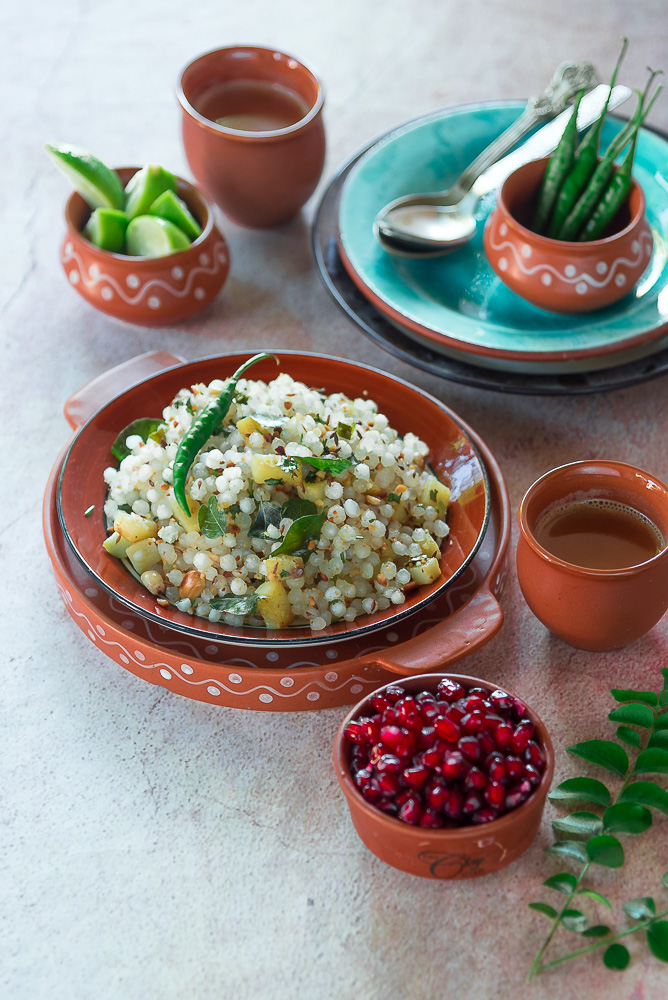
A few years ago, when Masala Library by Chef Jiggs Kalra decided to adopt the sabudana vada as its amuse bouche inspiration for a tikki, the reason was simple: Irrespective of region, community or whether you are an expat, there is a good chance that you have seen, eaten, even relished a dish made with these snow-white pearls. A good reason for that is the sabudana or tapioca pearl’s omnipresence in our culinary ledger — from popular street food (sabudana vada) to a staple fasting food and beloved breakfast (sabudana khichdi), to the now popular plant-based alternative.
Such is the popularity of these pearls that one would believe them to have a long history. Only they don’t. While sabudana’s presence — both as a root vegetable, pearls, flour, and chips — predates that of rice in China and elsewhere in Southeast Asia, when it comes to India, these tapioca pearls have a rather recent history.
When less became more
What took so long for sabudana to come to India even as famous travellers Marco Polo and Sir Francis Drake had turned advocates of what the world in the 21st century would tout as a superfood? After all, thanks to these two travellers, the West had been introduced to the wonders of tapioca — as an excellent flour for food and as a bread — that “tasted like some curd, but melts like sugar”.
A logical guesstimate is the lack of any known famine or drought, which unfortunately, according to Culinary Director Chef Vikas Seth of Zest, became a mainstay during the latter part of Indian history. “Thus was the need to find alternatives that could resolve not just the paucity of food, but do so with effective nourishment,” he explains. And sabudana or tapioca pearls emerged as one of the favourites, thanks to its appearance, texture, and nutritive dense nature that made it a choice where little was enough, he adds.
There was a need to find alternatives that could resolve not just the paucity of food, but do so with effective nourishment
Chef Vikas Seth, Zest
The story goes that the Maharaja of Travancore, Vishakham Thirunal Maharaja Vishakham Thirunal Rama Varma, while visiting one of the neighbouring kingdoms, which was then one of our neighbouring countries of today, was fascinated by a Cassava tree and its many uses, especially the fact that one tree could yield 800 kilos of pearl, flour, and chips. Like a true blue-blooded botanist — Dara Sikoh is considered the other best in Indian history — Vishakham brought not only a few saplings to experiment on the farm given to him by the erstwhile ruler, Ayilyam Thirunal Rama Varma, but also a few people who were skilled at turning the tapioca fruit into edible formats. The year was 1881.
Sabudana becomes a kitchen favourite
By this time, the kingdom suffered frequent famines. The next few years, Vishakham spent most of his time working on the saplings to create a graft that was conducive to the local soil, water, and climate. During this time, as per folklore, the initial produce was consumed by the family. Chefs and vaids worked in tandem to create tasty, filling, and nourishing dishes. Many believe this is how the initial few delicacies including kheer, payasam, upma (made with flour), and paniyaram were created and refined. But the one dish that took the cake was the bejewelled Sabudana Khichdi garnished with potatoes, peanuts, and eventually peas and other vegetables.
Once the stage was set for the introduction, the enterprising king planted trees around the palace perimeter, and each tree was accorded royal protection, to entice his suspicious subjects. The area was barricaded, and a diktat announced severe punishment for those who tried to steal from the trees. The ploy worked, and in a few months each tree had cut marks. Folklore has it that once the Maharaja was assured that each house had one tree, he set about creating the three perceptions that we have of sago today: as a root vegetable to be used in fish and meat curries; flour to replace rice when needed; and the most popular and travelling variety, the tapioca pearls or as we today call it sabudana.
The starch in sabudana takes a long time to metabolise as compared to say, fruits. This bite-sized processing of the starch matrix ensures that there is a constant supply of energy keeping us going
Shaveta Bhassin, Nutritional Therapist
Armed with an alternative, the rise of sabudana as a drought-time sustenance instantly made it a farmer and household favourite. What added to its charm, says culinary specialist Chef Pradeep Tejwani, was that once processed, it travelled well and the bland, accommodating nature of the tapioca, specifically the pearls, made it an easy fit into different food cultures. “Of course, the fact that it was plant based also was an advantage for communities that had strict dietary habits,” he explains.
Detox, fasting, and sabudana
Despite the many positives, tapioca and its pearls’ happy run was largely in the South, say the chefs. According to them, “Here, despite its moody nature and diva tantrums — tapioca pearls have this amazing quality to turn into leather when either undercooked or overcooked — it was happily adopted.” Many argue that this was because of its Indian debut at the King’s Table; others credit its virtues as an easy, accessible raw food. Soaked properly, sabudana can be eaten as it is, minimally spiced or mauled into a delicious mixture of curd, fresh cheese, banana, coconut and khand.
Proof of this is the Odia Sabudana Chakata that is a staple not only during the nine days of Navratra, especially for those for whom it is the first morsel of the day, but also for those who observe Ekadashi and Purnima, two distinct days based on the concept of intermittent fasting and detox. Another example is of the sabudana kheer, which embodies the same virtues of rice kheer with the bonus of resistant starch, which is the main source of energy during the nine-day festival. It also aids in fertility while revving up the process of repair among organs like the stomach and the liver.
The fact that it is plant based also was an advantage for communities that have strict dietary habits
Chef Pradeep Tejwani, Culinary Specialist
Interestingly, it is this quality as well as its nutritive density that makes it a better version of not just rice, but potatoes — sweet and otherwise — as well. “This,” says Chef Tejwani, “worked towards the pearl’s acceptability in the rest of the country where it was received much as a final product as most of the laborious work of turning milk into beautiful white globes took place down south.”
The many faces of Sabudana
“Sabudana,” says Chef Seth, “provided this unique playground. While it could replace wheat and rice with efficacy, it could also be paired with them and other starchy produce to create wonderful dishes including the thalipeeth, pakora, chivda, dosa, missal, and the lighter version of the Hyderabadi delicacy, Gil e Firdaus, to name a few.” The versatility of pairing with texture soon made the pearls into something of a kitchen ace that was used to create or adopt a favourite into an occasion-appropriate food. A stance that played to the gallery immensely during Navratras, when grains are a complete no-no, and often that restriction elicits this unquenchable craving to a certain gluten-based delicacy, he adds.
While that could explain sago and sabudana’s entry and rise to a prime position during fasting when it becomes a satiating alternative, the fame of this “either you love it, or you don’t kind of food” came in the pre-World War 2 days when shortage of food made the colonial power shift to the pearly goodness of tapioca.
Was that the time when sabudana was turned into papad and dried dumplings (read: badis)? In terms of varieties, perhaps, says Chef Tejwani. “But in terms of repurposing, sabudana dehydrated chips and papads would have joined the culinary clan around the same time as the pearls began gaining importance as a nourishing food during a dry spell. After all, cassava is not only amongst the most drought-tolerant trees but also can flourish in nutrient-depleted and acidic soils,” he explains.
The sago effect
For India, it was one of the after-effects of the world war as more and more land — thanks to the forced famine and the constant dumping of world war spoils — became non-agricultural. The silver lining? Cassava became a produce of choice, whose fruit could be used as a root vegetable to flavour curries, and whose flour provided an alternative that was nourishing and satiating simultaneously.
An excellent example is Masala Library’s Sabudana Tikki Amuse Bouche. Served bite-sized, this take on a traditional vrat and snack favourite witnesses the pearl shine as it takes on a series of eclectic flavours to create a bite that is sensorily indulging.

Clearly for a product that ticked all the boxes, Sabudana made for a fascinating choice to be the hero of the ceremonial thali. But what won the pearls a berth in the fasting carriage was its interesting nutritive composition. “Which,” says nutritional therapist Shaveta Bhassin, “is a complex structure of carbohydrates. In layman words, it means that the starch in sabudana takes a long time to metabolise as compared to say, fruits. This bite-sized processing of the starch matrix ensures that there is a constant supply of energy keeping us going. It also controls the blood sugar level from going haywire. This is immensely beneficial for those who have diabetes or any gastric issue or are trying to lose weight due to any other lifestyle ailment.” Another important aspect of sabudana is the resistant starch, which is present in potatoes. This resistant starch, when boiled in water and cooled down, improves our gut health by increasing our gut bacteria. In fact, the entire process helps recalibrate the hormones, making dealing with hot flashes and high testosterone levels easy, she adds.
And one way it happens is with the way most sabudana dishes are cooked. Bhassin explains, “Whether it is the vada or poha or upma, each process involves the use of ghee and ingredients that work towards ensuring that we feel energised, calm, and nourished. In fact, the finest example of how a cooking method works at enhancing sabudana’s curative ability is the sabudana khichdi — a standard fare in ceremonial thalis.”
So go ahead and indulge in a restorative meal now!

Known for her columns on food anthropology, Chefs’ Retreat and wellness-based experiential tables, Madhulika Dash has also been on the food panel of Masterchef India Season 4, a guest lecturer at IHM, and is currently part of the Odisha government’s culinary council.