
It is not chutney, and neither is it raita but the story of Pachadi is wedged somewhere between these two — much like the purpose it serves.
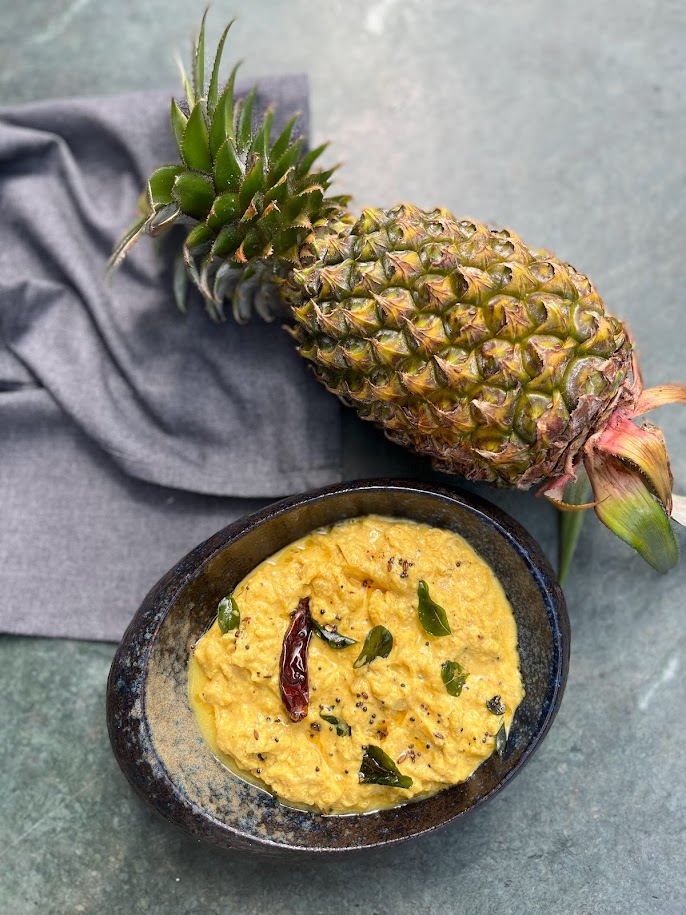
Apart from sambar, rasam, appalam and payasam, if there is one thing that many love and remember about sadya — the delightful Kerala feast, it is the pachadi. Ask any veteran in the culinary space, and they will talk animatedly about the zing and splendour that the humble pachadi adds. Interestingly, the pachadi is also not a static factor — it adapts to a wide range of dishes and seasons. For instance, Chef Sandeep Sadanandan, Head Chef of Byg Brewski, says that not only is it memorable, but over time, everyone finds their happy version of it — such as the pineapple pachadi, the bright-hued beetroot pachadi or, continues the Kerala native, “the traditional Inji Pachadi made with ginger, or the curiously interesting Kumbalanga Pachadi that is a fantastic introduction to the local white pumpkin”.
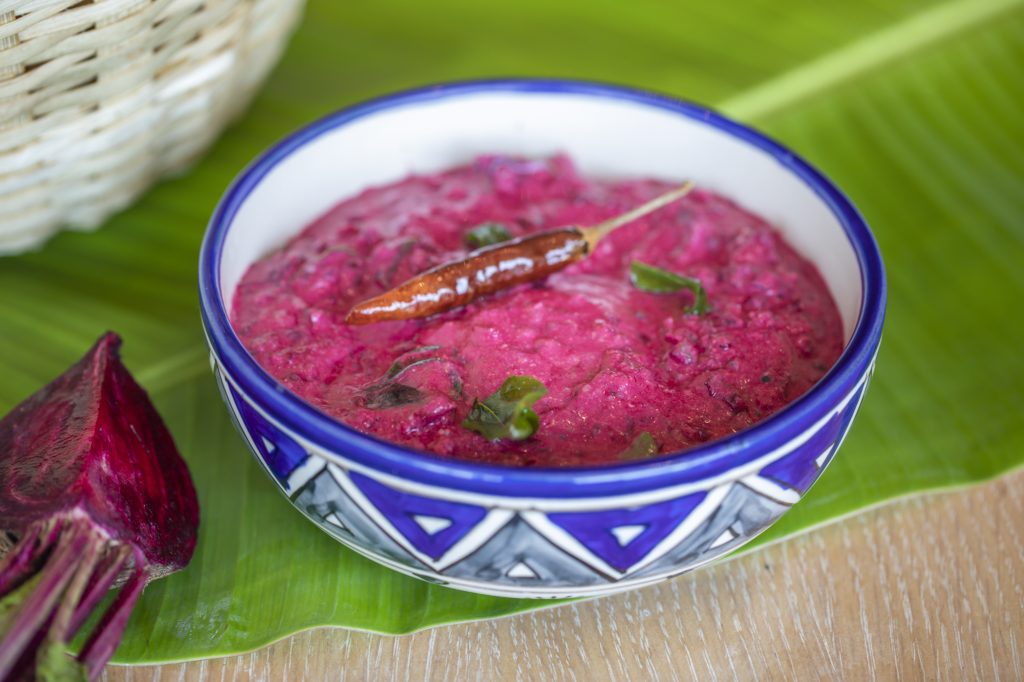
Is pachadi a chutney, a raita or none of these?
Pachadi is often compared with chutney or raita, both of which come from the north. As Sadanandan tells me, there is a clear difference between the three; in the pachadi, there is a clever play of sour-sweet and sour, with a hint of umami-ness. This lends the dish a flavour play that not only adds a distinct character to the many pickles of Kerala, but pegs it as an essential during summer months, or when seasons change.
Dakshina Ghosh, the Deputy Director of IIHM Bengaluru, believes that pachadi is a treat that lists somewhere between a chutney, a pickle, and a raita. For her, pachadi is an ultimate example of food that heals.
So, how is pachadi different from the other two?
Ghosh says that the making of any pachadi follows the same techniques as a chutney or raita, in which local ingredients are paired to create an addictive palate play. “What differentiates pachadi from its peers is the treatment. Unlike chutney and raita, in which largely raw ingredients are used — and the tempering or tadka gives the finishing flavour — in pachadi the central vegetable or fruit goes through some form of minimal cooking before other ingredients are incorporated and then tempered,” she says.
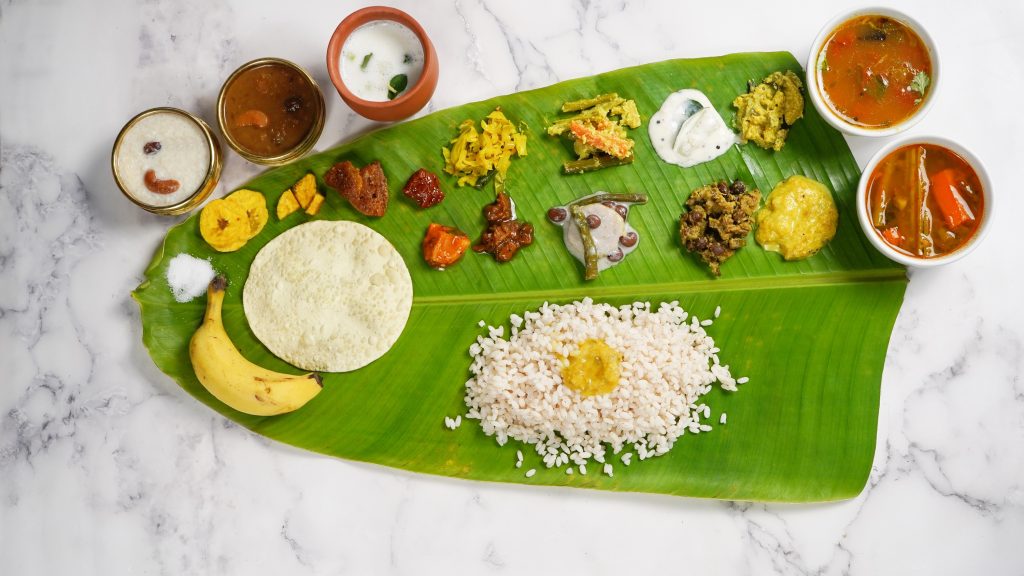
In fact, unlike chutney, where most ingredients are an integral part of the creation, in pachadi, there is generally always one hero ingredient. “The rest play a supporting cast and are included to enhance the taste and the nutritive properties,” Ghosh adds.
This approach to making pachadi, based on the solo hero ingredient, has given us several varieties. As Srinivas A, Senior Sous Chef, Chor Bizarre believes that the variations make pachadi — which he refers to as a dish from “the Chola era” — to be an “all-season favourite”.
Broadly defining the various kinds of pachadi, Ghosh says, “We have two major variants under which the whole gamut can be categorised. The first is a pachadi that encompasses all the spicy, tangy variants that uses fresh vegetable and fruits — including the one made with Malabar cucumber or pineapple, and is popular for its sweet-sour, tangy, and spicy mouth feel. The other is defined by the use of curd and is a milder version of the bold pachadi — called Kichadi. In this, the vegetables are usually bland in character and are cooked to soften before curd and other seasonings added and tempered.”
The evolution of pachadi and kachadi
Fascinatingly, these two versions evolved around the era of the great emperor, Raja Raja Chola, and his son Rajendra Chola — both documented to be patrons of cuisine and culture. This led to the comparison with chutney first and raita subsequently. Pachadi was so effective in adding taste and flavour to a meal and in helping with, that it was soon adopted in regions around.
In fact, says Selvaraj N, Chef de Cuisine, Malabar Café in Grand Hyatt Kochi, “Pachadi in its traditional form is found not just in Kerala and Tamil Nadu, but Karnataka, Maharashtra, and Andhra Pradesh, too. Kachadi, in some forms, is found in Odisha as well, with a few subtle nuance changes. While in Kerala, pachadi can take both a chutney-like form as well as that of vegetable curry and compare to the Odia Ou Khatta or Bengali Tomato Khejur Chatni in texture and appearance, in Andhra and Telengana, the vegetable is ground with chillies, fenugreek and mustard seeds — with greens (herbs) added to it give it that distinct taste.”
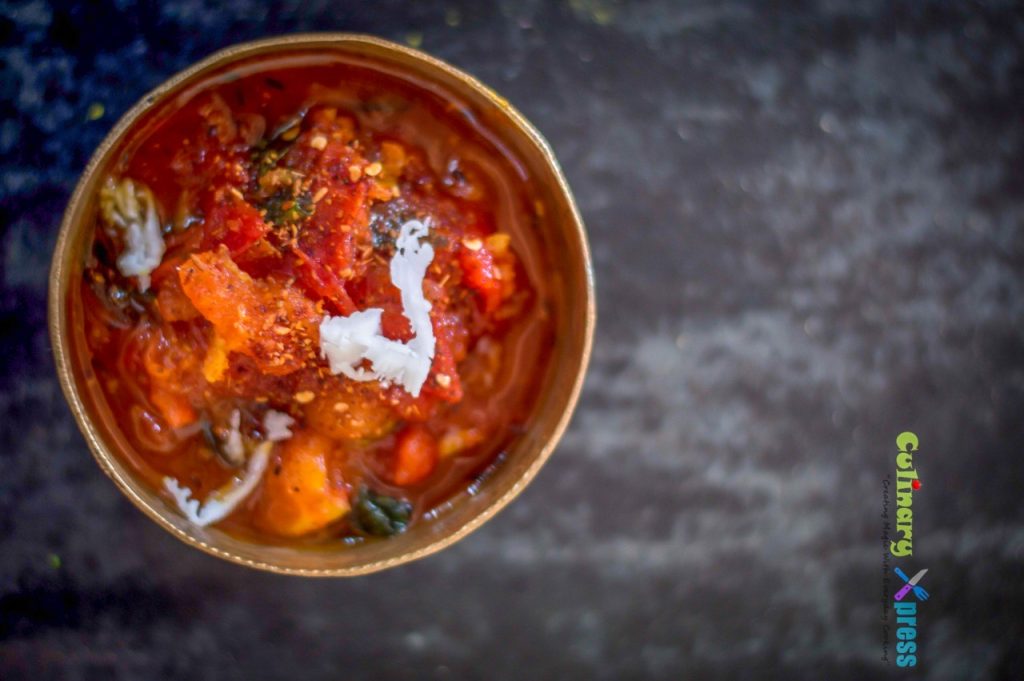
Selvaraj adds that in Karnataka, where it is called Thambuli, there is a hearty use of curd to achieve that tangy-sour taste.
According to chef and researcher Viveq Pawar, the kachadi has been the muse for the creation of koshimbir. “It takes on a mixed vegetable raita form with generous use of sengdana powder (peanut powder). In fact, much of the taste of this beloved Marathi take on the kachadi is due to the addition of peanut powder. There is the use of traditional curry leaf, mustard seeds, chilli and hing in the tempering poured on the peanut powder.”
There are millions of stories that can be shared about kachadi and pachadi, like this engaging one by Pawar. “Myth has it that when the Marathas began ruling these areas during the Middle Ages, they found to their amazement similar produce in the coast and the hills, and hence decided to adopt dishes that worked on both sides — ingredients and palate-wise. That’s how koshimbir, which in its initial iteration was made of local vegetable, came into being and travelled coast to coast.”
Kachadi’s other muses include the Mangalorean Southekai Pachadi and Odisha’s Nadia Pachadi, which are made with yoghurt, coconut, and fruits such as apple, pears, and pomegranate.
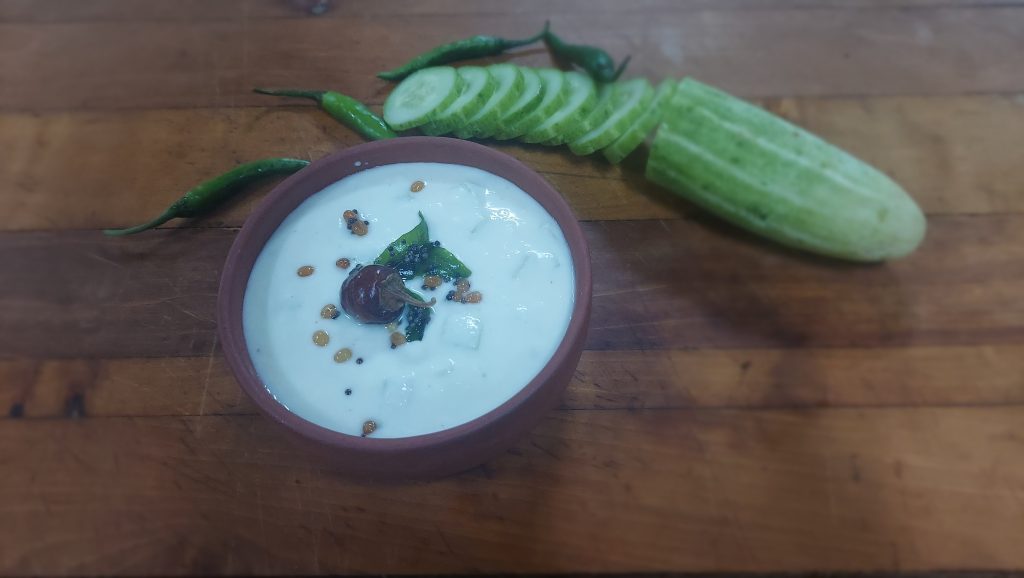
Curiously, pachadi also travelled from the lush green inland regions to other regions partly because of its place in the sadya, which by the era of Krishnadev Raya of Vijayanagram, had become a hallmark of effective food diplomacy, trade, and work. The thing about pachadi, as Chor Bizarre’s Chef Srinivas says, “is its lightness, which isn’t the case with pickle or chutney. This quality makes it an easy pairing with any dish around any season.”
Pachadi is great for digestion
Pachadi aces the game in its dual health purpose — of jogging the digestive enzymes in the digestive tract and in the mouth that aids digestion. Nutritional Therapist Sveta Bhassin says, “The charm of the pachadi lies in the process in which it is consumed. You begin by first licking the pachadi, followed by sensory stimulation as there is a burst of aroma while masticating the food in the mouth. This stimulation of the senses often cajoles the sluggish liver, gallbladder and intestines, the main cartels of our digestion, into action — thus ensuring that the act of digesting food starts immediately.”
This sensory foreplay, which we often identify as ‘deliciousness’, is accompanied by a demand for second serving, says Bhassin. “This is the reason behind pachadi’s existence in our meal, despite having chutney, pickle and raita, whose primary role is also of aiding digestion. Pachadi, thanks to its layer-on-layer flavour profile, does it better — especially at a time when the digestive system is slow-moving. Every time seasons change there is a slowing of the digestive system, including, incidentally, during Onam, which is a harvest festival.
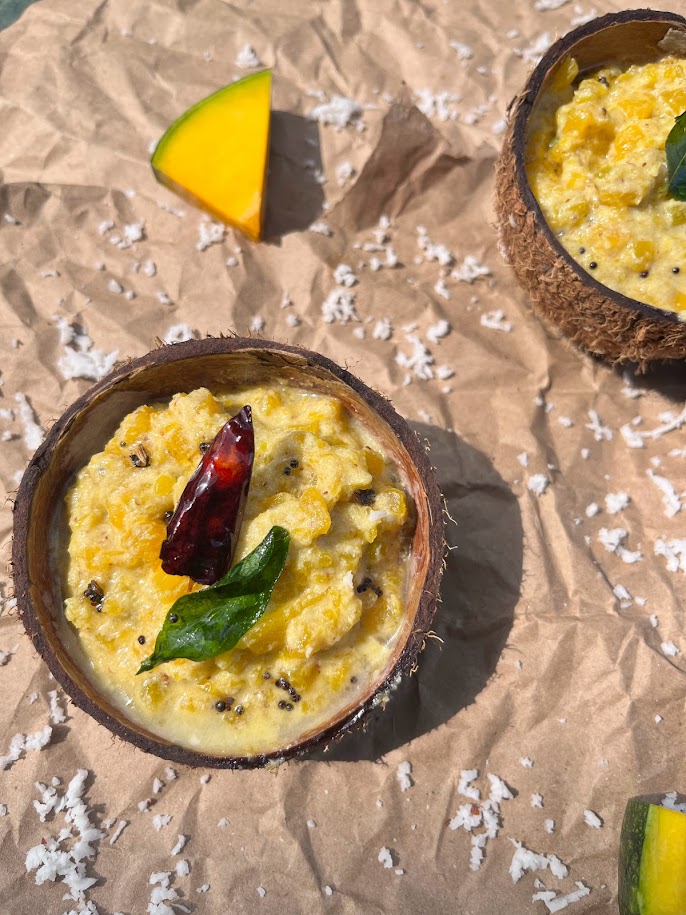
Given pachadi’s supremacy on taste and wellness, it comes as no surprise that the dish was part of the Charak Samhita’s antidote, especially for the recovery of the taste buds, post-illness. In later years, pachadi also became part of the ritualistic food in Ugaadi.
Ugaadi Pachadi — a sweet, sour, slightly bitter drink that is made with raw mango and neem flowers — is, in fact, a popular way to ring in the traditional New Year in Karnataka, Telangana and Andhra Pradesh. Like so many others, Ugaadi Pachadi, too, is said to be a close iteration of how pachadi was originally made.

Known for her columns on food anthropology, Chefs’ Retreat and wellness-based experiential tables, Madhulika Dash has also been on the food panel of Masterchef India Season 4, a guest lecturer at IHM, and is currently part of the Odisha government’s culinary council.