
A hilsa food festival currently on at the Eden Pavilion, ITC Sonar, Kolkata, brings alive recipes from Purnima Tagore’s Thakur Barir Ranna.
In Bengal, the arrival of rains means the promise of Hilsa, or Ilish — the season’s piscine star, in whose honour Bengalis are known to have penned effusive encomiums and composed soulful songs. In Kolkata, Ilisher morshum also means a string of Hilsa festivals across restaurants in the city, each trying to best others at the Ilish game.
Eden Pavilion, the all-day, fine-dining destination at ITC Sonar, is serving up some unctuous Ilish — smoked, stewed and steamed, a la carte, at a festival titled ‘Poetry in Cuisine’. What makes these dishes special is that they are gleaned from the illustrious kitchen of the Tagores of Jorasanko and are likely to have appeared on the table of Nobel Laureate Rabindranath Tagore, whose love for the Ilish is well known.
To curate the menu, the hotel roped in the help of educationist Sudripta Tagore, a scion of the Tagore family whose grandmother Purnima Tagore’s book Thakur Barir Ranna is a cherished possession in many Bengali homes, and the prime resource for this festival.

First published in 1985, Thakur Barir Ranna is a compilation of recipes, mostly from a khata full with hand-written recipes that the author inherited from Indira Devi Chaudhurani. “Incidentally, Indira Devi never set foot in the kitchen but meticulously documented various recipes which has turned out to be a cultural treasure,” says Sudripta, “My grandmother, on the other hand, was a prolific cook.”
The culinary arts were essential education for Tagore women. In the Tagore household, for instance, new brides would receive rigorous training in culinary crafts like rolling a ‘paan’, making pickles and preserves like Kasundi, and preparing bori or sundried lentil pellets and intricate coconut-based sweetmeats. “Such training was considered mandatory though the family was wealthy,” writes Chitra Deb, in her book Women of the Tagore Household. Interestingly, aestheticising culinary practices in domestic kitchens was central to the project of modernity in colonial Bengal and the construction of the narrative of Bengali gentility and culinary sophistication.
The colonial era also saw the emergence of a ‘hybrid’ cuisine that was born out of interaction and collaboration between the European colonisers and the natives. The kitchen of the Tagore household, fuelled by the cosmopolitan spirit and universalist vision of its famous residents, was perhaps among the first to embrace this absorption of diverse culinary influences in their food and eating culture, that came to define their culinary legacy. In fact, the culinary culture of the Tagore household was gravid with the inventive and dynamic spirit of the Bengal Renaissance.
“It is this spirit of assimilation that we wanted to highlight while curating the menu for the Hilsa fest,” says Sudripta. He points out that while every domestic kitchen typically adhered to a particular style of cooking, the kitchen of the Tagore household was cuisine-agnostic. On the Tagore table, Irish stews, mutton roasts and tipsy pudding rubbed shoulders with quintessential Bengali ghonto and chhenchki. Intricate recipes often featured unusual combinations of ingredients or fused diverse culinary sensibilities. It could be safely said that the Tagores were the pioneers of what’s today dubbed as fusion food.

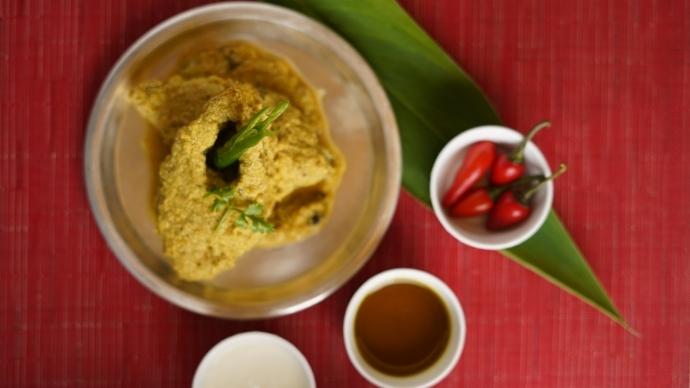
One dish that marries the East and West is perhaps the Ilish roast. The fish is first marinated with a simple blend of onions, ginger and green chilies and pan-roasted in ghee. The remaining marinade is roasted in more ghee to a sticky, caramelised finish and ladled on top of the burnished fish. The mash that comes along gets its creaminess and mildly tangy underpinning from yoghurt — a signature Thakurbari touch, says Sous Chef Subhankar Roy.
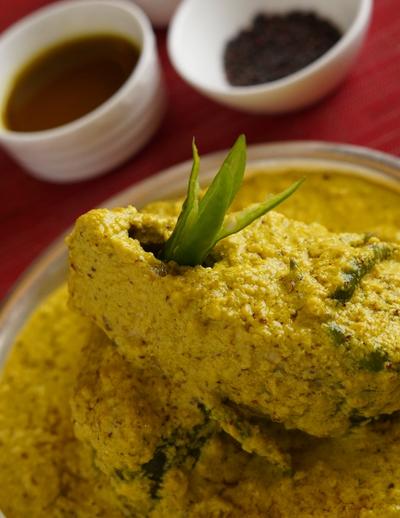
“Besides, the family’s roots are spread across the two Bengals, West and the erstwhile East. On either side, Ilish is cooked in distinctive ways,” says Sudripta. On the menu at ITC Sonar, the East Bengali influence is more pronounced in dishes like Ilish Bhape, or plump Hilsa steaks dressed in a robust marinade of mustard paste, coconut, green chillies and drizzled with mustard oil and steamed, and the Ilish Shorshe, rich with mustard and green chillies. Sudripta fondly reminisces childhood lunches of Shorshe Ilish prepared by his grandmother, fascinated by her stories of cooking the same dish for Rabi dada. “We were in such awe we didn’t complain about all the bones,” he says.
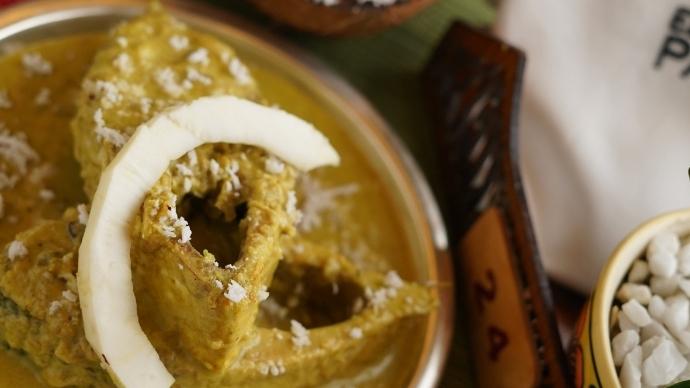
The Narkel Dudh Diye Ilish, on the other hand, is more aligned with West Bengali proclivities. Thick paves of Hilsa are stewed in mildly spiced but spirited gravy fortified with lashings of freshly pressed coconut milk, on a mellow flame to a velvety finish. The sweet, nutty creaminess from the coconut milk is offset by the faint heat from the slit green chillies.
Doi Ilish — a rich, sweet and spicy dish, in a sapid gravy cooked with alliums and yoghurt — is another crowd pleaser on the menu. In her book, Purnima Tagore recommends using mishti doi or sweetened yoghurt for Doi Maachh. In case a cook uses sour yoghurt, they must add a bit of sweetness. As Sudripta reminds me, the use of sugar, still an expensive ingredient in the 19th century, characterised food from the storied Tagore kitchen.
“In the Tagore household the maxim Atithi Narayan (Guest is God) has always been taken literally,” says Sudripta. The Tagores entertained an eclectic circle of people — from Company officials and foreign dignitaries to the brightest minds of the Bengali intelligentsia — and the menus at the opulent feasts they hosted, were carefully constructed to ensure there was something for every palate. It was perhaps to introduce their European friends to the sublime taste of the feted Ilish, that the Tagore kitchen rolled out deboned slivers of Ilish, smoked with charcoal and murki, jaggery-laced popped rice, on the menu.
But feeding a family as large as the Tagores, and the massive gatherings they hosted, required an army of cooks. In her memoirs Jeebaner Jharapata, Sarala Devi Choudhurani reminisces, “A dozen Brahmin cooks were kept busy since early morning in the central kitchen cooking for the entire family and other residents. Cooked rice would be piled high, almost touching the ceiling on one end of the huge kitchen.” The kitchen staff also included legendary Muslim khansamas and French chefs whose influence on the family’s culinary coffers is undeniable.
Rabindranath’s elder brother Jyotirindranath Tagore mentions in his writings a French chef named Cathrin, who was hired by Hemendranath Tagore to cook and teach French for a monthly salary of Rs 30. “Cathrin would only cook the Foreign dinners and was quite an expert at preparing exquisite dishes at a low price,” he writes. Artist Abanindranath Tagore was fond of chicken stew and pudding cooked by the bawarchi Taleb Ali. Abanindranath also learnt to cook dishes like cornflour pudding from Mrs Beeton’s cookbook and indulged in quirky culinary experiments at his glutton’s club.
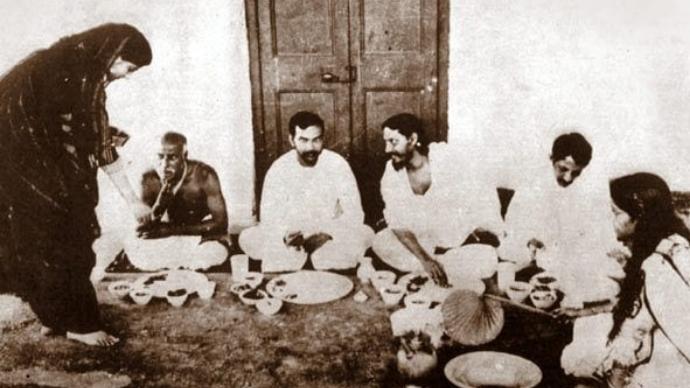
Tagore too is known to have had his go at culinary experiments. His hunger for novelty, fuelled by his globe-trotting lifestyle, pushed the family kitchen to constantly innovate. At his Khamkheyali Sabha, the bard mandated nothing ordinary could be served. He is known to have the habit of collecting menu cards from banquets he was invited to across the world.
For the bard’s 50th birthday, his niece Pragyasundari Devi, whose Amish o Niramish Ahaar, published nearly nine decades prior to Thakur Barir Ranna, is a weighty culinary tome replete with secrets of her family’s kitchen, created a luxuriant sweetmeat, enriched with nuts and raisins and embellished with gold and silver leaf, that stumped guests who couldn’t guess the main ingredient. The sweet, christened Kavi Sambardharana Barfi, was in fact made of cauliflower, a vegetable imported to the country by the English a few decades earlier and yet to be entrenched in native cuisines. It was Pragyasundari who also introduced the concept of menu cards, that she called Kramani, to Bengali feasts and with it a touch of modern novelty.
British historian Edward Thomas, a friend of Rabindranath, once said, “In no other family, than the Tagores could all the varied impulses of the time have been felt so strongly and fully.” Their culinary legacy is a worthy testimonial.
Read more.