
From snails in yam curry to Colocasia leaves cooked with banana stems, discover the world of authentic cuisine of Nagaland, beyond Raja mircha and Axone.
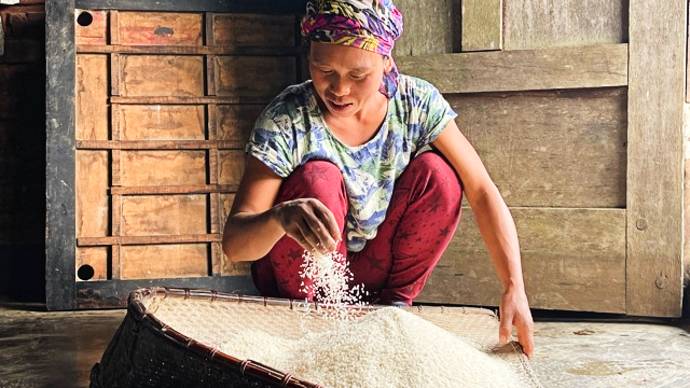
“We’re really sorry… Today is Good Friday, so we can only serve you a vegetarian meal,” apologised Pastor Rakongaolü Lawrence, with a deep sense of regret. We asked him not to make much of it, as vegetarian fare was more than welcome in meat-heavy Nagaland. Exploring 4×4 trails across the state for the Tourism Department with offroad specialists Wander Beyond Boundaries gave us the chance to stay in remote villages where we gratefully partook whatever local villagers rustled up…
A different definition of vegetarian food…
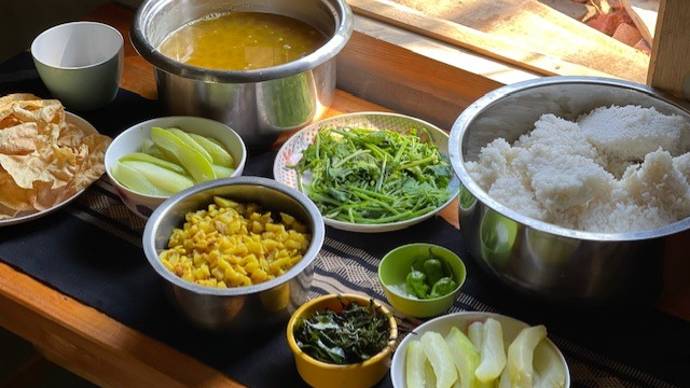
Happy that no country chicken had been sacrificed for us this time, the breakfast at the pastor’s house at Zelome village in Phek district seemed no less than a blessing. It was a meal of rice, dal, potato fry, boiled cabbage, and yongchak (stinky bean) chutney when the melodious tinkling in the yam curry made us notice the snails in it. “B… but, Pastor, you said it’s all vegetarian!” Lawrence looked at us quizzically for a moment, broke into his trademark, beaming smile, and explained in a matter-of-fact tone, “Snails don’t have blood. And anything that doesn’t have blood, is…” “Vegetarian!” we echoed like obedient school children, the logic dawning on us.
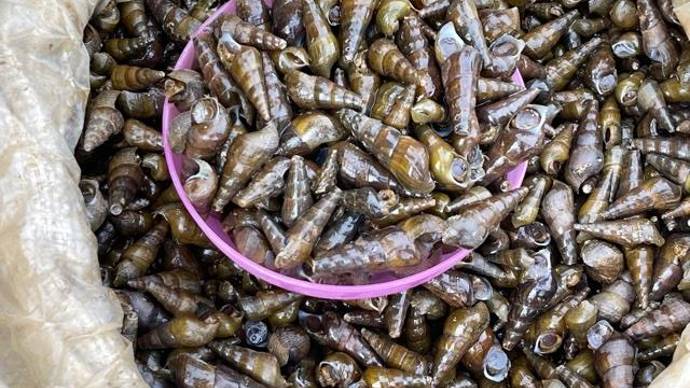
“You just have to suck the meat out of it.” We’ve tasted escargot in butter garlic sauce in our travels across Germany, but this was the first time we were trying snails in India. Unlike their EU counterparts, these snails are tiny and found in paddy fields. The flesh is just a smidgen but really tasty and worth the effort — like sucking out tightly wedged marrow from an obstinate bone. Once we were done, we tossed the shells to the dogs, who happily crunched into this unlikely snack. What a perfect arrangement of leaving no trace! Yet, we could just imagine our folks’ reaction if they heard of our culinary adventures. “Isn’t there anything better to eat?” they’d ask sardonically.
Meat, the great equaliser
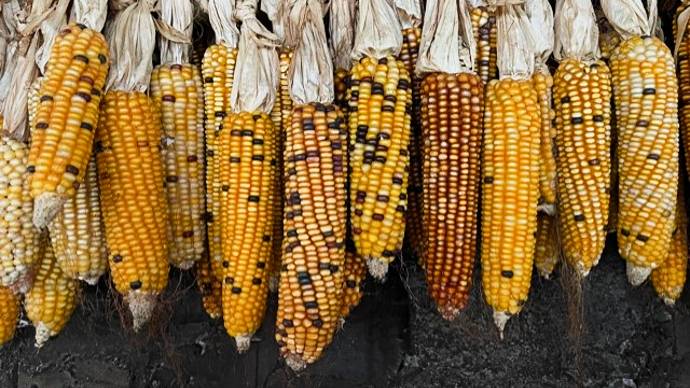
We ate inside the kitchen, marvelling at all the local ingredients and implements hanging from nooks or lining the walls — winnows, baskets, daos, bushels of Naga lasoon (garlic), florets of Naga basil, oval tree tomatoes, titaguti (Naga brinjal) and other herbs. The kitchen is where most meals are consumed, usually in a three-legged wooden or aluminium plate. Typically, above the fireplace chunks of pork, fat, intestines, venison, fish, and other meats are left to cure and smoke. We thanked Lawrence and his wife Virhiinyi for the lovely meal. Outside their home, corn was hung to dry in sheaves to be sown the next season.
Gahuri (pork) is the meat of choice in Nagaland, apart from chicken and fish, while mithun (semi-domesticated cattle) are sacrificed during community feasts. Dogs are a delicacy too and it was quite an experience travelling with Buster, WBB founder Nidhi Salgame’s 7-year-old Labrador. Our host Deo Krome motioned with his dao (machete) if he could eat Buster. Ironically, the next instant he was playing with him, along with his grandchildren. At Akhwego, the chairman Nienthso’s wife casually asked if we would eat Buster after he died! In Moya, as they patted Buster, the elders remarked how he could easily feed 50 people! Chairman Kusumeiu recommended that dog meat soup was really fortifying if you were sick. We haven’t had the heart or the opportunity so far, but who knows…
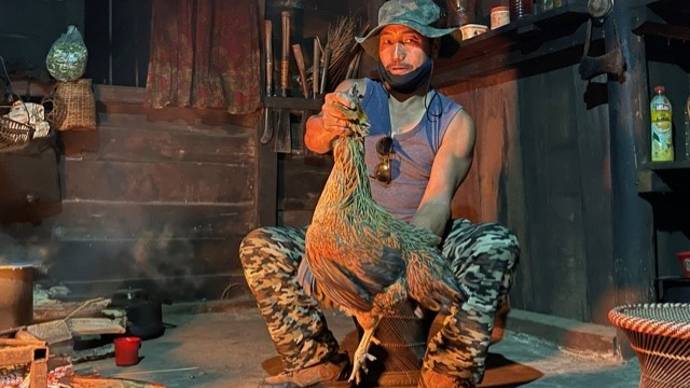
Most Nagas are omnivorous and will readily eat anything that moves or has stopped moving. Hunting has been part of the tradition and they often head to the forests to hunt squirrels, hare or anything more substantial. Meat is often cooked with tubers, beans, gourds, and greens. A trip to Keeda Bazaar in Kohima or the Supermaket in Dimapur, especially Wednesday Bazaar, is an eye-opener — eels, snails, silkworm larvae, wood worms, hornets, grubs, and everything from frogs to dogs are up for grabs!
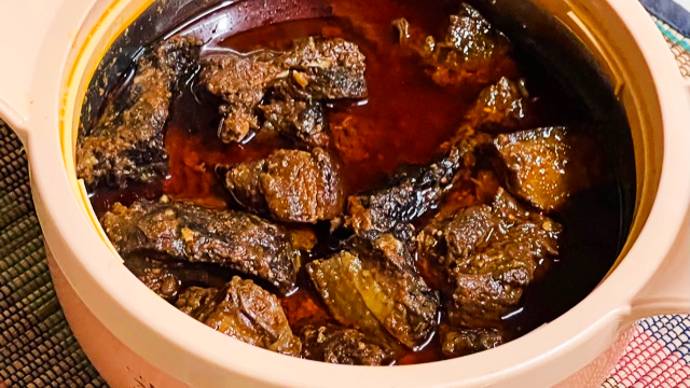
The heat is on for vegetarians
Surprisingly, Naga cuisine is supplemented with a lot of vegetarian fare — Naga dal, kholar (beans), and vegetables like pumpkin, potato, sweet potato, squash, yam, and colocasia. Apart from the main staple rice, Nagas consume maize and millets like Job’s tears (Coix-lacryma jobi) and foxtail millet (Setaria italica). Very little oil or masalas are used, and boiling is the preferred method of cooking. Raja morich (king chili) or Bhoot jolokia and its cousins with varying levels of heat are the main spice.
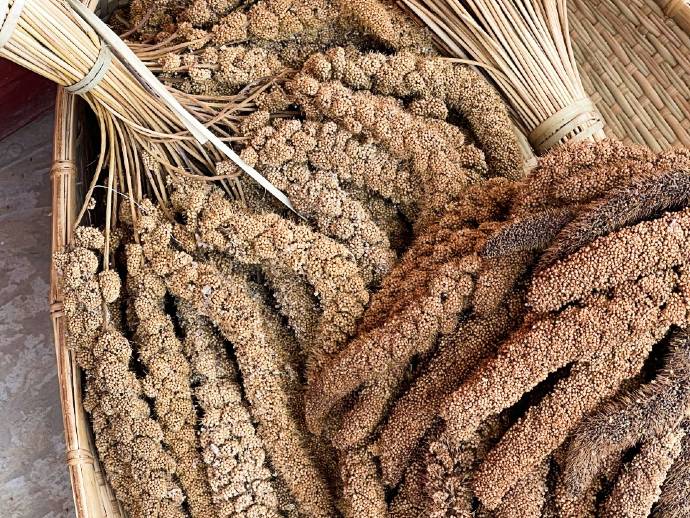
Yongchak (Parkia speciosa) was in season, hanging like garlands in markets. The long twisty bean grows wild all over Nagaland in clusters on tall trees and is a popular legume in Northeast and Southeast Asia, known as Petai or Sator. Here, it’s believed to be an influence from Manipur where a salad called eromba is made. Besides its inherent gassiness, Yongchak contains sulphur compounds and amino acids, similar to shiitake, truffles, and asparagus that cause one’s urine to smell the next day, hence its popular nickname ‘stinky bean’. The outer skin is scraped off, washed a few times in water, sliced, and ready to use raw or cooked. Often paired with strongly flavoured ingredients like Naga morich (Raja Mircha), garlic, dried shrimp, and fermented fish, it’s widely made into chutney or stir fried into a pickle.
When the leaves matter…
No meal is complete without the customary ‘boil’ — a wedge of cabbage, a slice of steamed squash or some blanched greens, many of which are packed with medicinal benefits. The most popular are lai patta (Brassica juncea) or vegetable mustard leaves, mejenga patta or Sichuan pepper leaves (Zanthoxylum oxphyllum), eskos/iskus patta (squash leaves) and slip patta or Longevity Spinach (Gynura procumbens), called mühyingtahi in Sangtam and letsuye in Kheza.
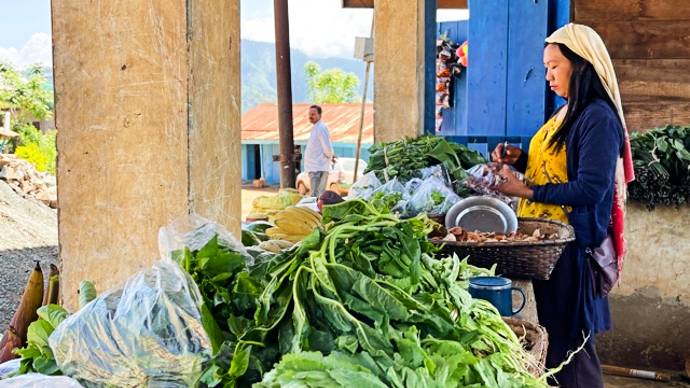
Sometimes, Naga lasoon (garlic) chives are stirred into a quick salad. Another delicacy is dhekia saak (Diplazium esculentum) or fiddlehead fern, with tendrils curved like the ends of a fiddle/violin! Greens like tenga patta literally ‘sour leaves’, also called gazie or Chinese Knotweed (Persicaria chinensis) and kochu patta or colocasia leaves are eaten too, as well as chopped and cooked with banana stems and rice into a slurry as gahuri dana (pig food). Leaves of the Himalayan Knotweed (Persicaria Wallichi) are used in dishes like galho — a rice porridge with meat and foraged greens, typical of the Angami tribe.