
A rich heritage, an elaborate routine, and a bunch of guidelines might govern caffeine in Sharjah, UAE. But it’s always worth it.

If there’s one thing Sharjah (and pretty much all of the UAE) loves, it’s a cup of coffee. Be it a cup of karak or some good old qahwa, coffee is intrinsic to the pulse of the country.
As humble homes gave way to skyscrapers and top-of-the-line vehicles replaced camels, the role coffee plays has evolved as well. While it was initially reserved as a symbol of generosity and hospitality in the country, it’s now grown to take on specialty, artisanal shades, enjoyed both traditionally and otherwise.
And its popularity is only increasing.
On average, coffee is consumed in the region at a rate of $7 billion per year. The average yearly coffee consumption is estimated to be 3.5 kilos per person, with national spends of about $630 million each year. A new cafe pops up around the corner almost every week, and you can now get everything from an old-school cafeteria coffee to a cortado in the blink of an eye.
Statistics aside, sentiment plays a huge part in the ongoing thriving nature of the industry. While newer generations have experimented with blending the Arabian aura with modernity, there will always be room and respect for how it began.
As per historical documents and poetry, coffee came to the region at least 180 years ago. Qahwa was mentioned in a report dated sometime around 1904-1906, with no mentions of coffee export or import previously.
It’s widely believed that coffee cultivation originated in the Arabian Peninsula, which lends itself to the country’s pride over the association. As part of keeping that identity intact, all the processes from roasting and brewing to serving and even consuming are a little different from your local cafe.

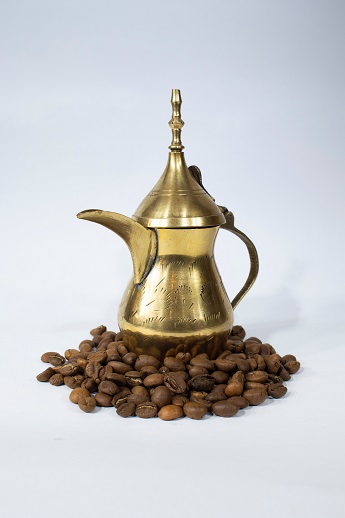
Traditionally, coffee in the UAE is roasted incredibly light (considered underdeveloped by specialty standards). It’s ground slightly finer than your average filter paper and optionally blended with spices like cloves or cardamom. 16 minutes of brewing later, you pour out the cocoa brown liquid into a traditional kettle called a Dallah. Such is the significance of coffee in UAE’s culture, that you’ll find the 1 dirham coin has the kettle etched onto it.
Entering an Arab house means you’re guaranteed to be served coffee. Since the original brew doesn’t call for sugar, it’s served in tiny wide-lipped cups accompanied by some dates for sweetness. Generally, you would take them in odd numbers, and also have at least one cup up to a maximum of five.
According to Fatima Al Shuweihi, Head of Cultural Guidance in Sharjah, “Majlis’ back in the day only employed deaf servers to serve coffee, in order to avoid any accidental spilling of secrets. Guests would have to shake their coffee cups to signal the server to stop serving more.”

Which brings us to all the etiquette surrounding coffee culture in the country. While some say there are at least a hundred odd rules, not all of them are followed to a fault to date. Some basic rules while serving include having the dallah in your left hand while the coffee cup or Fenyaal, would be served with the right hand.
If there was a high-profile figure at the majlis, the owner of the majlis himself would have to serve the coffee instead of having it designated to someone else. Generally, the eldest receives the first cup, which is only one-quarter of the way filled – and is replenished till the server is signalled to stop. The coffee cup must never be filled fully, as a means of conveying that you’d like your guest to stay longer.

But that’s simply the tip of a coffee-drenched iceberg. Over the years and especially with the influx of immigrants, the customs have evolved into something a lot more complex and multicultural. There’s been several waves of coffee in the country, each one bringing either a new bean or a new method.
The beauty of it all, however, lies in the unanimous love and community built around a single cup. You might have different preferences, but the generosity and hospitality still remain. And perhaps, that’s all that matters.
Read more.
What a day in Sharjah could look like
Flavours and heritage course rich through UAE’s Al Mukhtar Bakery