
Rich, buttery and delicious, Azerbaijani cuisine is a supernova of flavours serving up several cultures and continents on a single plate.

Located on the erstwhile Silk Route, and straddling Asia and Europe, Azerbaijan is often referred to as the ‘Land of Fire’. Fringed by the jagged Caucasus mountains and fanned by the misty Caspian Sea, it is peppered with nine of the Earth’s 11 climate zones that produce a bounty of fruits, vegetables, herbs, and nuts!
Centuries of influences from the neighbouring Turks, Iranians, Russians, and Georgians make the country’s tables a kaleidoscope of colourful dishes brimming with taste and complexity.
Fresh, tender, and fragrant food for your palate in Azerbaijan
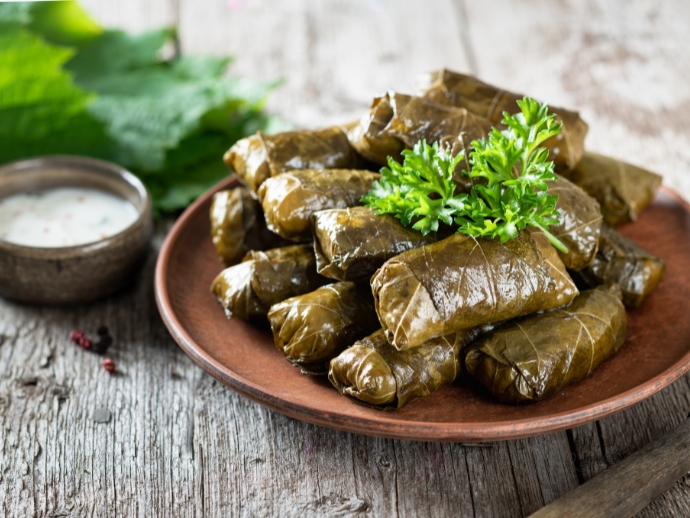
Image: Shutterstock/Chzu.
During a recent trip to the beautiful country, my tastebuds were tickled by velvety pots of hummus, dolma (grape leaves stuffed with rice, spiced meat, and onions), lavangi (walnuts, onions and seasonings stuffed in fish or chicken and baked), and dushbara (dumplings bursting with herbs and meat, akin to tortellini) among others. Oh, and did I mention baked vegetables saturated with the aroma of burning coals, barbecued meats dripping golden juices and melt-in-the-mouth kebabs?
Meats, vegetables, milk products, and dough-based dishes, as well as pilafs and soups, comprise the quintessentially Azeri diet. The year-round availability of fresh fruits, vegetables, and nuts, as well as a prolific use of spices like saffron, cumin, bay leaf, star anise, coriander, and mint amp up the food’s flavour while also making it an olfactory delight.
Meat is stewed in its own juices, the dishes fresh, tender, and fragrant, either crispy or soft, but never greasy. Seasoning is invariably perfect, never over or underdone, and the meat easily falls off the bones.
When in Azerbaijan, must binge in Baku
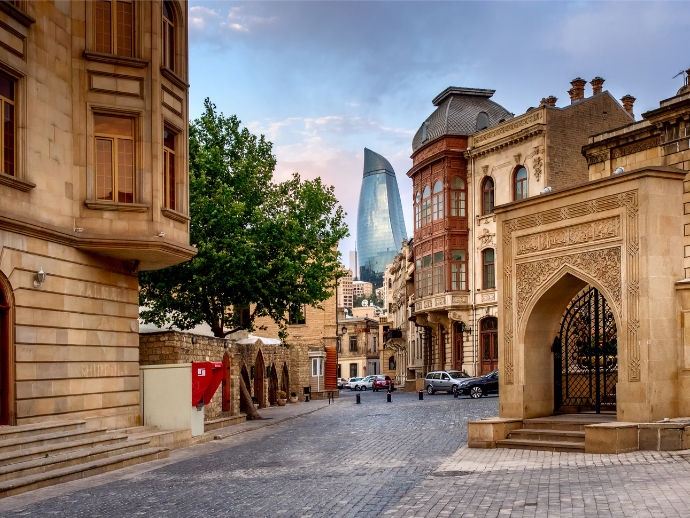
I began my culinary explorations in Baku, the capital city that intriguingly juxtaposes the modern with the medieval and the quaint with the cosmopolitan. Spiffy eateries co-exist harmoniously with centuries old chai khanas (tea houses) here and chic cafes with ancient bakeries helmed by ruddy-cheeked ladies.
Baku’s dining scene is eclectic and exciting. For my first meal, I visited Icheri Sheher, or the pristinely restored UNESCO-listed Persian Old Town that mimics a vintage painting with its honey-hued buildings. Sandstone hammams, caravanserais, kilim (rug) shops and bustling restaurants vie for my attention in a squiggle of overlapping lanes.
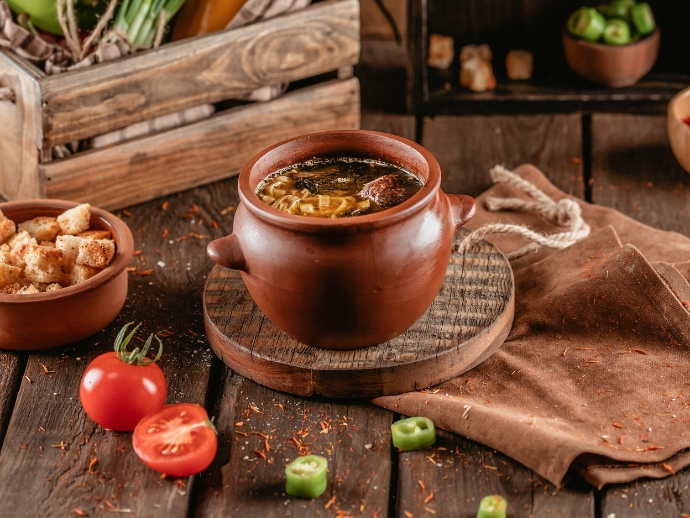
I was booked at the widely popular Firuze Restaurant which offers charming interiors, unobtrusive service and an extensive menu. What’s not to love? I began with Azerbaijan’s national dish — Piti — a nourishing lamb soup thickened with chickpeas and veggies that instantly warmed me up. Cooked in an oven in small earthen pots, this is no fast food. The waiter brought the hissing, smoking pot to my table straight from the oven and assembled the dish in front of me as I shot hundreds of videos.
Up next is Qutub, another popular dish, much like the Indian stuffed paratha, which can have varied fillings — meat, cheese, veggies. Mine was bursting with gooey cheese and was flecked with fresh green herbs. I washed it all down with a Cornelian cherry compote, the ambrosial drink Azerbaijan is so famous for.
Azerbaijan, where pilaf-cooking has strict rules
The next day I visited Fountain Square, smack dab in the heart of Baku, an area peppered with bustling eateries and cafes. Here, I visit the cavernous Dolma Restaurant for an immersive dining experience. Friendly, costumed waiters; mellifluous traditional folk music and an Old-World vibe kept me entertained throughout my two-hour meal.
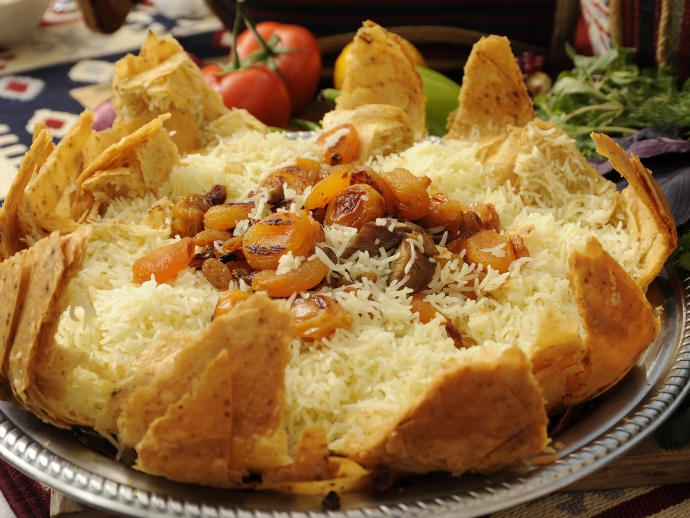
From an extensive menu, I chose a Lamb Pilaf and Entrecote (soft and juicy pieces of meat arranged on a platter with grilled veggies) topped with a flavour-charged sauce. Every morsel was like a party in my mouth!
As I dug into the saffron-infused pilaf, its umami offset by raisins and apricots, the chef informed me that it is one of Azerbaijan’s most beloved dishes. And with over 100 different recipes, discussions often get heated over which is the ‘best’ version. ‘Plov’ cooking is integral to weddings, birthdays, and other important family events. It is eaten between the second and the third course and prepared strictly according to rules. For instance, its components are never bunged into the pot all together but cooked separately and then combined delicately just before serving, I was informed.
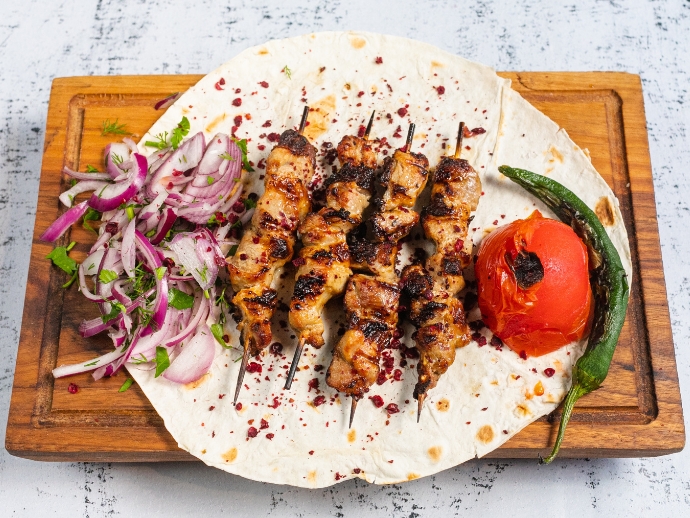
Image: Shutterstock/shamiltural7.
Daily, I ate until my innards begged for mercy. Most irresistible, however, I found the Azeri kebabs. Crafted from fine quality lamb mince, they are mined with fresh herbs and spices, squeezed around skewers and grilled until redolent of the smell of smoke on which they are cooked.
Lula kebab — minced meat grilled to a gossamer hue and served with breads and salad — is a meal in itself. Then there’s Tava Kebab (lamb cutlet sizzled in a pan) as well as Shish Touk, akin to chicken tikka. Kebabs can be of meat, fish, game, or vegetables but are always served with the habit-forming `narsharab’, a sweet and sour pomegranate sauce.
‘Music of aroma and the poetry of flavour’ in Azerbaijan
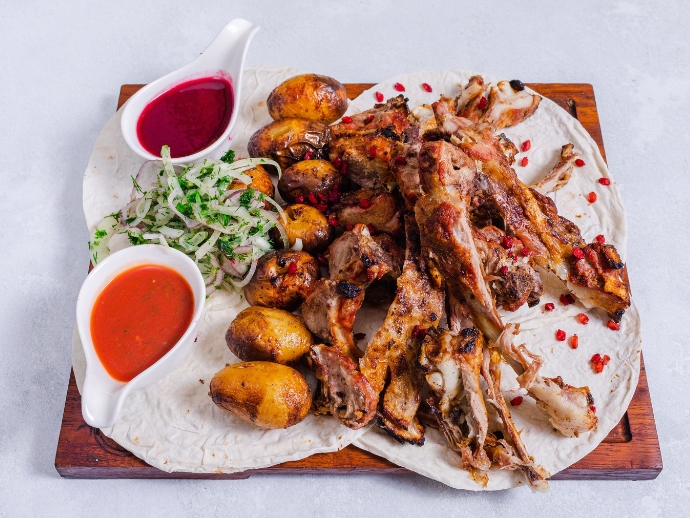
Bread is considered sacred in Azerbaijan. Families, especially rural ones, bake their own at home in a tendir (tandır). The kalın and fetir are popular, but it is the translucent lavaşh, mimicking the roomali (handkerchief) roti that has my heart. Made in advance and stored in a closed box, it is pulled out 10 minutes before a meal, splashed with water, heated and enjoyed with curries or kebabs. I tried the bread by stuffing it with creamy cheeses, fresh salads, and meats and enjoyed it like a wrap. Lavash was my plate, napkin, and cutlery.
Azerbaijanis are big time pickle eaters and pickle anything they fancy, from vegetables to fruits and meats. Gleaming jars of quivering preserves, jams, pickles, relishes, and sauces line kitchen shelves in most homes.
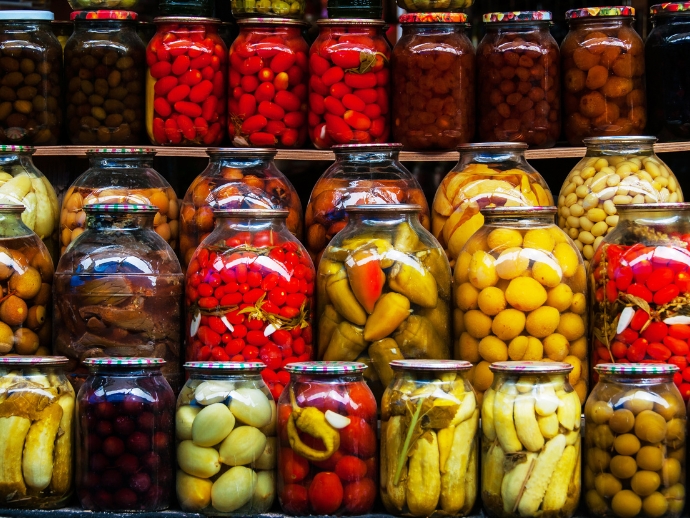
Image: Shutterstock/Madrugada Verde.
Pickled and stuffed eggplant, bell pepper, garlic, green tomato, sour plums and more make for flavour-charged accompaniments to meals. Prepared in summer, when fruits and vegetables are abundant and cheap, they last through the punishing winter months when produce is scarce and expensive.
After eating my way through beautiful food served by hospitable locals in atmospheric settings, I understood why travellers of yore compared Azerbaijan’s cuisine to the `music of aroma and the poetry of flavour’.
Read more.
A tea trail in Azerbaijan: When tea plays matchmaker
Azerbaijan an immersive destination for luxury travellers: Bahruz Asgarov