
No Christmas feast in Goa is complete without the decadent Sorpotel. Here’s the how and why of this prime example of zero-waste cooking much before it became a trend.
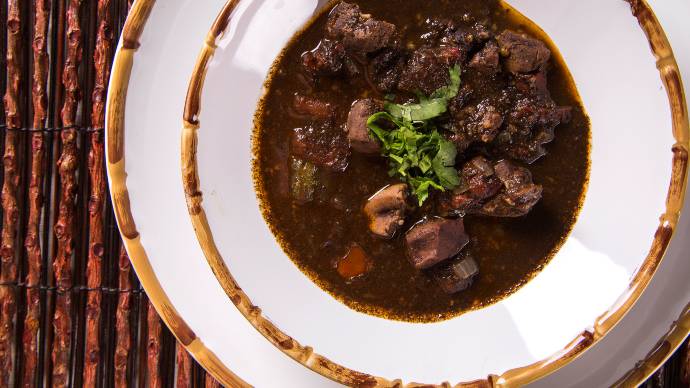
In Goan villages, preparations for any big celebration begin days in advance, especially when it comes to food. Pork is a feature of every Catholic celebration, and Christmas is no exception. In the olden days, many people kept pigs and goats and a pig was fattened for special occasions. Much of the meat, offal, and even the blood was kept aside for one special dish: Sorpotel. Traditional recipes for Sorpotel used the ear, liver, kidney, tongue and even the tail — true nose-to-tail cooking before it became a buzzword.
A Goan mishmash we love…
Sorpotel translates to mishmash or confusion. It is a dish that requires time, ages well, and is a delicious and irreplaceable part of every celebration. It is a regular at the Goan Catholic table during festivals like Christmas, First Holy Communions, village feasts, and more.
There are different credited origins of the dish: Some say it is a version of a lamb dish made in Castelo de Vide in Alentejo, Portugal. Others say it is a version of the Sarabulho, a stew of minced pork cooked in pig’s blood. Author and historian Fatima da Silva Gracias writes, ‘Sometimes recipes were modified to suit the palate of the people or add flavour, as in the case of sarabulho, vindalho, cabidela and feijoada made of pork. Sarabulho in its original form consisted of pork meat, liver, ears, tail and limbs. Only a few spices were added to the cooking. Goan Christians discarded the ears, tail, limbs, added tempero paste and called it sorpotel (sarapatel).’
The oft repeated and commonly accepted origin story has to do with African slaves in Brazil who would use offal and cheaper cuts of meat discarded by their masters and cook it in a stew. The pork-loving Portuguese seafarers liked the dish because it didn’t spoil easily and could satiate them on longer journeys. They carried this dish to their colony in Goa, where Goans added their spices and chillies and made it their own. The name sorpotel is believed to have been derived from sorro (the Konkani word for alcohol) because in the olden days, feni was sometimes added to the dish.
Sorpotel’s scrumptious secrets!
The secret behind sorpotel’s developing, maturing taste is not feni but toddy vinegar, a slightly opaque liquid that is found in every Goan Catholic home. Also called palm vinegar, this liquid adds flavour and pickles the meat along with the spices. Palm vinegar became a substitute to wine vinegar or wine, used by the Portuguese in cooking. Wine was an integral part of the cuisine, and on learning that Goans don’t use it, they introduced toddy vinegar as a substitute.
Toddy vinegar is just one aspect of a good sorpotel. It’s a dish that requires time and patience. The process of cooking it begins with the meat, which is par-boiled and then cut into narrow cubes. The fat pieces are fried first to release oil. To this, onions are added. The meat is then fried and mixed with the sorpotel masala — made with Kashmiri chillies, Gaon chillies, ginger, garlic, spices, tamarind, and of course, toddy vinegar. Kashmiri chillies are what give the dish that dark red colour (once obtained by the use of blood). Once prepared, it is left to mature and so the flavours intermingle well, for a few days or even weeks.
Sorpotel, the star of a Goan Christmas spread
These days, sorpotel isn’t made with blood or offal but just pork. It is still a meat dish, made with pork. Though there are vegetable and chicken versions of it, sorpotel has always been a pork dish.
As da Silva Gracias writes, ‘Sorpotel is a popular dish in the Goan Christian cuisine on festive occasions and even today many in the Goan diaspora prepare it’.
It’s one of the stars of the Christmas table, served with sannas (a spongy, steamed rice cake made with toddy), plain rice or pulao. It is usually prepared days or weeks before the day and left to mature.
Because, like all good things, it tastes better with time.
Read more.