
Goan desserts are a class apart. And if they are traditional Goan desserts, then you’ve hit the jackpot. So this Christmas, try these eight traditional Goan desserts curated by chefs from Taj Aguada, Goa, and savour a sliver of Goa with a pinch of Portuguese influence.

The Portuguese left their mark on certain Indian cuisines in two ways: By introducing new ingredients to India — including spices that are seen as an essential part of Indian food today — and by introducing Portuguese dishes that have been adapted to Indian culinary techniques and tastes. The strongest Portuguese influence was in Goa, which Portugal ruled until 1961. No wonder then that Goan Catholic cuisine has a distinct Portuguese flavour. You’ll love these eight Goan desserts with Portuguese influences that the chefs at Taj Aguada, Goa, have curated.
Fios de Ovos
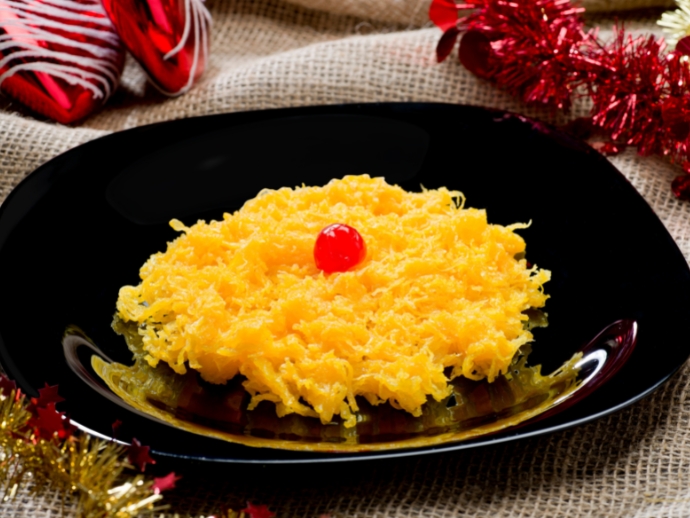
Angel hair — Fios de Ovos (‘egg threads’) in Portuguese — is a traditional Portuguese sweet, made with eggs (chiefly yolks), drawn into thin strands, and boiled in sugar syrup. They are a traditional element in Portuguese cuisine.
Like other egg-based Portuguese sweets, Fios de ovos is believed to have been created by Portuguese nuns around the 14th or 15th-century. Laundry was a common service performed by convents and monasteries, and their use of egg whites for “starching” clothes created a large surplus of yolks.
Dedos de Dama
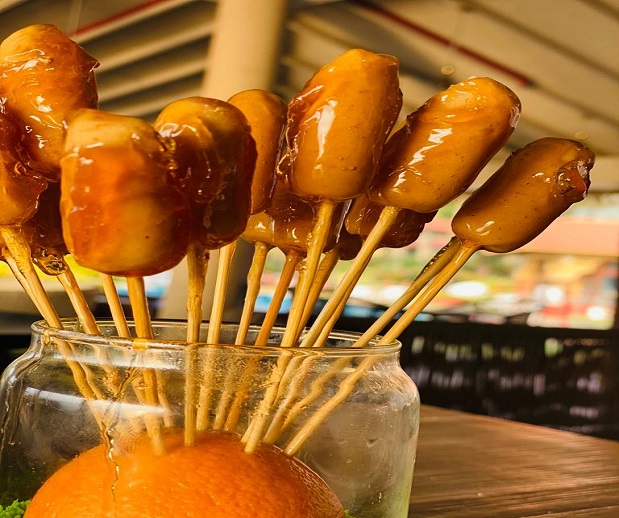
The nuns at the convent of Santa Monica in old Goa were innovative and creative in blending Portuguese and Goan recipes with the local ingredients available. One of them is Dedos de dama, which literally means lady’s fingers. Served as a dessert on festive and special occasions, it is basically a mixture of cooked ground cashew nuts and coconut, shaped into small cylindrical fingers, and coated with caramel. Pierced into decorated skewers and stuck onto a fruit like watermelon or pineapple, Dedos de damas are enjoyed like lollipops.
Bolo sans Rivals
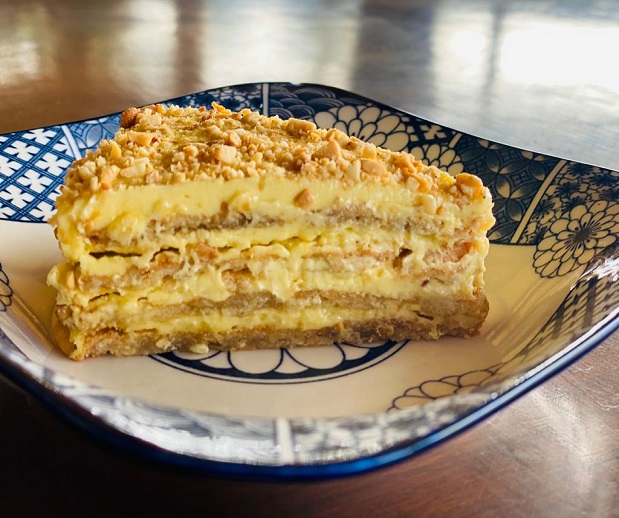
This cake has French buttercream sandwiched between layers of meringue, which is prepared with egg whites, cream of tartar, sugar, chopped cashew nuts, and vanilla extract. French buttercream is made with egg yolks that are whipped until they are thick and pale yellow. Hot sugar syrup, which has reached the soft ball stage, is beaten with the egg yolks until cool. Once at room temperature, butter and flavourings (rum, vanilla, or almond extract) are then whipped in. This buttercream has a tendency to melt fast due to the high content of fat from egg yolks and butter.
The best part is that it can be refrigerated to firm up, whipped again, and used. Once the cake is layered and covered, it is adorned with chopped cashew nuts or slivered almonds and cherries. Refrigerate it to set for at least a couple of hours or more before slicing. Rich, creamy, chewy, nutty with a slight crunch, a small slice goes a long way. Incredibly delicious, irresistible, and memorable.
Teias de Aranhas
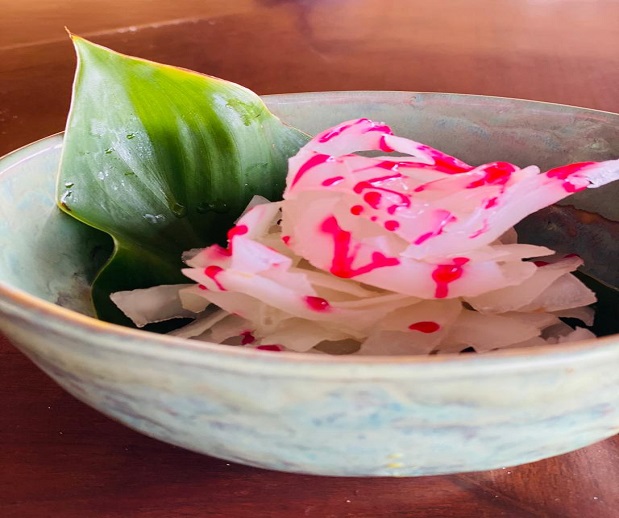
In Portuguese, Teias De Aranhas refers to ‘cobwebs’ or ‘spider webs’. Known as Gons or Cocad in Konkani, it is a traditional Goan Christmas sweet. It is prepared with firm flesh from tender coconuts. And getting ones with the right kernel can be a challenge!
Quick and easy to make with just three ingredients — tender coconut, water, and sugar — Teias De Aranhas is delicious with the goodness of coconut.
The kernels are scooped out from the coconut, with any brown skin peeled off. Then, it is cut into thin strips, and kept in water to prevent the strips from turning black. It is then drained and cooked in a dash of water until the liquid has been reduced. Sugar is added, which melts and thickens, coming to the centre with the sides of the pan starting to crystallize.
Working quickly with a couple of forks by spreading forkfuls of the mixture onto 12 cm square-sized tissue or buttered papers with edges cut in decorative patterns. Once the coconut clusters cool and harden, stored them in an airtight container. Preparing this sweet on low heat and taking it off the fire at the right time maintains its white colour or else, the mixture can turn brown.
Goan Doce (Doce de Grão)
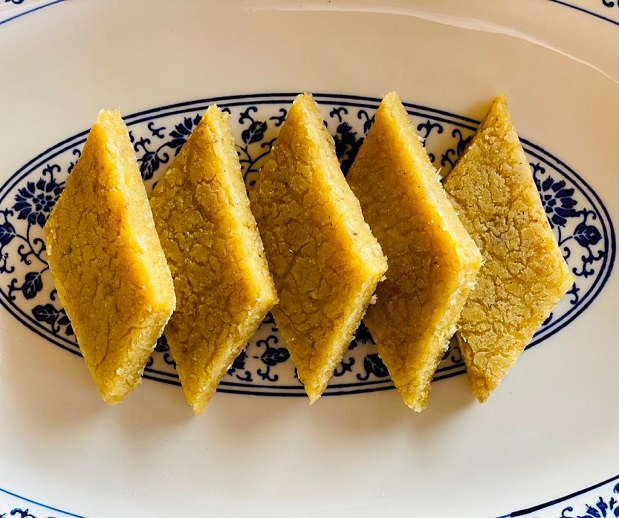
Doce means ‘sweet’ and grao is ‘grain’ in Portuguese. Goan Doce is a dessert that requires very few ingredients but a whole lot of patience and tremendous amount of stirring. The end result is a simple dessert that is utterly irresistible.
Doce is made during Christmas, for weddings, and other special occasions. It is also available in the local market throughout the year. This Goan fudge is made using chana dal (split Bengal gram), freshly grated coconut, and sugar, and flavoured with cardamom. It is quite a tedious and time-consuming dessert, but the results are so worth it!
Bebinca
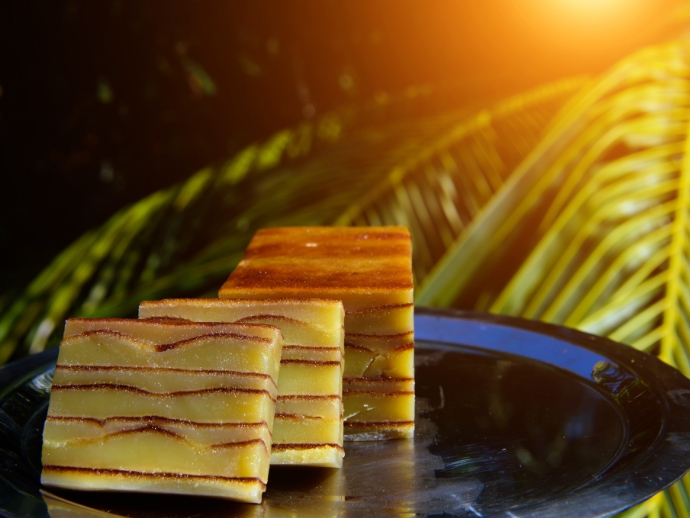
Also known as ‘bibik’, this Portuguese-influenced dessert is undisputedly the most popular delicacy in Goa. It makes special appearances at every occasion, be it a wedding, Christmas, or any other feast. This indeed has earned bebinca the sobriquet of ‘Queen of Goan Desserts’. However, its origin is still shrouded in mystery. Some legends claim that much like other confectionaries of the convent (doces conventuais in Portuguese), Bebinca was also invented by Portuguese nuns in the 17th century. But what stands out is their zero-waste baking approach.
Contrary to most baked foods that use egg whites, here the yolks have the limelight. Legend has it that bebinca came in to existence as a solution for leftover yolks. Prominent historian Fatima da Silva Gracias’ book, Cozinha de Goa: History and Tradition of Goan Food, states that one of these nuns from Santa Monica Convent was called Bebiana. She invented a seven-layered pudding using leftover yolks to symbolise the seven hills of the old city of Goa and Lisbon.
This pudding was then sent to the priests, possibly those living in the Convent of St Augustine — the Order to which Santa Monica belonged — who although impressed, pointed out that seven layers weren’t enough for them. They advised Bebiana to increase the dessert’s size to accommodate at least a dozen layers. Today, this pudding is known as Bebinca in her honour and boasts of seven to as many as 16 layers!
Pasteis de Nata
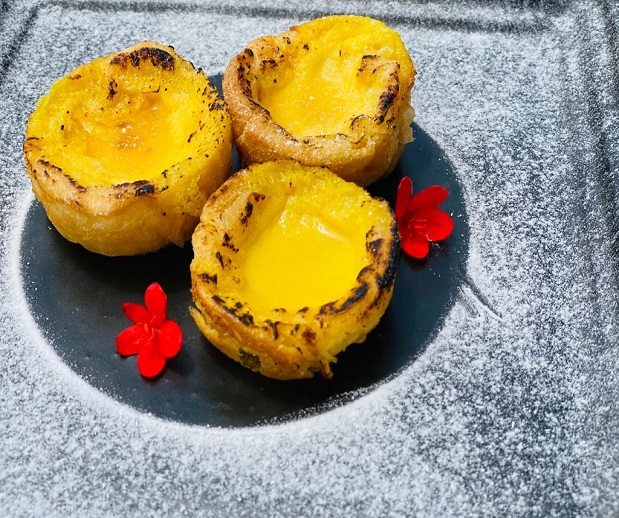
Pastéis de Nata is a Portuguese egg custard tart pastry dusted with cinnamon. It was created before the 18th-century by Catholic monks at the Hieronymites Monastery in the civil parish of Saint Mary of Bethlehem, in Lisbon. At the time, convents and monasteries used large quantities of egg whites for starching clothes, such as friars and nuns’ religious habits. It was quite common for monasteries and convents to use the leftover egg yolks to make cakes and pastries, resulting in the proliferation of sweet pastry recipes throughout the country.
Toucinho Do Ceu
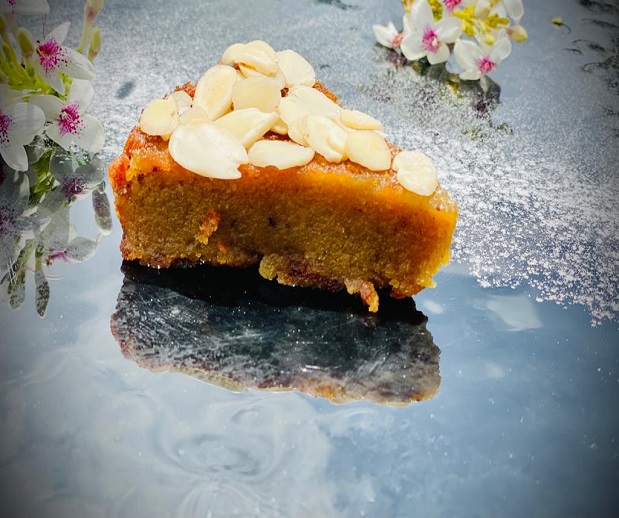
Toucinho Do Céu, translated literally as Bacon from Heaven, is a delicious Portuguese almond cake originating in the Guimarães region of Portugal. It is translated as Bacon from Heaven for two reasons: It uses pork lard to make the cake and it is unbelievably delicious!
It is one of the most popular and traditional Portuguese desserts typically seen at many restaurants. This is because of its unbelievable flavour despite its simplicity, making it an integral part of Portuguese desserts. The sweetness and amazing texture of the almond makes this cake a delectable treat for those with a sweet tooth.
Read more: