
Heritage and colour, generosity and hospitality, food and culture… Patiala epitomises all these and more.
The only things I knew about Patiala before visiting the city were that it was a princely state and was famous for Patiala Peg, the song sung by Diljit Dosanjh. What I experienced was the warm hospitality of its people, their motto of living life full size, and a city that was rooted in culture.

Patiala’s penchant for palate-tickling food
Wishing to learn about the heritage of Patiala, I began my walk not with a monument or historical building but with a hearty breakfast of puri chole. After all, I was in Patiala, which is known for its food.
Pammi Purian Wala is a no-frills eatery started by brothers Pammi Singh and Parinder Singh. The eatery which was started almost three decades ago serves the puri chole with an accompaniment of kaddu ki sabji. This is made from white gourd and happens to be the crowd puller. As I devour another puri that has been fried in front of me in the kadai, a regular advises me to taste their samosa as well.
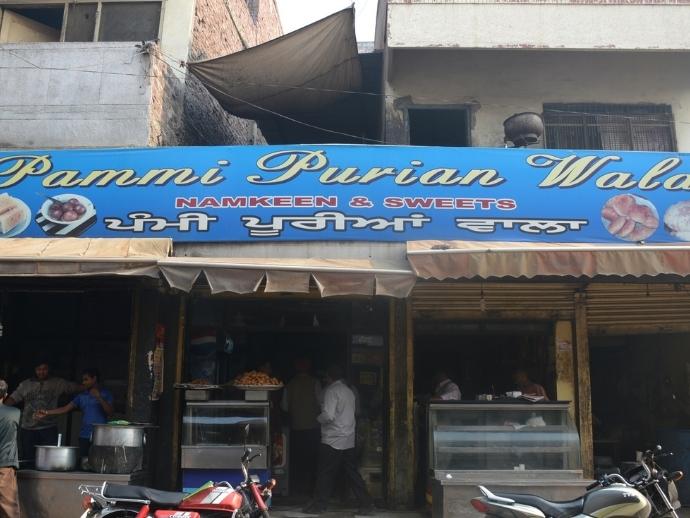
The samosa has a filling of paneer and peas. I pack some of Punjab’s famous desi ghee pinni where whole wheat flour, sugar, and loads of desi ghee is turned into this mouth-watering sweet that was traditionally sent along with the invitations for Punjabi weddings.
Of narrow lanes with havelis and heritage homes…
As I complain about overeating my delicious breakfast, a Punjabi laughs and tells me not to worry because in Patiala, everything gets digested. Putting it to the test, I walk to Haveliwala Mohalla which houses traditional havelis and heritage homes. Considered an elite area in its glorious days, narrow lanes are dotted with grand homes on either side. The doors are mostly carved from wood and painted in a combination of blue and grey.
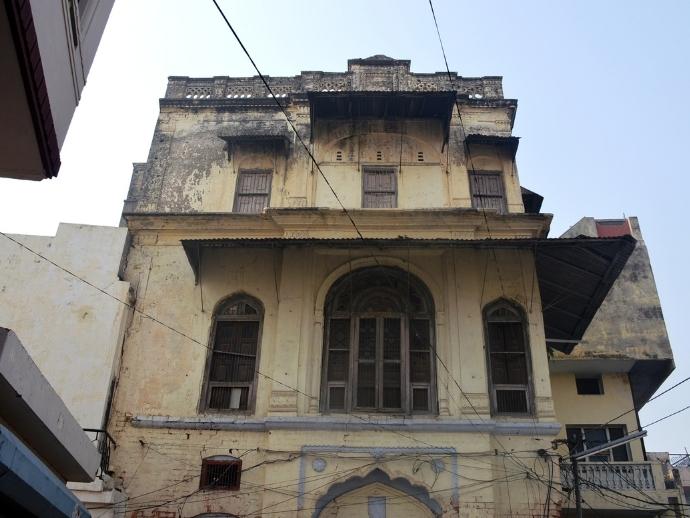
Some of the prominent ones belong to the royal astrologer Ram Kishan and Nanumal who was the prime minister of the Maharaja of Patiala. The home of Nanumal is special because he was given the privilege to build his house over the road, a rare honour indeed. The house is arch-shaped and was used for public hearings. The only other personality who got this permission was Diwan Magniram. Jagannath Kaushal, the former Union Law Minister also has a home in this neighbourhood. I pass by a Jain school and admire the chajjas that are carved in some of the havelis.
The shimmer and shine of Bartan Bazaar
The sight of utensils of various shapes and sizes is enough to let me know that I have strolled into Bartan bazaar or the utensils market. If steel vessels were prominently displayed in the shops, then brass vessels had their own place on the shelves. Bartan bazaar is the go-to place if you need utensils for any occasion. I walked into a shop to choose a gleaming stainless-steel glass for lassi — these glasses easily accommodate anywhere between half a litre to a litre of lassi. The customer next to me had recently moved to Patiala from Chennai and had a big list of vessels to buy as she was setting up a new kitchen in the city.
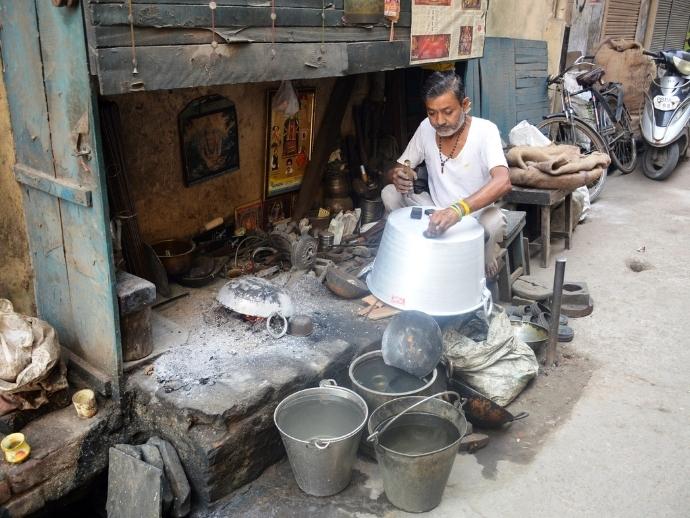
A traditional craft that can be observed at the market is Kalai. It involves giving a metallic coating to utensils made of brass or copper. I saw a kalaiwala in action and when I asked him what the purpose of the coating was, he replied in Punjabi that it served not one but two purposes: The metallic coating retained the shine of the vessels as well as reduced their wear and tear when they are subjected to heat.
Patiala’s phulkari and parandis
The lanes leading from Bartan Bazaar open to shops that are a delightful riot of colour. They are selling phulkari, which is a folk embroidery of Punjab. This home-made craft was worn by Punjabi women during marriages and other special occasions. Today it makes for a vibrant style statement. The most expensive kind of phulkari is bagh and it is so intricately embroidered that its base cloth is not visible. It can take a couple of months to hand embroider a bagh.
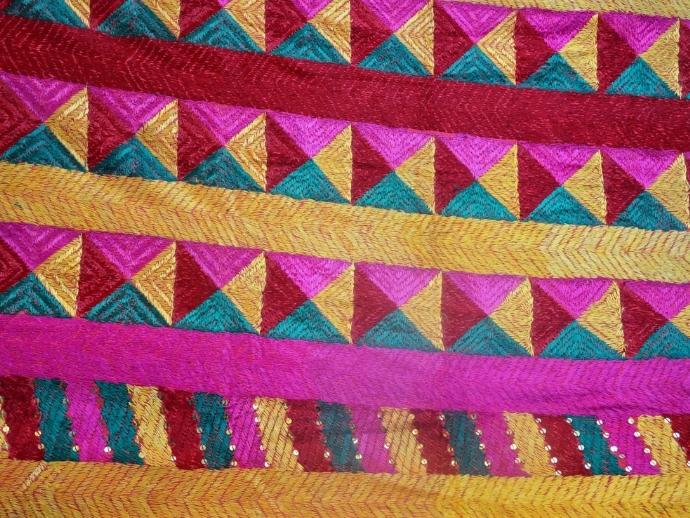
The most popular colour is red because it signifies auspiciousness. Other well-liked colours are blue, yellow, orange, pink, and green while flower motifs are the common designs created. While silk is the most popular thread used, on occasion cotton and wool have also found their way into the craft. The darning stitch is used to turn dupattas and bed sheets into colourful works of art with stunning geometrical designs. Bollywood movies have showcased quite a few of its leading ladies in phulkari dupattas.
Another colourful accessory that is sold in Patiala is the paranda or parandi. This is a hair accessory that is attached to braids and has been the subject of quite a few Punjabi songs. Made from colourful silk threads, it is entwined with hair and mostly worn with salwar kameezes.
Of embroidered and colourful footwear…
Punjab is the land of colour and this reflects in the footwear of the state as well. At jutti bazaar, there are plenty of shops selling juttis that line their shelves. Even if you visit a single shop you get to see various kinds. Comfortable to walk in because they have a flat sole, the footwear has no demarcation between the feet so one can wear a jutti in either foot and it will still look gorgeous.
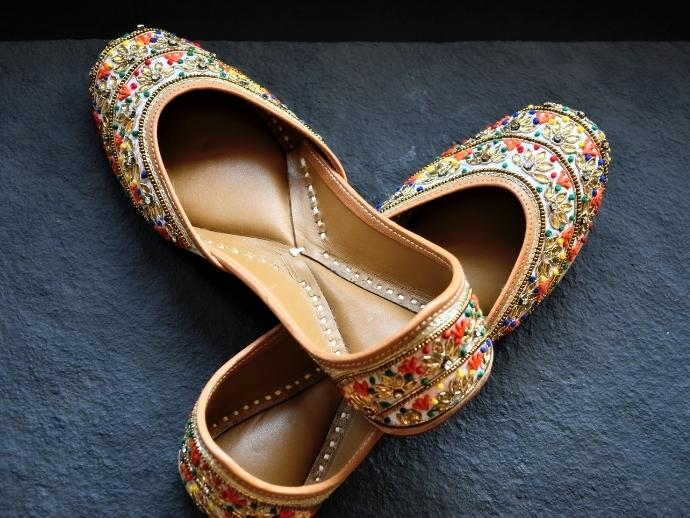
I was awed by the elaborate embroidery done on leather and it took me some time to decide which juttis to buy as souvenirs. Even today, one of those juttis embroidered in multi hues of colour gets me compliments when I wear it with a salwar kameez. In the olden days, gold and silver thread was used for embroidering this footwear for the royal family. At that time, it was considered a mark of wealth.
Over the years, juttis became accessible to everyone. I saw juttis bedecked with beads and sequins along with being embroidered. This handmade craft takes decades of expertise to create and involves the handiwork of work specialized people like tanners, dyers, and cobblers. Some of the types of jutti are tilla, Lahori, Peshawari, and kasoori jutti.
Read more.
Indian Classic: Meethe chawal
TD Travelista: Planning your wardrobe for a destination wedding
Dal Pakwaan: The genius of simplicity