
Everyone’s been to Allapuzha and loved the Kerala backwaters. Now, why not try a cruise on the Konaseema backwaters in the East Godavari district, that dances to its own rhythm of river life, interesting cultural beats, and unique cuisine?

Konaseema, a group of islands between the tributaries of the river Godavari and the Bay of Bengal, are located in the Konaseema district of Andhra Pradesh in southern India. Our coastal sojourn of the state started from Dindi, a picturesque location nestling on the banks of the mighty river.
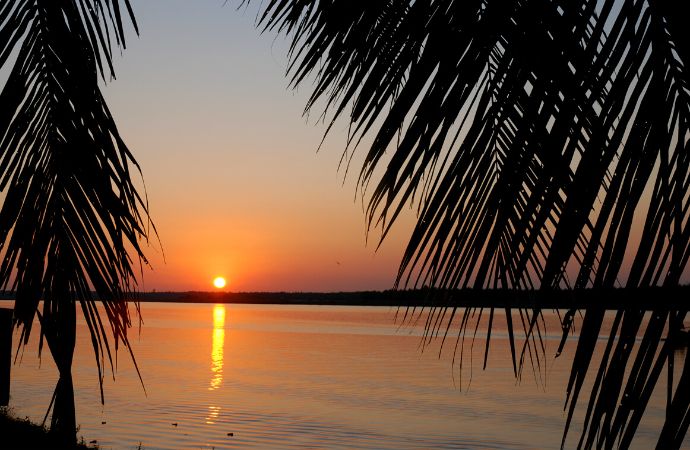
As we drifted down the Godavari, the scenic charm of the magical green land she nurtures unfolded before us. We glided past coconut groves, mangroves, hamlets, and a patchwork of bucolic delights like lush paddy fields, towering bamboo clumps, water meadows, fish traps, banana plantations and hyacinth-filled fishponds.

Journey down the Godavari
It was an incredible experience passing through the backwaters of Konaseema in the East Godavari district of Andhra Pradesh. What lent special enchantment and charm to the trip was the stunning scenery and the rich, vibrant cultural mélange of the region itself. We cruised past palm thatched hamlets, red tiled-roof cottages, tiny waterfront wood and stone temples, and had fleeting glimpses of the simple lives of the villagers living along the banks of the waterways. It conjured visions of the palm-fringed backwaters in Alleppey in God’s Own Country.
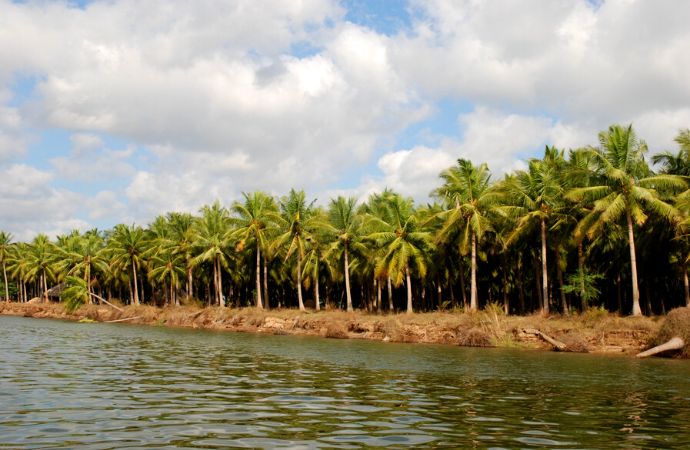
This lesser-explored territory of the scenic Konaseema delta, where the river meets the sea, is famed for its stunning scenery, ancient temples and colourful festivals. The mighty Godavari is the heart of Konaseema and everything here revolves around it, from lifestyle to religion to all industry.
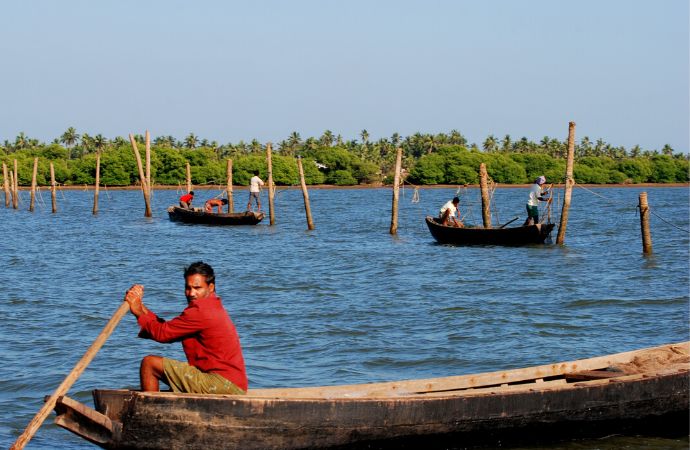
Konaseema in local parlance means ‘land’s corner’. The East Godavari district is also hailed as the rice bowl of Andhra Pradesh. As we drifted along, we saw myriad moods of the Godavari merging with the life of the denizens. The delta abounds in a plethora of waterside activities like fishing, shrimp fisheries and rice farming.
Myriad magical sights and sounds along the way
Fishermen casting their nets for a haul, and locals crossing the river with their bikes aboard boats are some of the common sights along the backwaters. We could hear, in the distance, priests chanting prayers, ringing of temple bells and the voices of the local residents, who bathe and worship on its banks. As we left the place, the constant drone of the motorboats ferrying tourists from the landings at the ghats, echoed afar.
This small patch of coastal Andhra Pradesh, part of the Godavari delta, the triangle between the tributaries Gautami and Vashishta, is a particularly fertile tract. As the boat headed downstream, we savoured the beauty of the unhurried, quaint rural life on the banks. Our boat cruised past the Coringa mangroves lining the banks of the Tulya and Athreya, both tributaries of the Godavari, which together are said to form the second largest delta in India after the Sunderbans.
The mangroves are an ornithologist’s haven. Lazing in the boat, we were held spellbound by the antics of the avian species of Konaseema such as kingfishers, storks, egrets, as well as shoals of fish flipping momentarily out of the river. After a 10 kms ride, we reached Narasapur, where a multitude of villagers were waiting to be ferried across.

The place where the river Vashishta pours into the ocean is not far from Narasapur. The boat does not enter the sea as the river widens and becomes shallow. Instead, it anchors at Antarvedi on the left bank. Fishing trawlers, boats with their hauls of fish, and small motorised ferries loomed into view as we docked.

Exploring Antarvedi
We tarried at the coastal temple town of Antarvedi (just 20 kms from Dindi), which is a mandatory stop on the river cruise. The Antarvedi Narasimha Temple, also popularly known as ‘Dakshina Kashi’ is a celebrated pilgrimage site, while the place where the Godavari meets the Bay of Bengal is called Sapta Sagara Sangam Pradesham. The legend goes that Antarvedi is the spot where Sage Vashishta consecrated the shrine in honour of Lord Narasimha. The brightly painted entrance tower of the Narasimhaswamy Temple, visible along the sides, is striking.
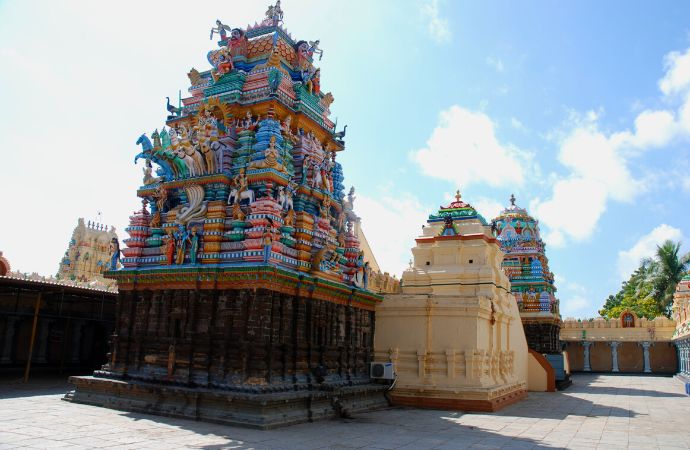
Pilgrims visit the Lakshmi Narayana Temple from February to March to attend the wedding festival of the god in large numbers. According to local legend, Narasimha manifested himself in an anthill, where the existing stone image of the deity was discovered. This was originally kept in a shed and installed in the temple, which was erected around the spot in 1823.
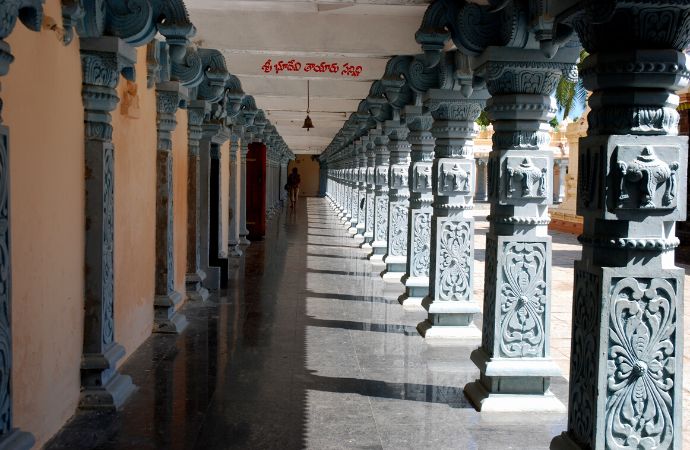
A unique feature of the temple (apart from its wonderful stucco work architecture and vibrant colours), is that, on the day of the Ratha Sapthami (usually in January or February), the rays of the setting sun fall on the feet of the deity. Pilgrims flock to the temple to witness this amazing sight. The nearby Vashishta Ashram is worth visiting too. The common belief is that the water around the area tastes sweet and is marked as a sacred bathing spot since the temple is at the confluence.
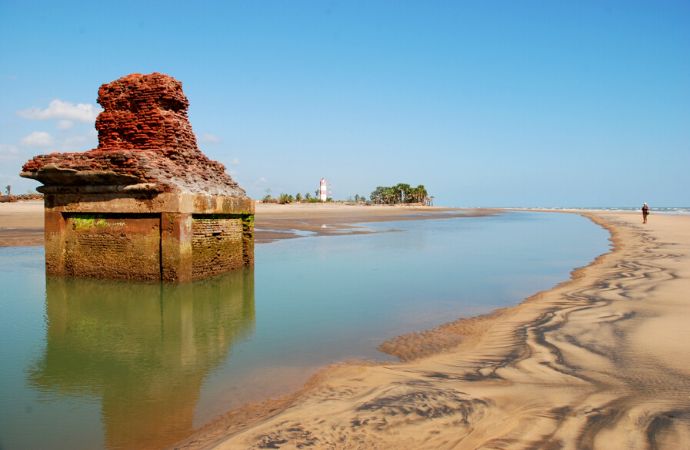
After the temple break, we headed towards Antarvedi Beach, which is claimed to be one of the best along Andhra Pradesh’s coastline. As we strolled on the desolate, windswept beach, we came across not footprints on the sands of time, but black patterns left behind by the waves. The new lighthouse is just a hop away from the ruins of the old one which extends into the sea. We clambered up its seven floors to get a bird’s-eye view of the patchwork of fields and fishing vessels surrounding it.
Culinary adventures in Konaseema
Food is an integral part of travel, and we found the cuisine of the Godavari belt as impressive as the scenic beauty of the place. We sampled the spicy pesarattu, a moong dal dosa, the chinta chiguru pappu, a Konaseema special dal specialty which is made of green tender leaves of the chinta (tamarind) tree. For aroma and flavour, a tempering of garlic, asafoetida, mustard, and fenugreek is usually added.
We relished the Pulasa fish, the region’s culinary delight cooked in a tangy sauce or ‘Pulasu’. A rare seasonal fish found only in some parts of the Godavari backwaters, it is akin to the hilsa that Bengalis swear by. As a local saying goes, ‘Pulasa’ must be had in your lifetime even if it means that you have to sell your valuables, even your gold chains!
Another local delicacy which we relished was cashew fruits cooked in a rich gravy of onions. We culminated our backwater trip with an Andhra thali served with various varieties of fish and rounded off with Putharekalu, (a local delicacy wrapped in a wafer- thin rich starch layer resembling paper and stuffed with jaggery, ghee and dry fruits).
Good to know
Nearest airport: Rajahmundry (80 kms away) | Nearest railhead: Narasapur (15 kms away) | By road: It is well connected with important towns like Rajahmundry and Vijayawada | Where to stay: APTDC runs the Haritha Coconut County Resort in Dindi. The Konaseema group runs Konaseema Resorts. The Sarovar group runs the RVR Sarovar Portico Resort in Dindi. Sterling Palavalli. There are also houseboats which can be booked for 12-hour stays.
Read more.
Embark on the world’s longest river cruise journey with Antara Cruises
10 floating hotels for an epic on-sea/river/lake experience
Get ready to set sail in Kochi backwaters with Classic Imperial!