
Is it an art, is it a craft? We take a close look at the living heritage of papier-mâché, its origins in the past, how it shapes the present-day lives of the people who create it, and what its future holds.
We drive into an industrial estate in old Srinagar. Before this, we were unable to enter this part of the old city on two occasions due to security concerns. But we try again and are third-time lucky. Thanks to aari embroidery artisan Sajad Dar, who is also a coordinator for an organisation called Commitment to Kashmir (CtoK), we manage to reach the source of some of the most beautiful objets d’art in the valley. It is the home of a cultured gentleman — Hakim Ghulam Mohammad — a master artist who specialises in papier-mâché painting.
Over sips of the most delicious saffron-laced kahwa made by his graceful daughter, Mohammad explains the process. The creation of the basic shape using wastepaper that is soaked and mashed into pulp is called Sakhtsazi. The intricate hand-painting in nature-inspired patterns that brings vibrancy and richness to each piece is Naqashi. That such gloriously decorative pieces can be created from mere pulped wastepaper is a revelation. Upcycling has become such a fashionable watchword today, but this art, which originated in China where helmets were crafted from it as early as AD 200, already had sustainability at its heart!

Mohammad sells his products via exhibitions and NGOs such as CtoK, which help artisans gain access to new markets. Post the pandemic, the market has all but disappeared and he is struggling to exhaust his inventory while working on customised orders for a few big showrooms. He says, “If you’re a good artist or craftsman, you don’t have to chase customers. People do come to you. But when the situation here deteriorates, then the artisans have a tough time.” He speaks about how government loans and subsidies don’t really reach the artisans, who often drown in debt. “What is sad is that very few young people want to learn this art, as they see that we don’t get much support. There was a time when we could build a home or fund a child’s wedding on this income, but that’s not the case anymore,” he shakes his head ruefully.

How papier-mâché came to India
The irony is that papier-mâché was originally introduced into and popularised in Kashmir as a way of uplifting the poor by providing them a craft to master. Historian Ishtiaq Hussain Mir helps guests at the newly opened art and cultural centre called Artisane, located at Batpora on the road between Srinagar and Gulmarg, to understand the nuances of various Kashmiri crafts. We ask him to tell us how papier-mâché came to the region.
Mir says, “The story goes that between 1365 and 1383 AD, a Persian mystic and reformer by the name of Mir Syed Ali Hamadani visited the valley three times, and later sent his son as well, migrating with 700 skilled artisans. While Hamadani preached Islam through love and is greatly revered by Kashmiris even today, his followers sowed the seeds of their talent and technique too.”
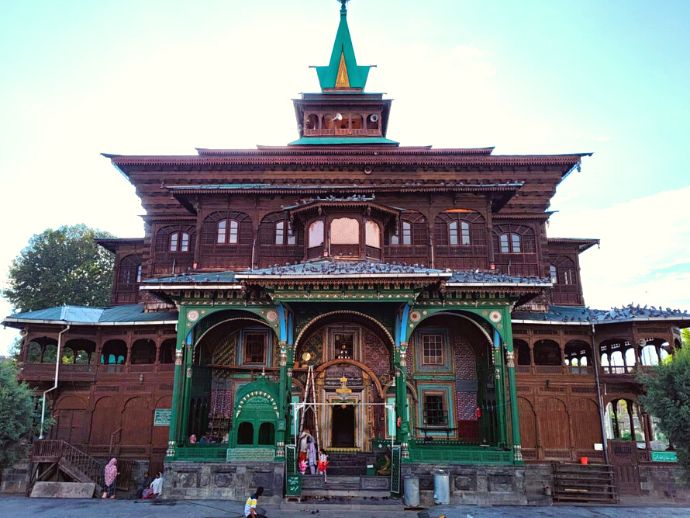

In fact, Sultan Sikander built the famous Shah-e-Hamadan shrine in 1395 AD in memory of the Sufi saint from Western Iran. Nisar Malik, Srinagar city expert, who is giving us a tour of downtown Srinagar, points to the impressive edifice, saying, “The shrine is an interesting piece of art, with wooden architecture, ceilings and walls decorated with intricate papier-mâché. Even after three fires and rebuilt many times, the most recent structure erected in 1731 AD has some stunning work that you can see when you visit.”
Malik, who conducts these immersive tours for fortunate guests of the ABChapri Retreats-owned Sukoon Houseboat and the new Qayaam Gah, narrates, “Sikander’s son Zain-ul-Abidin, the eighth sultan of Kashmir who brought in a golden age of religious tolerance and support of the arts, music, and literature, actively encouraged papier-mâché as well as other handicrafts such as shawl and carpet weaving, walnut wood carving, copperware, etc. crafts which Kashmir is still renowned for today.” They say that he was enchanted by the beauty of these when he saw them in Samarkand in Central Asia and thought them a worthwhile addition to the Kashmiri way of life.

The universal appeal of papier-mâché
While papier-mâché was initially used mainly for making pen cases (earning it the sobriquet of ‘kar-i-qulamdan’), it gained even greater popularity during the Mughal rule and found favour as household furniture and palanquins too. At around the same time, it was gaining ascendance in Europe as well, used for stagecoach doors and dolls’ heads, among many other objects.

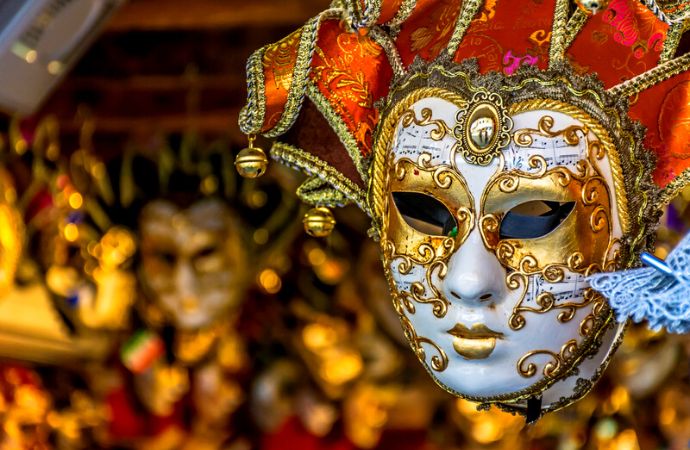
Rumour has it that the name itself came from France, where the employees of a papier-mâché factory had to literally ‘chew paper’ to create the pulp required in bulk! While that may just be an urban legend, the fact remains that this was a valued technique used across the world then, perfect for lightweight canoes, observatory domes, and even guns! And, although the invention of plastic has seen it replaced in many functions, it’s still in widespread use now for things such as stage props, puppets, masquerade masks in Venice, Italy, and cartonería piñatas in Oaxaca, Mexico.
Of the many shops in Srinagar that deal in papier-mâché merchandise, Suffering Moses is perhaps the most famous. Mohamed Sadiq Wani, whose great-grandfather started the enterprise in 1840 AD, employs several skilled artisans to create the handmade products in the right way.
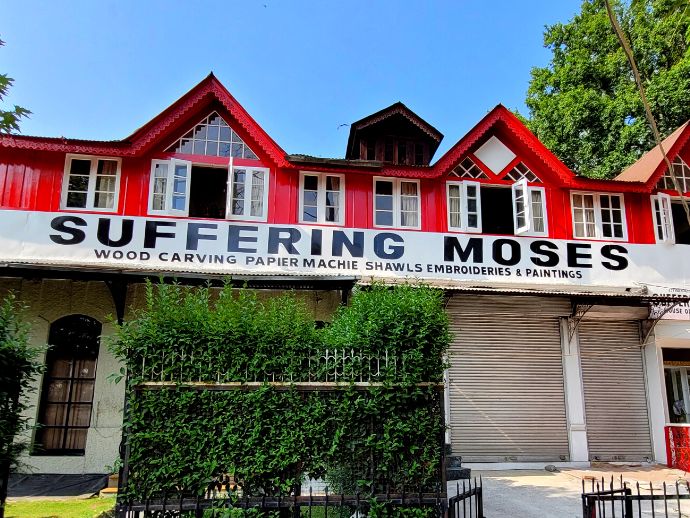
But he observes that it is becoming more and more difficult to get the high-quality work that he wants, as the older artisans are retiring, and the youth is not interested in pursuing this painstaking profession. “In fact, a senior British army officer who saw how much labour goes into it quipped that my great-grandfather was ‘a suffering Moses’, and that’s how the name of the shop came about,” he chuckles wryly. The art needs to gain ground as a more lucrative and prestigious option for it to attract youngsters to learn it.
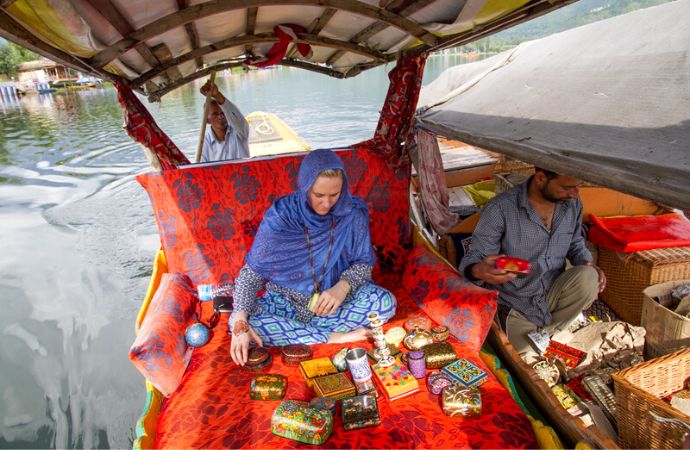
What lies ahead…
In an effort to preserve the art of Kashmiri papier-mâché and try to pique the interest of the next generation, the government has protected it under the Geographic Indication Act 1999 and included it as a subject in the school curriculum.
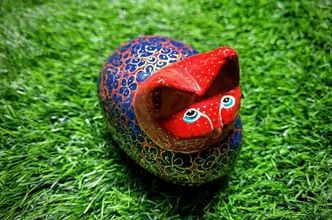
With quite a lot of demand for papier-mâché from foreign countries already in existence, there is scope to revive this dying art and give it even more visibility by promoting it in domestic as well as international markets.
NGOs too work to bridge the gap and to handhold artisans by providing them capacity building and skill development tools, financial support, marketing aid, as well as insights into colours and designs that appeal to the contemporary consumer.
According to Shruti Jagota, Project Director, CtoK, and co-founder of Zaina by CtoK (the website via which the products are available), “Today, there are about 1,000 papier-mâché artisans in the valley, 80 per cent of whom are men. As a craft, it contributes about four per cent of the total value of handicrafts exported from the valley.” She explains that CtoK works with eight papier-mâché artisan-entrepreneurs/ workshop heads in the valley, which in turn work with about 100 artisans. CtoK also plans to market experiential tours of artisan workshops so that visitors to the valley can get a deeper understanding of the ancient craft.
There’s hope yet that this wonderful art form — which ties in so organically into the world’s search for the sustainable and the handmade — will survive, and perhaps even thrive.

Read more.
Seeking the sublime in Srinagar? Stay at Qayaam Gah
The Pashmina Trail: Weaving tales of glory
This little artist village in Odisha is the keeper of a 12th-century legacy