
India is not only catching up with the bar and cocktail cultures in Singapore, Hong Kong, and Japan but also driving the major trends, believes Devender Sehgal, one of India’s finest exports to the mixology world.
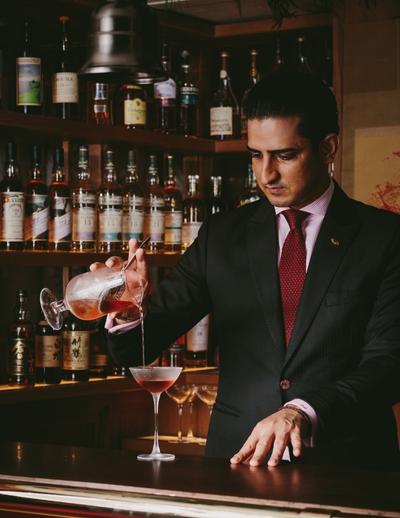
Currently, Devender Sehgal is the Beverage Manager at Mandarin Oriental, Hong Kong where his attention at The Aubrey is on the Japanese spirit — Shochu. He has been fascinated with Japanese Shochu for some time now. In a candid chat, he shares his thoughts on the latest bar industry trends and talks about his journey from the by-lanes of Delhi to the high rises of Hong Kong.
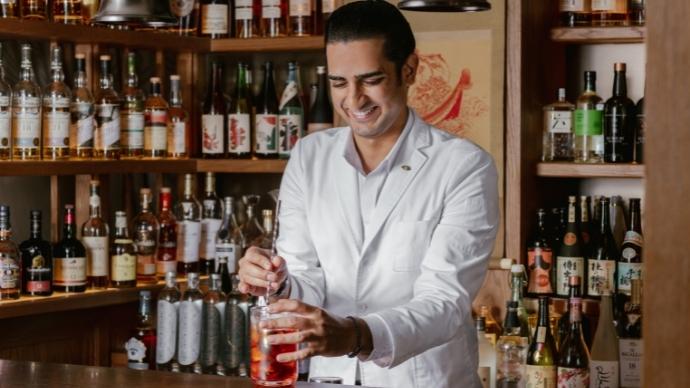
“In recent years, we have started to see Shochu appear overseas more and more, whereas previously it was consumed only in Japan. A spirit with almost 500 years of history is slowly starting to be celebrated and explored in cocktail menus around Asia and the US.” He adds that it is promising to see a spirit that doesn’t fall into the category of vodka, rum, or whisky gaining popularity, as there are no boundaries when it comes to making them.
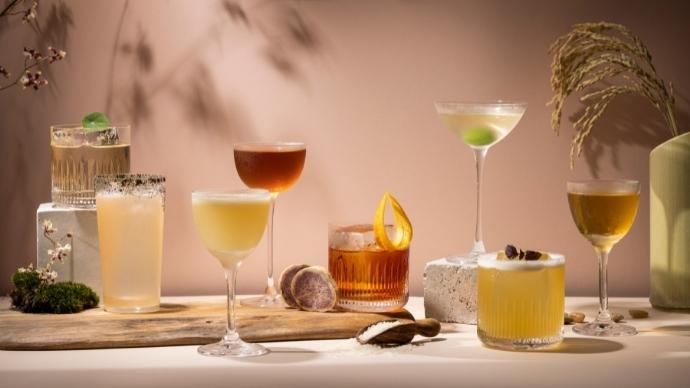
His two current favourite cocktails are Harmony and Mizu No Kuni at The Aubrey, a resto-bar at Mandarin Oriental that provides an authentic Japanese Izakaya experience. Harmony — a combination of Sweet Potato Shochu from Kagoshima and Sauvignon Blanc juice from France — is combined with a bit of citric acid solution to balance out the sweetness and the whole drink is carbonated before it appears in the glass with a nasturtium leaf on top. The guest must eat the leaf first before they sip. This nasturtium leaf reminds one of radish with a bit of pleasant spiciness followed by the gentle sweetness from the drink.
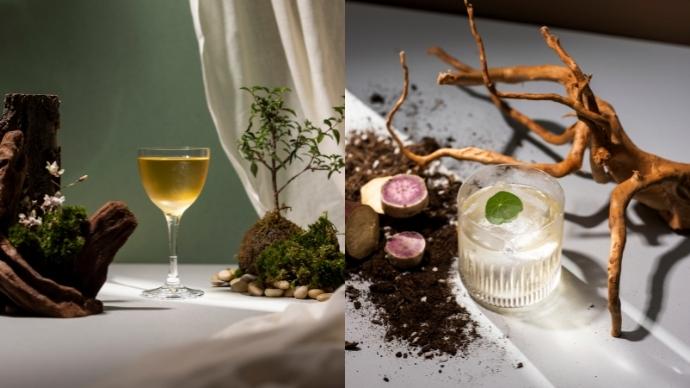
Mizu No Kuni is inspired by the Kumamoto prefecture and its Shochu. It is made with Rice Shochu called Torikai which is made with Gohyakumangoku sake rice and distilled. “It is a beautiful expression of Rice Shochu. The drink contains Torikai Rice Shochu, Banana, Sherry, and Sweet Potato Shochu that is infused with jasmine tea. Our bar programme is focussed on Japanese spirits which includes Shochu, various kinds of Awamori, and so on. At the moment, we have over 40 brands of Umeshu, Awamori, and Shochu and the list is only increasing.”
According to Sehgal, the most effective bar programme is the one that understands the market, availability of a product, and produce. “I think a good bar should have a strong identity and idea of who they are as an establishment, rather than simply being like another opening around the corner. Education plays a big role. Having a well-trained team can be as simple as making a different version of Highballs but the devil is in the details from the Highball glassware, the ice, the kind of soda water, to what kind of whisky is used in it. It should all be on point, to where everything has a reason to be present in the glass.
“Details go a long way and everything is noticed. With bars like COA where they focus on Mezcal, they not only focus on the cocktails but the ingredients, and they are very specific about the brand that goes into them and they make sure it is consistent so that the taste doesn’t change too much whenever you are making it through the year.”
Speaking about techniques in cocktail making, Sehgal says that it is moving from the kitchen to the bar. Some of the bars that we visit today probably have a lab in the back of their bar or have a separate room where they develop flavours and ideas. “I think things will remain more technique driven in more Western parts of the world, whereas some countries like Japan will always focus on craft over anything,” he says.
While being raised in New Delhi, Sehgal grew up with a lack of interest in any sort of conventional education. Beginning his adulthood as a motor mechanic on the streets of Tilak Nagar, bartending happened to him accidentally. After working at the mechanics’ store for about nine months he started learning how to flair and later joined a company which was run by his cousin who gave him his first gig at a bar back in New Delhi. From a humble background in a few years, he rose to become one of the most sought-after faces in the bar industry in Asia.
He admits that his bumpy career path can teach little to aspiring bartenders. But he advises that one must take time to explore things around, and stay open-minded. “I found my passion accidentally. Now I love my work so much that I don’t ever want to look back. The young generation must grab every opportunity to explore different industries to find that spark, the reason to wake up every morning, go to work, and give their best. The other thing that I would like to recommend to aspiring bartenders is that although practical knowledge is important, it is equally important to have theoretical knowledge.”
“Evaluating my work against some of the industry leaders in different fields has also offered me a different perspective towards how I perceive my work,” adds Sehgal.
What does he think of the cocktail culture in India? “We aren’t far away from catching up with more developed places when it comes to bar and cocktail cultures like Singapore, Hong Kong, and Japan. Singapore’s cocktail scene has developed incredibly over the last 10 years, starting with Manhattan Bar, Tipping Club, and 28 Hong Kong Street, which contributed to this development. I remember when I arrived in Hong Kong eight years ago, there were only a few bars where you could get a decent drink. Now Hong Kong is a hub for not only some of the best bars in Asia but also home to two of Asia’s top three bars, COA and Argo.”
“The same is the case with India,” Sehgal elaborates, “In 10 years, we have cocktail bars like Cocktail and Dreams, and The Bombay Canteen with a solid food and cocktail programme, Sidecar is an award-winning bar at par with some of the finest bars in Asia. Bar Tesouro from Goa came as a pleasant surprise as a direct entry at #4 on Asia’s 50 Best Bars this year, as no bar from India has ever ranked this high and not to mention in its first entry. Asia’s 50 Best is a great recognition as it showcases that Indian bars and bartenders are pushing boundaries by exploring local flavours. We need to keep experimenting and in the meanwhile grow the community together.”
Sehgal thinks that India is driving the major trends in cocktail culture at the moment. “I have seen massive growth in terms of ideation, the level of hospitality, and drinks programmes. Besides India, I think Taiwan delivers well-made cocktails and great hospitality.”
Lastly, addressing the pandemic-induced changes in the bar industry, he says, “Sustainability is at the centre of our bar programme. We are reducing our carbon footprint by sourcing products locally as much as possible, and working on smart packaging with suppliers. We are also focussed on waste management, reduction of waste, and finding ways to eliminate non-recyclable items, eliminating single-use plastic, etc. Staff is volunteering to support local communities. Mandarin Oriental emphasises sourcing 100 percent sustainable certified agricultural commodities.”

Read more.
Tipple Tales: A week in Guadeloupe, the heartland of Rhum Agricole