
On July 4, America will celebrate its 246th anniversary of the adoption of the Declaration of Independence. It’s also the perfect time to remember and retrace the food/drink footprints of the country’s Founding Fathers; which included George Washington, Thomas Jefferson, and James Madison.
Date: September 14, 1787.
Place: City Tavern (Philadelphia), opened in 1773. During the American Revolution, it became a regular gathering spot for George Washington, John Adams and Thomas Jefferson.
Occasion: Framers’ Farewell Dinner for George Washington. That day, the menu for 55 gentlemen, 16 musicians and servants included 54 bottles of Madeira, 60 of Clairet, and 22 bottles of Porter, olives, punch, and cyder.
The bill: 89 pounds, 4 shillings and 2 pence (about $16,000 in current dollar terms).
Until recently, one could walk into City Tavern, eat what the Founding Fathers loved and hear tales of the Farewell party. I remember sitting in the dimly-lit tavern a few years ago and learning all about the wine that was sipped and the staple pea soup.
Sadly, the City Tavern is now closed, though rumours of its reopening linger. However, fret not, for one can still follow the footprints of the Founding Fathers through the taverns, vineyards and kitchens in their ornate, luxurious homes.
George Washington’s Estate in Mount Vernon (Virginia)
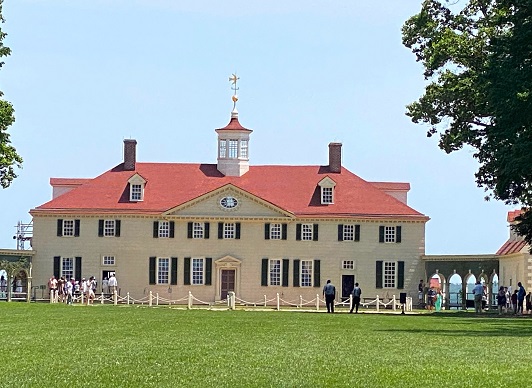
Located about 15 miles south of Washington, D.C. and 8 miles south of Alexandria, Mount Vernon was the plantation home of Martha and George Washington. It had 4 gardens, a salt room, a fish room and an entourage of 600 slaves who kept the hearth burning. George Washington, a keen gardener, oversaw most aspects of managing the pleasure grounds. Meanwhile, Martha Washington oversaw the kitchen garden, allowing her to keep fruits and vegetables on the table year-round.

Washington made many references to the botanical garden during his lifetime, often referring to it as ‘the little garden by the salt house’. Large quantities of salt seasonally imported from England, Portugal, and the Caribbean were stored in the aforementioned Salt House.
You can tour the Mount Vernon estate, but separate tickets are required to tour the house.
Gadsby’s Tavern (Alexandria, Virginia)

Named for Englishman John Gadsby who operated the tavern from 1796 to 1808, this was the favourite watering hole for George and Martha Washington, Thomas Jefferson, and the Marquis de Lafayette. The biggest event here was the Birthnight Ball, which is also when George Washington celebrated his birthday in 1798 and 1799.
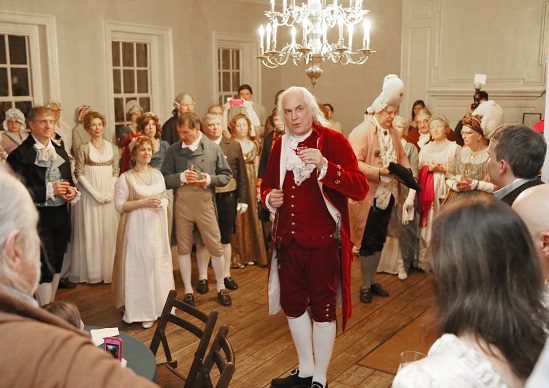
The menu still follows the old English spellings (Soop & Sallads); with traditional favourites being the Meatloaf a la Daube, Thyme roasted half chicken, Vegetable pastry and George Washington’s Favourite. It’s actually called that, the dish being roasted half duck with corn pudding, roasted potatoes, rhotekraut and a cherry orange glaze.
You can visit the Gadsby’s Tavern Museum which displays everything from ceramics to furniture. Each object speaks of the evolution of hospitality in the 18th and 19th centuries. Do not miss the Ice Well that was built in 1792 and supplied ice to the tavern.
George Washington’s Distillery (Virginia)

George Washington began commercial distilling in 1797 at the urging of his Scottish farm manager, James Anderson. The latter had experience distilling grain in Scotland and Virginia. Construction began in October of 1797, with a stone still house that measured 75 x 30 feet (2,250 square feet), one of the largest in the country.
Washington’s Distillery operated five copper pot stills for 12 months a year. In 1799, they produced almost 11,000 gallons of whiskey, valued at $7,500 (approximately $120,000 today).
You can do a tour of Washington’s Distillery and buy aged and unaged whiskey as well as brandy and rum.
Monticello: Thomas Jefferson’s home (Virginia)
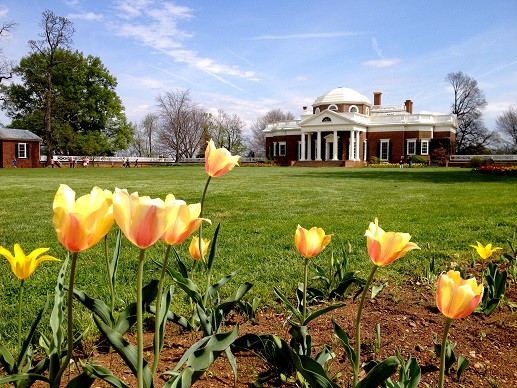
Thomas Jefferson’s passion for French cuisine earned him the title of ‘Founding Foodie’. In Monticello, his home in Charlottesville, Virginia, the kitchen was housed in the basement. Archaeologists have discovered the original kitchen fireplace, along with evidence of a crane to suspend iron cooking pots, a bake oven, at least two generations of kitchen counters or ‘dressers’, and most importantly, two generations of stew stoves.

The stoves – potagers in French – are the key physical traces of Jefferson’s engagement with French cuisine.
Jefferson’s design dates to the late 1760s and features a five-burner stew stove. It’s also indicative of his early interest in French cooking. Enslaved cook Ursula Granger may have used this stove to prepare French-influenced recipes. These were found in the most popular English-language cookbook of the 18th century; Hannah Glasse’s The Art of Cookery, which Jefferson owned.
There’s plaster preserved evidence of enough built-in shelving to accommodate dozens of state-of-the-art copper pots and pans that Jefferson purchased in Paris.
You can book tickets for the tour at: www.monticello.org
James Madison: Dinner for the Madisons at Montpelier (Virginia)

Dinners at Montpelier, James Madison’s (4th president of the United States) house in Orange County, Virginia, featured bountiful Virginia fare prepared and served in an elegant French style. However, the success of these meals rested squarely on the shoulders of a team of enslaved workers who toiled long hours to prepare, set up, and serve the meals according to strict guidelines and protocols of the day.
You can visit Montpelier and watch ‘Dinner for the Madisons’, an installation in Montpelier’s dining room. Get details of the Montpelier tour at:www.montpelier.org
Revolutionary Ales by Yards Brewing Company (Philadelphia)

The Founding Fathers had pushed the daisies centuries ago when in the 1980s, two college buds Tom and Jon decided to brew some beer for their friends. That was the beginning of what was to become Yards Brewing Company. They created a series of ‘revolutionary’ ales that are considered ‘historical beers’. Why? Because they’re based on real recipes by the Founding Fathers.
Jefferson’s Golden Ale
Paying homage to Thomas Jefferson, this complex golden ale is a recreation of his recipe, employing flaked oats and maize. There’s also rye, wheat, and local honey from Fruitwood Orchards.
Poor Richard’s Spruce Ale
Based on Benjamin Franklin’s original recipe, this one-of-a-kind deep amber ale calls for barley, molasses and the essence of spruce. Locally sourced organic blue spruce clippings are steeped in a kettle to create an ale as approachable and engaging as the man himself.
Washington’s Porter
Detailed in a letter from the General to his officers during the war, George Washington’s recipe employed molasses to aid fermentation and give a rich caramel aroma to this robust, roasty ale. This Porter is dark, smooth and complex with just a hint of dried fruit in the finish.
More details on: www.yardsbrewing.com
Jefferson’s Vineyard (Virginia)
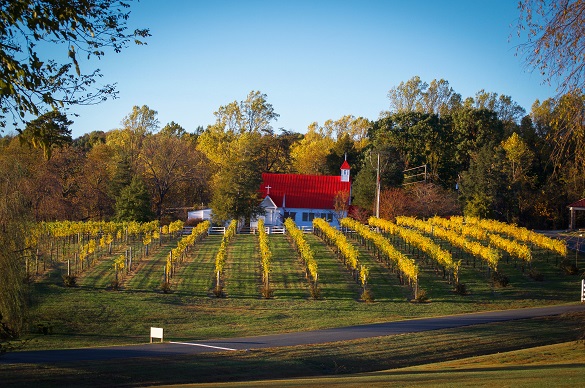
In what is now known as Jefferson’s Vineyard, Thomas Jefferson and Philip Mazzei grew grapes almost 250 years ago. Convinced by Benjamin Franklin and sponsored by Jefferson’s merchant friend Thomas Adams, Italian viticulturist Filippo Mazzei (or Philip Mazzei) set off to Virginia with European vines on September 2, 1773.
En route, Mazzei and Adams stopped at Monticello, where the former was convinced by Jefferson to become his neighbour. He then gave Mazzei 193 acres south of Monticello. The following year, Mazzei purchased an additional 281-acre tract of land from Edward Carter. In 1774, Jefferson encouraged Mazzei to form Virginia Wine Company. The company had 38 shareholders, including many prominent colonists such as Jefferson and George Washington.
A subscription of 2,000 pounds sterling was obtained for the “purpose of raising and making wine, oil, agruminous plants and silk.” Although a severe frost ruined many of the vines in 1774, years later Mazzei managed to produce two barrels of wine from six varieties of wild grapes.
Visit: www.jeffersonvineyards.com
Read more.
10 spots to add to your breakfast trail in Philadelphia
Check into the inspiring past at Philadelphia’s The Guild House