
Poets have waxed eloquent about it; authors have written reams on it; an entire populace swears by it. Meet Nolen Gur, the seasonal and artisanal jaggery that makes winter months sweet in Bengal.

If Bengal’s fugacious winter could be distilled into a syrupy essence, it would perhaps flow in a torrent of fragrant, caramel-hued Nolen Gur, the — strictly — seasonal, artisanal jaggery made by inspissating the sweet sap of wild date palm trees that abound in the region. While date palm jaggery or Khejurer Gur is produced and consumed throughout the winter months in Bengal, Nolen Gur — exquisite in taste and aroma — specifically refers to new jaggery made from sap harvested during the first few weeks of deep winter.
Earthy, woody, and slightly smoky, with whispers of floral and fruity notes, Nolen Gur — particularly its liquid variant called Jhola Gur, but also the solid, sticky Patali — is the crowning glory of Bengal’s winter pantry.
Nolen Gur, the sweetest of them all…
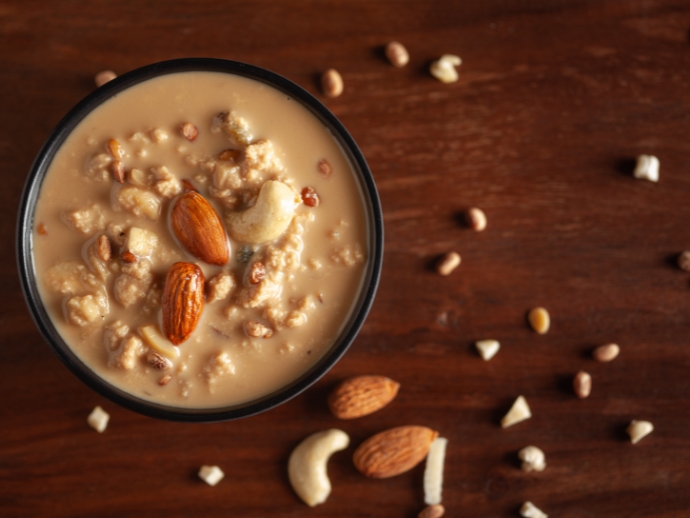
In Bengali homes, Nolen Gur is enthusiastically stirred into bubbling pots of creamy Chaal’er Payesh (milk and rice pudding), crumbled into rustic breakfast bowls of Doodh-Muri (puffed rice and milk), or cooked with freshly grated coconut, sesame seeds or puffed rice to make homely treats like Nadu, Moa, Takti, and Khando. Khando is a chewy treat painstakingly made by reducing Nolen Gur on a leisurely flame — along with freshly grated coconut — to a sticky, fudge-like mixture, which is then moulded into different shapes and patterns. An old folk song proclaims ‘Nolen gurer narkeler chhaach laage boro mitha…’ (Nolen gur and coconut set in moulds taste very sweet.)
At our home, the Jhola Gur is sometimes simmered with a few drops of ginger and splash of water and served warm at dinner time, to dunk our rotis or parathas in. Or, a chunk of Patali is crumbled on bashi (leftover) ruti that is first fried in ghee to a crisp, and eaten as a snack. The unprocessed sap or Khejurer Rawsh, clear and sweet, makes for a refreshing drink. Rabindranath Tagore’s niece Pragyasundari Devi’s iconic cookbook Amish o Niramish Ahaar also features a recipe for kheer sweetened with Khejurer Rawsh.
The sweet fragrance of winter with Nolen Gur
Bengal’s winter festivities too are flavoured with the earthy, fragrant sweetness of Nolen Gur. It is a crucial element in the eponymous dish prepared during the harvest festival of Nabanna, celebrated in the month of Agrahayana (November-December). Nabanna is a muddled mix of newly harvested rice, soaked and pounded, raw milk, chopped seasonal fruits like oranges and custard apple, grated coconut and soft, crumbly sandesh, a pinch of edible camphor, and the season’s fresh date palm jaggery.
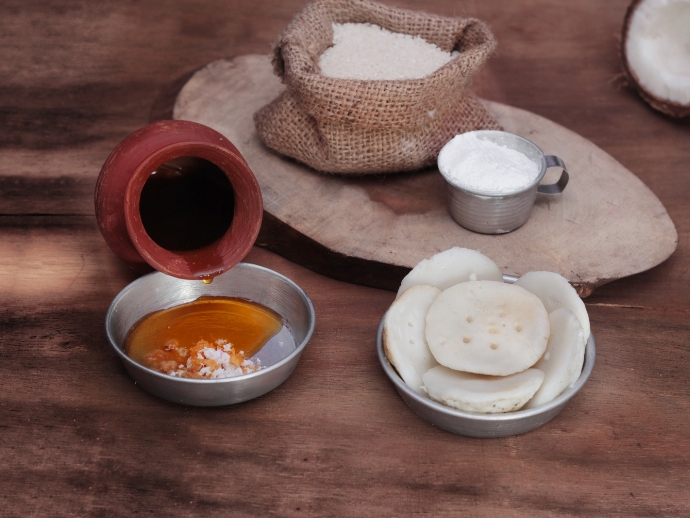
Again, during Makar Sankranti, called Poush Parbon in Bengal, a huge variety of sweet pitha (stuffed rice cakes and dumplings) and patishapta (crepes stuffed with jaggery laced coconut), made with newly harvested rice, moong dal, coconut, milk and khoya get their fragrant sweetness from nolen gur. So, the poet Sunirmal Basu wrote in the poem Poush Parbon, ‘Nolen gurer sourabhey aaj moshgul je bhitey/pithe pithe pithe’ (The home is consumed by the fragrance of nolen gur/pithe pithe pithe).
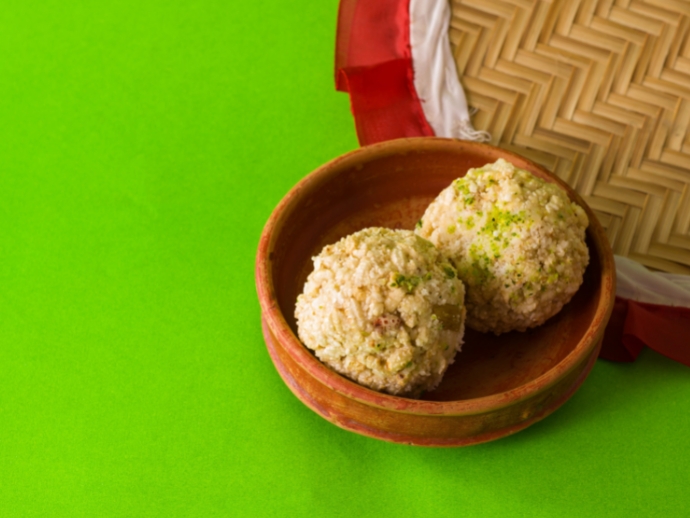
Additionally, there are quintessential winter specialties like the hyperlocal Joy Nagarer moa — an heirloom sweetmeat from the eponymous town in Bengal — made with popped Kanakchur rice, a folk rice variant, cashew nuts, raisins, along with khoya and fragrant Nolen Gur.
When all roads lead to Nolen Gur
Come Nolen Gur season, sweetshops in Kolkata and around Bengal go full throttle drumming up Nolen Gur-based sweetmeats to cater to an insatiable crowd of Nolen Gur lovers. Even if Bengali sweets have evolved to embrace a cornucopia of flavours ranging from blueberry and blackcurrant to Belgian chocolate and kiwi, nothing matches the earthy, floral fragrance of Nolen Gur.
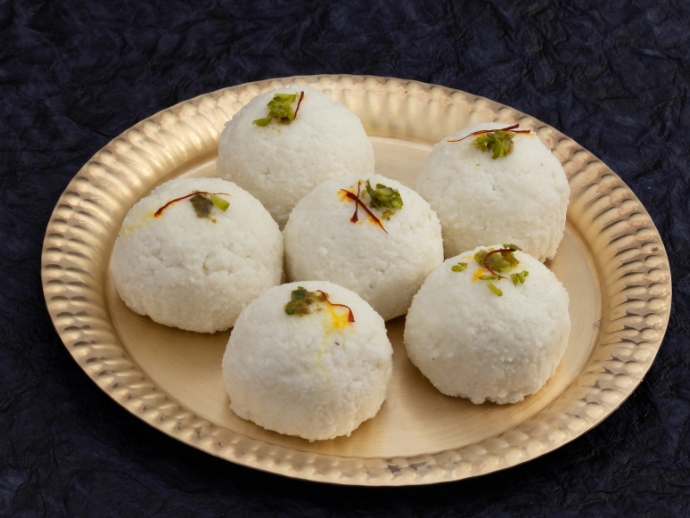
From the amber-tinged Nolen Gurer Roshogolla and melt-in-the-mouth Makha Sandesh to pillowy soft Kacha Golla and Jalbhora Talshash Sandesh (or simply Jalbhora) — a Korapaak (hard) Sandesh shaped like palm hearts with a molten Nolen Gur centre instead of the usual rose-scented syrup — the list is inexhaustible.
Kolkata’s sweetmeat giants each have their Nolen Gur specialties.
- Nalin Chandra Das & Sons: At this 178-year-old establishment, a winter speciality is the Mousumi, a decadent sandesh stuffed with Nolen Gur-soaked coconut and cashew nuts.
- Balaram Mullick & Radharaman Mullick: Try the new-age fusion mishti like Nolen Gurer Soufflé — a layered treat of grainy Nolen Gur sandesh and airy Nolen Gur infused mousse topped with generous drizzles of Nolen Gur.
A new mould for Nolen Gur
In the past few years, Nolen Gur has broken old moulds and appeared on the table in exciting new forms.
- Nolen Gurer ice cream is a rage in Kolkata and a must at winter weddings in the city.
- A Kolkata gastropub — Traffic — doled out a tomato and cheese laden pizza drizzled with Nolen Gur.
- It has also found a spot among gourmet ingredients in pantries of adventurous chefs across the country and abroad and has made its way into everything from rich cheesecakes, crunchy granola, and wobbly panna cotta to cocktails and mulled wine.
- Try a drizzle of Nolen Gur on fluffy pancakes and thick slabs of French toasts. Add a splash to marinades for roasts and grills.
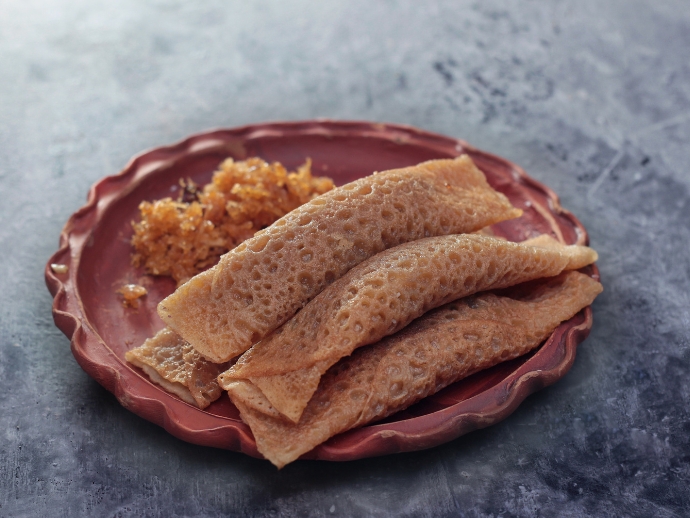
Image: Shutterstock/Susmita Dutta Saha.
But it’s not just its seasonality or gastronomic virtues that makes Nolen Gur special. It is also intrinsically entwined with the idea of Bengaliness. In the poem Tatarashir Gaan, renowned Bengali poet Satyendranath Dutta entwines the fine art of making date palm jaggery — Nolen or Patali — by heating the rawsh or sap with Bengali identity. Rawsher bhiyan baar korechhi amra Bangali/ rawsh tatiye tatarashi, nolen, patali, he wrote.
Nolen Gur is deeply rooted in terroir. The quality of the sap and by extension the Gur depends heavily on the weather. The ideal temperature for optimum sap production is about 14 degrees Celsius. For instance, sap collected on a calm cloudless night is especially sweet, but on humid, cloudy nights it’s likely to be sour. But Nolen Gur is as much a fruit of its natural environment, as of tradition and hard work, immense skill, and dexterity.
Tapping the history of Nolen Gur
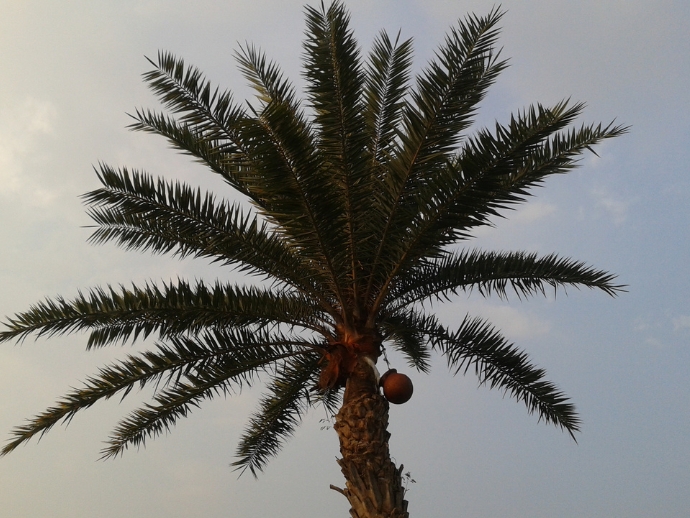
Come winter in Bengal’s rural hinterlands, when the late-afternoon sun —calm and mellow — hovers above the far edges of rolling fields from which a cloak of mist slowly rises, you can often spot men climbing date palm trees, a long rope tied around their waist. Typically, a pouch made of hide or palmyra leaves is latched on to the waist, from which bill hooks, spouts, and other tools peep out. These men, highly-skilled professional tappers, are called Shiuli or Gachhi, who take patches of date palm trees from landlords in order to collect sap.
An age-old profession, the 16th-century Bengali texts, Kavikankan Mukundaram Chakrabarti’s Chandimangal too mentions Shiulis “went around cutting date palms for sap and making jaggery using various methods”. Although the history of date palm jaggery in Bengali predates the text by thousands of years.
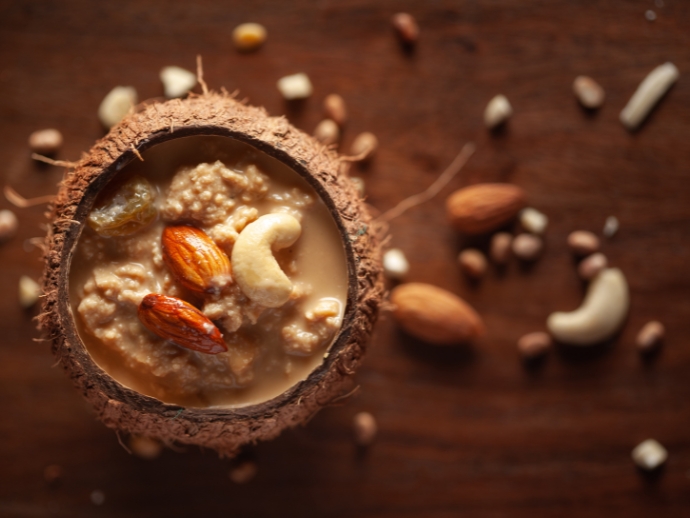
Image: Shutterstock/ELAKSHI CREATIVE BUSINESS.
Close to sundown, the shiuli makes eye-shaped incisions at the neck of the trees and strategically hangs clay pots attached with a spout, so the sap trickles through it into the pots, all night long. This process of fixing the spout is called nolen-rom. According to one theory, Nolen Gur gets its name from this ‘spout’, called nol in Bengali. They return before sunrise the next morning to collect the sap.
Preparations for Nolen Gur’s tapping season
The preparations begin several weeks before the arrival of winters. An article published in the journal Indian Agriculturist in 1893 explains in detail the cumbersome but delicate process that begins with preparing the trees.
- Old, sturdier leaves are first cut off from below the crown.
- Bases of the petioles and sheaths are carefully removed.
- The outer zone of loose tissue is pared off in long slices leaving only a thin covering protecting the inner sap-producing zone. Should these tissues be exposed, the plant is likely to rot and die.
- The pots in which the sap is collected must be properly maintained and well smoked daily so that the alkaline salts in the smoke neutralises any acidity in the sap and the heat destroys any ferments that might have been produced.
- The khejurer rawsh is prone to speedy fermentation and must be processed before the sun grows strong and temperature rises.
- The full pots of sap are brought down at the crack of dawn and transferred to tray-like vats.
- It is then allowed to simmer on a wood-fired oven, to a precise degree.
- As the sap slowly changes colour, and furiously bubbles away, the sweet smell of Nolen Gur melds into the winter air and engulfs entire villages.
- The first extract yields the runny, caramel-gold Jhola Gur, and is further reduced, poured into moulds, and allowed to set to make sticky, crumbly, bowl-like roundels of Patali.
Nolen Gur’s sojourn from clay pots to glass jars…
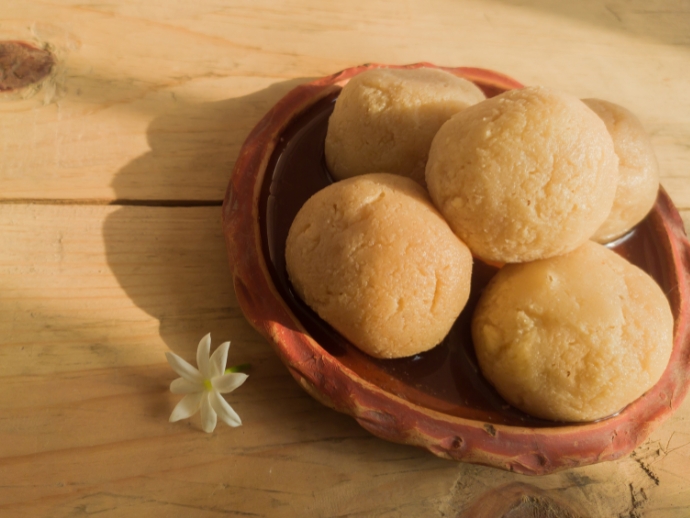
Back in the day jaggery manufacturers from the villages of Bengal would come all the way to Kolkata with stacks of Patali and clay pots called nagri full of Jhola Gur suspended with ropes on two ends of a bamboo stick called baank, that they carried on their shoulders. Nowadays, of course, Nolen Gur also comes in convenient squeeze tubes and glass jars, and travels the world to satisfy the nostalgia-laced cravings of the Bengali diaspora.
It has also lost some of its winter exclusivity with some shops selling Nolen Gur or Nolen Gur-based sweets round the year. And yet the demand for Nolen Gur is only on the rise.
This comes at a cost. A growing number of Gur manufacturers now resort to adulteration of Gur with sugar syrup and Nolen Gur essence, to meet the soaring demand, and often compromise on traditional practices and methods of harvesting sap. The situation is compounded by a decrease in the production of sap, due to volatile weather conditions, warmer winters, and rampant felling of date palm trees.
There’s also a rising apathy towards the labour-intensive profession among younger generations. And while we slurp on Jhola Gur this winter, the clock seems to be ticking for good old Nolen Gur. It might only be a matter of time before Bengal’s heirloom jaggery becomes a thing of a sepia-tinted past.
Read more.
India Classic: The story of moong dal halwa melting hearts
India Classic: Kofta capers through the years
India Modern: What really makes a classic Indian dish ‘modern’?