
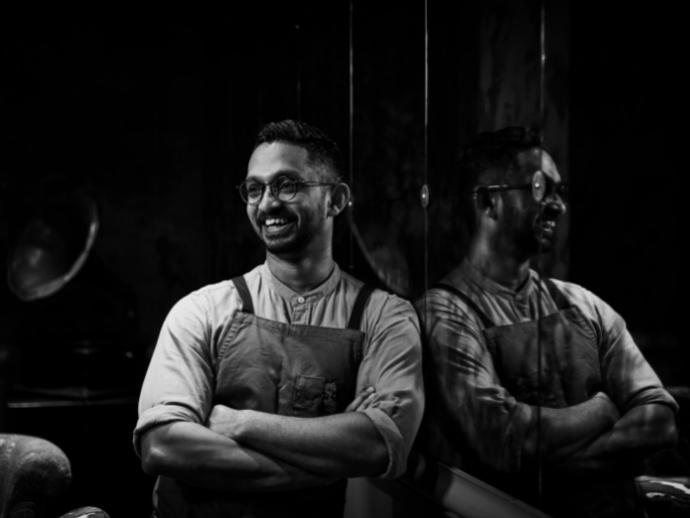
While the two chefs — Rishi Naleendra and Manogren Thevar— who bagged two Michelin Stars for their restaurants in Singapore this year have different stories to tell, what brings them together is their ability to create dishes that reflect themselves.
The sixth edition of Michelin Guide Singapore 2022 has gifted the city-state two new two-starred restaurants — Cloudstreet and Thevar — run by Chef Rishi Naleendra and Chef Manogren Thevar, respectively. The prestigious guide says this about Cloudstreet: Cloudstreet delivers an unforgettable gastronomic journey that marries disparate cultures and influences in an artistic expression.
A Sri Lankan heritage makes a global mark

With roots in Sri Lanka, Cloudstreet’s Chef Naleendra left a degree in architecture for creative cooking in Australia, and has never looked back. Despite being born into a family that had a catering business, the 37-year-old chef chose to study architecture in Melbourne. A part-time stint at a restaurant — and his desire to get an Australian Permanent Resident status quickly — made him switch to hospitality management. His love for cooking grew as he discovered his skill with ingredients.
After working at several top restaurants in Sydney and Melbourne, Chef Naleendra moved to Singapore where his Sri Lankan heritage was seen as an impediment to the way he could be marketed. His staff and clients couldn’t understand how a Sri Lankan man would go about cooking Australian food.
But he proved everyone wrong.
A fusion of Australian and Sri Lankan cuisine in Singapore!
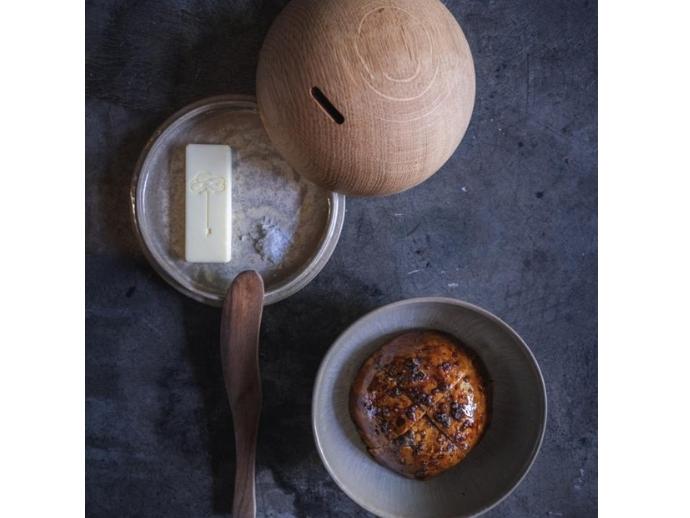
After earning his first Michelin star for Cheek by Jowl, a restaurant that served Australian cuisine in Singapore, Naleendra went on to introduce Cloudstreet to the world in 2019. Run by Naleendra and his wife Manuela Toniolo, Cloudstreet on Amoy Street in Chinatown, Singapore, fuses Sri Lankan and Australian cuisine to reflect the chef’s journey so far in the culinary world. It is ranked 31 on Asia’s 50 Best Restaurants list.
Though Chef Naleendra doesn’t want to be known for any particular way of cooking, Cloudstreet — with its Sri Lankan yellow curry, stout and liquorice bread, grilled oyster with betel leaves, Vegemite tart, and Celeriac ice cream with pickled guava — surely mirrors his fondness for both countries.
The restaurant, which won two Michelin stars, has also played with space to deliver the right dining experience to its customers. The kitchen is open-styled with natural light flooding in at daytime while the interiors carry a house-like approach with bookshelves that hold cooking books, ancient liqueur bottles, and old scrolls.
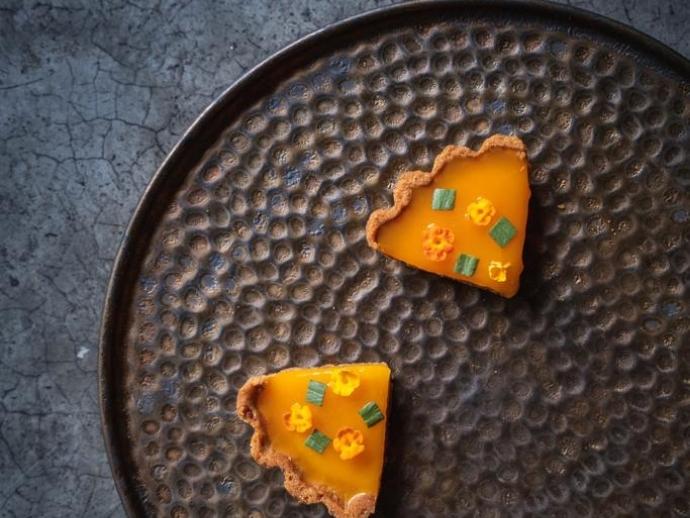
Chef Naleendra’s third restaurant in Singapore — Kotuwa — serves Lankan specialties such as lychee achcharu (pickle), egg hoppers, dallo baduma (fried calamari), and watalappam tart made of palm sugar and coconut milk — a dessert that’s hugely popular with Kotuwa regulars. The young chef has also opened a wine bar — Fool — in the busy Central Business District area of Singapore in collaboration with the head sommelier of Cloudstreet, Vinodhan Veloo.
Thevar’s blend of Indian traditions with European cooking techniques…
Opened in 2018 on the buzzing Keong Saik road in Singapore, Thevar tells a similar story of childhood influences and traditions dictating the destinies of those that submit to them.
Born into a house than runs a South Indian restaurant in Penang, Chef Manogren Thevar followed memories of his grandmother’s rasam to create a beautiful dish that has reinterpreted the spicy tamarind concoction by turning it into a granita with sugar on raw oysters!
What caught the eye of Michelin inspectors is the strong Indian tradition Thevar tastefully blends with European cooking techniques. Though Chef Thevar gathered his skills from Pure C in the Netherlands, and later from Waku Ghin and barbecue joint Meatsmith Little India — both in Singapore — his recipes reflect a heavy leaning towards his Malaysian-Indian heritage. For instance, the crispy pork sambal wrapped in betel leaves, or the heirloom tomato chaat, or even the sweet corn payasam created with great care in Chef Thevar’s kitchen, which is completely open to its customers.
Malaysian-Indian heritage with a global interpretation
As a reviewer says, Chef Thevar’s interpretation is experimental, modern and at the very least, unexpected.
Chef Thevar has often said that his love for Asian food comes from his childhood experiences when his father took him around to eat, not only in Penang but also neighbouring countries that were easy to access. His idea of traveling to India on a month-long journey rose from his need to better understand the kind of food he was most comfortable with. From New Delhi in the North to Tamil Nadu in the South, his observations on Indian cooking helped him see where its flavours emerged from.
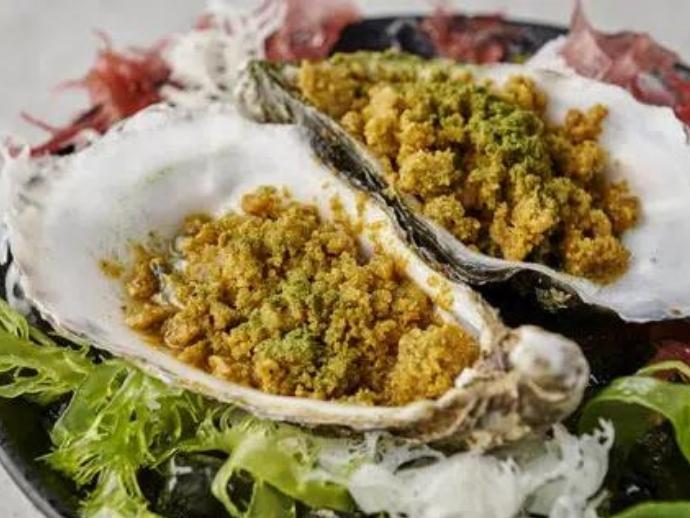
His knowledge of how timing makes an enormous difference to the food being cooked springs from his journey to the land where his grandparents were born. It helped him discover lesser-known secrets about Indian food.
As the Michelin Guide proclaims: It takes passion, dedication and confidence to preserve flavors rooted in tradition, and to breathe new life into them through modern techniques.
One look at Thevar’s frequently changing menu, which transforms itself to incorporate seasonal changes, is enough to see why Chef Thevar earned his stars. From chaat and idli to Chettinad chicken roti, fermented cabbage & chilli thogayal and guava spiced gujia, the restaurant has honoured Indian food by respecting tradition yet allowing change at the same time.
Both Cloudstreet and Thevar merge artistic expression with diverse cultures to create and serve boundlessly. They are fine examples of how the making of successful enterprises are intricately connected with the making of the men behind them.
In conversation with Chef Rishi Naleendra
How has Cloudstreet experimented with space in guiding the dining experience of its customers?
When we found Cloudstreet’s space almost four years ago, it was an open office space where you could see from the front door all the way to the back door. It is a shophouse, but we could see that it had a high ceiling with good structure. Given that most shophouses in Singapore are usually narrow, small, and not as high, I think we got really lucky with finding a shophouse that is a lot broader than usual.
It was very important for us to have the kitchen as the centrepiece of the restaurant.
My idea for Cloudstreet was for guests to feel like they were coming into our home (rather than a restaurant), and the kitchen is an open space where people would sit around. It also gave us an opportunity to interact with diners. With it being a shophouse, there are a lot of structural components we could not touch, hence, we needed to make use of the space in a clever way. For example, the area where our private dining room is and our wine cellar as well, were spaces we could not change. The space under the staircase was also previously our office.
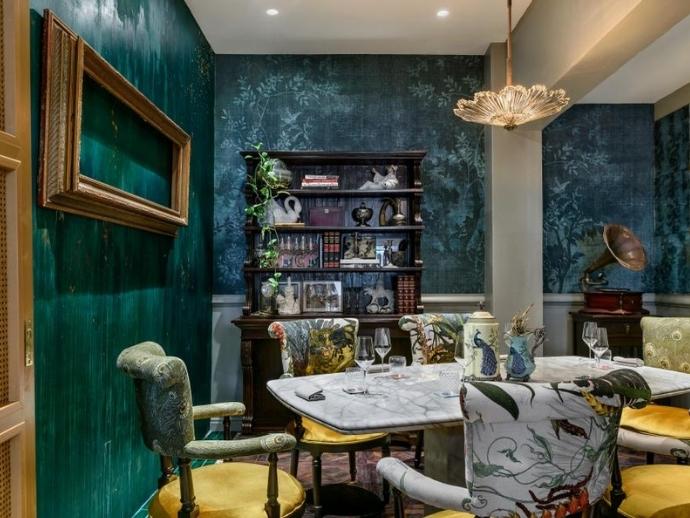
Then two and a half years later, when the second floor became vacant, we decided to take that space as well, mainly because we have several restaurants now and we really needed an office space. So we looked into turning the second floor into an office.
However, the space was a little big and we decided to move the pastry kitchen upstairs, which created a very different experience for diners where you finish your main course on the first floor and head up to the second floor for pastry. The second floor, our dessert lounge, is a tad more relaxed.
The space itself has 3 sections — the main dining area, the wine and bar area where it feels a little more private, and the pastry kitchen, where you sit next to the pastry counter with a good view of the happenings during service.
All three areas give a very different vibe and create a very different experience in a good way. As such, given that our space is a heritage building and there is only so much we can do to it, I think we have utilized it really well.
What’s the biggest risk in bringing highly innovative approaches to food menus? How has Cloudstreet tackled this challenge?
Being innovative is the one thing we have done from when we started Cheek by Jowl, and it’s almost an evolution from seven years ago — both for myself and the team.
It’s all about gaining our customers’ trust and not about just going ahead to do something out-of-the-box straight away. It’s really about starting slowly and building a clientele around it, and getting sufficient support from the team while making everyone believe in your vision and the product. However, it’s challenging sometimes because when you try something new, you don’t know if it’s good or not as you don’t have anything to compare it to. So for us, sometimes it’s really about forgetting about everything we know and being very open when we experiment and create. Same goes for our diners.

To overcome these challenges, our service is very interactive. We are always there to explain each dish to guests and are also there to answer any questions. It’s been a slow process but I’m glad we stuck to our innovative approach to food.
And as innovative as food can be, I strongly believe that at the end of the day, we are serving lunch or dinner; guests need to feel satisfied, like they have had a meal.
From student to star chef, what has your journey taught you about success?
From a student to a chef, I have learnt many things along the way — resilience, patience, planning, etc. — that go into what I do.
I have also learnt that sometimes, things are out of your control and plans change. It’ll come down to how fast you can change and adapt to those situations. This skill of being able to quickly pivot and adapt to sometimes uncontrollable circumstances is one that has made us who we are over the last seven years.
The best example is the last three years that we have spent with Covid. We had to do things that we had never done before but managed to not only pivot very quickly, but also to create a structure around us and the team, to be able to change and adapt accordingly. It would have been a very difficult journey otherwise.