
From the Imperial Enclosure and Dragon boat rides to the silky Vietnamese cuisine and Buddhist pagodas, there are many reasons Hue is a popular holiday destination in Vietnam.
Hue is a city that’s bursting at the seams with stories. Every time I visit this ancient city in central Vietnam, I am amazed at its onion-like quality: Peel back a layer and be prepared to be surprised by another hitherto unknown/unseen facet.
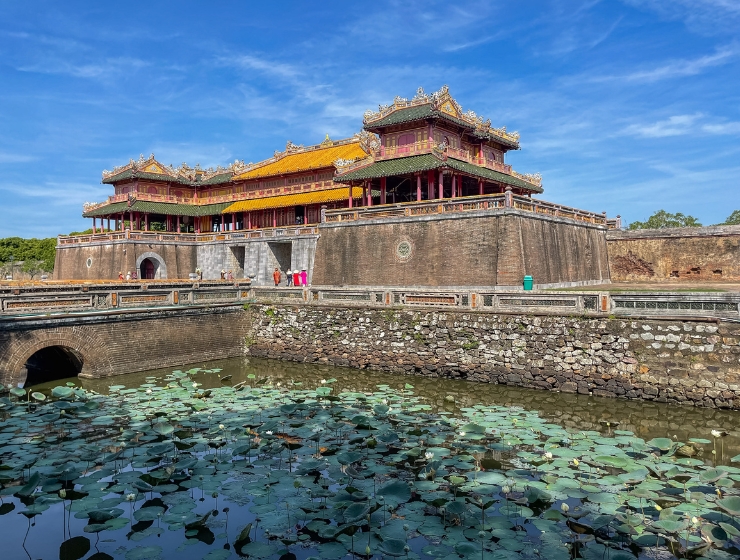
Hue acted as the capital of Vietnam from 1802 to 1945, under 13 emperors of the Nguyễn dynasty. The city is resultantly studded with historic treasures. Royal residences, walled defences, pagodas, and citadels — several of which are classified as World Heritage Sites — flank both banks of the Perfume River that winds through the town.
Over the past decade, there’s been an emphasis on the preservation of cultural elements — from dress to food to local crafts, breathing new life into a city that’s literally seen it all.
The Citadel Story: Vietnam’s city within a city

You can’t be in Hue and not visit the Imperial Enclosure, also known as the Imperial City. A complex of Hue heritage monuments, it is a citadel within a citadel, comprising temples, palaces, emperor’s residence, all within six-metre high and 2.5 km long walls.
Cyclos (or a three-wheeled bicycle taxi with a double seat in front) are a popular mode of transport in Hue. Ao-dais, the elegant, delicately embroidered, traditional costume of Vietnam, along with an entire gamut of props from hand-held fans to headgear, can be rented for a memorable experience. I acquiesce to both for a deep immersion in all things cultural.
The Cyclo rider, a man strident with cardiovascular efficiency, pedals me past heavily fortified walls, past a moat 30-meters wide, to an encounter with the treasures lying within the Imperial Enclosure.

There’s the Thai Hoa Palace, with its lacquered and elaborately carved columns from which the emperor would greet his visitors. Then there’s the Ngo Mon Gate with its grandiose gateway, once reserved for the use of the dynastic leader. Gardens like Co Ha are peppered with ponds and pavilions.
In the centre of the imperial enclosure, you can see the devastation wreaked by the Vietnam War, a testament to the horrors and consequence of war. Other areas have been remarkably restored and shed light on the unique imprints of feudal life.
The To Mieu walled temple complex is a case in point. In the courtyard are nine enormous bronze urns. Ornamented with decorative motifs and barnacled with a minimum of 1,900 kg in weight, they were created to symbolize the power of the Nguyễn dynasty.
Hue’s royal dining experience is plate poetry!
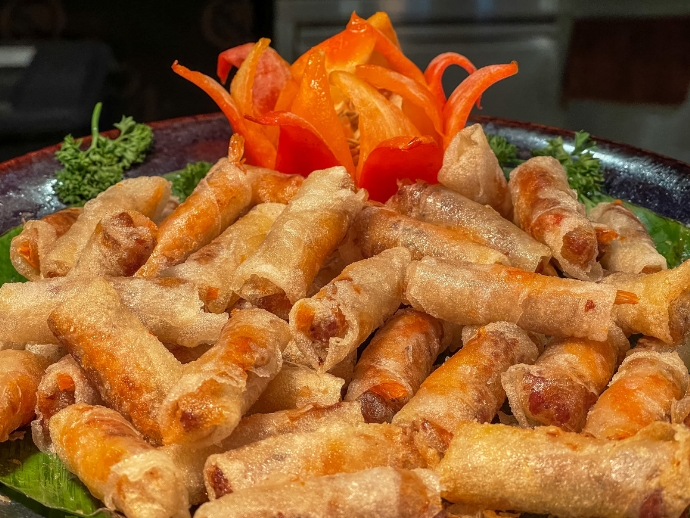
As worthy of an academic’s dissertation is the cuisine in Vietnam. Complex and refined textures that balance sweet and sour, crunchy and silky, and fried and steamed are the common denominators to most dining experiences here.
Dining in Hue has traditionally been an elaborate and sophisticated experience. Centuries ago, it was subject to the demands of a royal court that required dishes to be as sophisticated in decoration and meticulous in presentation as they were refined in taste. Plate poetry was rampant and special bowls, plates, and chopsticks were used at the time.
Today you can continue to dine like an emperor, with restaurants re-creating imperial dishes. At the Khong Gian Xua restaurant for instance, dishes arrive upon the table in breathless succession: Swallow-wrapped shrimps decorated in the form of a peacock; Fried rice in the form of a turtle; Hue speciality Khoai cake, or crunchy and fragrant rice crepes, accompanied by an assortment of sauces; Grilled fish with turmeric.

The city, long regarded a centre of Buddhist scholarship and consciousness, offers an abundance of vegetarian and vegan food choices. An Nhien restaurant for instance, situated in a manicured garden space (and reminiscent of the peaceful garden houses that once made up the city) is a perfect case in point. You can expect a modern take on traditional vegetarian recipes here.

Image: Sonia Nazareth.
Finally, one is never too far away from street food classics. In and around the Dong Ba market, for instance, there are numerous stalls to tickle your tastebuds. Think rice noodles with grilled meat, Mussel rice, Shrimp spring rolls. The French influence is felt in the ubiquitous banh mi — a crunchy baguette brimming with meat of your choice, pickled vegetables, chillies, mayo, and seasoning.
When in Vietnam, encounter the Dragon!
Dragon boat rides down the Perfume River (Huong River) are popular at any time of day, but at sunrise there’s an added glory. Legend has it that the ancient river got its name as it flowed through redolent forests. By the time it reached Hue, it carried with it the aroma of natural grass.
On a Dragon boat at 6 am, I drift past tombs, pagodas, and gardens, but there are also signs of a city waking up — Tai Chi enthusiasts on the bank, cyclists on the bridge, swimmers bobbing around in the river.
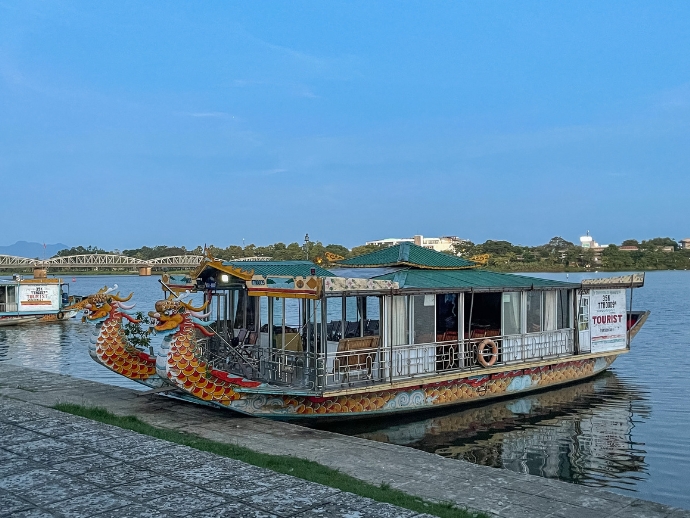
If it’s the evening cruise you’re on, you’ll marvel when the Trang Tien Bridge you float under, comes to life with lights, the soundtrack being ancient folk songs sung by eager boatmen.
Another way to get a grand overview of the city is on a ‘City Sightseeing’ bus tour. Each seat is equipped with a multi-lingual audio guide. Your eyes swivel between the ancient citadel not far from the stately crimson building of the Quoc HocHigh school and the French colonial architecture that hosts a lively nightlife pubs and cafes open until the wee hours.
It becomes immediately apparent that tradition and modernity thrive harmoniously side by side here.
The city Hue’s Pagoda watch
The serene feeling of the city’s Buddhist roots are best experienced at the pagodas. If you have time for just one, let it be the well-preserved Thien Mu, located on a hill on the banks of the Perfume River.

Iconic and seven-storied like a layered cake, it has come to represent — unofficially — the symbol of the city. Just like the pagoda and the city’s garden houses, a vast array of tombs were also built under the landscaping principles of Feng shui.
The Tomb of Minh Mang, set in a lush forest, is a perfect case in point. Each structure from the Honor Courtyard to the Minh Lau Pavilion, which stand atop three terraces that represent heaven, earth, and water, is built with thoughtful attention to detail. The Tomb of Tu Ducis also resplendent, set like a jewel amid manicured gardens, pavilions, and lakes.

Image: Sonia Nazareth.
Khai Dinh tomb, the smallest but most striking of the lot, is a synthesis of European and Vietnamese elements. Concrete, slate, and wrought iron on the outside give the tomb a Gothic air. These colours sit in sharp contrast to the brightness and light inside the tomb.
Incorporated in its construction is the Vietnamese use of terraces. Further on is the Thien Dinh Palace. Aficionados of the intricate are lost in rapture at the ceiling. Nine dragons hidden in clouds were painted by the feet of artist Phan Van Tanh. Fine examples of inlaid ceramic and glass fragment work barnacle the walls, around which sit other objects of art that reflect the ideals and beliefs of feudal life at the time.

Image: Sonia Nazareth.
Re-awakening of small-scale markets in Vietnam
Small-scale occupations flourish in Hue. This is best seen in the revival of crafts like the making of colourful paper flowers and the thriving of long-standing traditions- of incense-stick crafting, for instance. Just 7 kms southwest of the city centre is the Thuy Xuan incense village.

Image: Sonia Nazareth.
Follow your nose with the scent of agarwood and you’ll arrive at a colourful field of incense. These hand-rolled creations are more than just livelihood; they are a part of the spiritual lives of their producers, who use the incense sticks they create to offer prayers to Buddha and their ancestors.
By contrast, the Dong Ba market thrives in over 15,600 square meters of space. Visit it, if only to feel the whirlpool of commerce that characterizes the life of great shoals of people, in a country in transition. Everything on display offers rapture for your Dong, in this busiest trading centre in Hue.
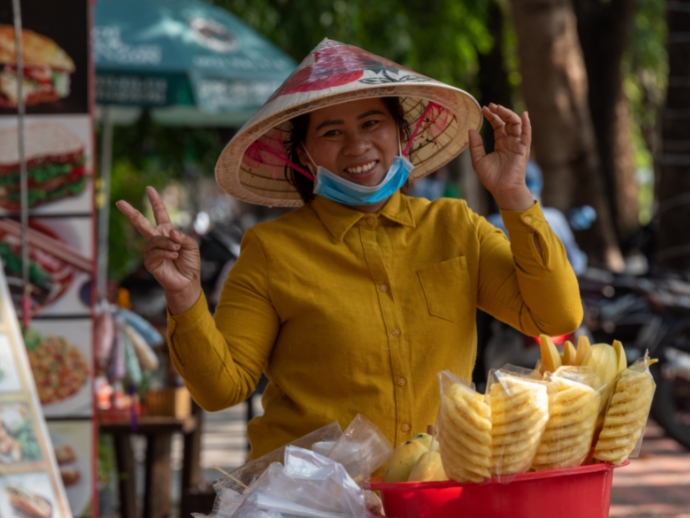
Amid the abundance of ‘stuff’, the discerning eye will find conical hats, also called poem hats here (for the delicate representations of Hue portrayed on the hats), the spicy shrimp sauce which the locals swear by, and bamboo and rattan products.
Set sail on a lagoon
Fifteenkms from Hue City is the Tam Giang Lagoon, situated within the Cau Hai lagoon system. The lagoon, reputed to be the largest freshwater lagoon in Southeast Asia, boasts of a mindboggling array of flora and fauna. I take a small boat to explore the lagoon at sunset.
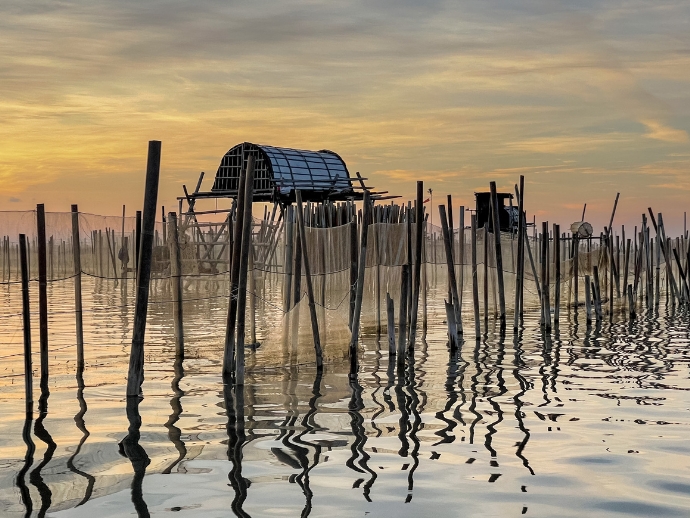
A surreal hour, as reflections of wooden boats back from the day’s fishing dapple the waters. Dam Chuon Hoi Quon, a shanty restaurant in the lagoon, serves the freshest seafood, to complement the dramatic sunset views.
Fact File
- Getting there: VietJet offers direct flights connecting cities like Mumbai, Delhi, and Bengaluru with Da Nang. A few other airlines connect India to Vietnam as well. However, these are multi-stop journeys. From Da Nang, it’s a two-hour drive to Hue.
- Accommodation: The Alba Spa Hotel and the Huong Giang Hotel are both centrally located, reasonably priced, and comfortable stays.
Read more.
24 Hours in Vietnam: Of scenic beaches, meandering rivers, and resilient women
Vietnam: A journey of war remnants, stunning views, and craft brews
Travelling with kids? Fun activities across Vietnam that young explorers will enjoy!