
In Vietnam, enjoy the beachside at Da Nang, gaze at the beauty of Hoi An, and admire the strength and wisdom of the local women.

I reach Da Nang to know a storm has passed by.
The rain claims the mountains and streets. The waters of the South China Sea lash in and out of My Khe beach where I stand watching a pristine white statue of Lady Buddha.
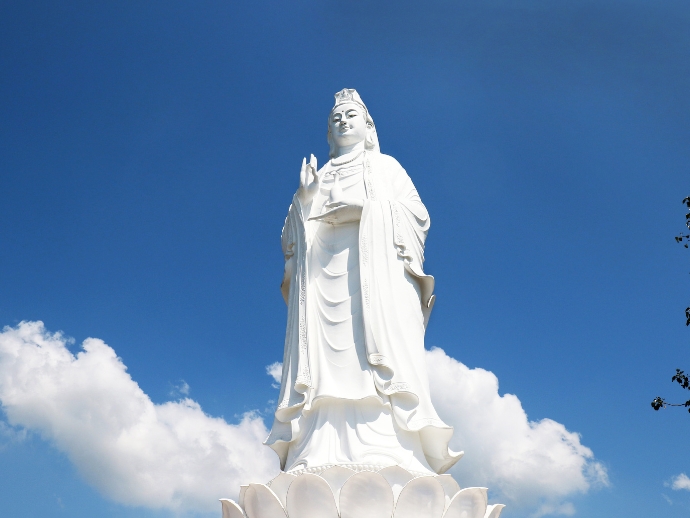
She stands afar, atop a hill on Son Tra peninsula, surveying the city around her. My Khe beach’s glittering wet shore reflects her golden glow at night.
At 67 metres, Son Tra’s Lady Buddha holds 17 floors inside with 21 Buddha statues on each floor.
Linh Ung Bai pagoda, where she stands, merges the beauty of an ancient forest — home to indigenous birds and animals — with the architectural skills of man, attracting travellers around the world.
Of Vietnam’s Lantern Town and a monster that causes earthquakes…
More rain and a restless sea drive me into a restaurant at the resort I am in.
Cups of fragrant Vietnamese coffee sit on tables where several guests relax with bowls of steaming pho and plates of rice crackers and spring rolls. Outside, the wind pushes the sea further.
The next day sees better weather, so I book a short trip to the heritage town of Hoi An, which is less than an hour by taxi from Da Nang.
Called the Lantern Town, Hoi An was declared a UNESCO World Cultural Heritage Site in 1999.
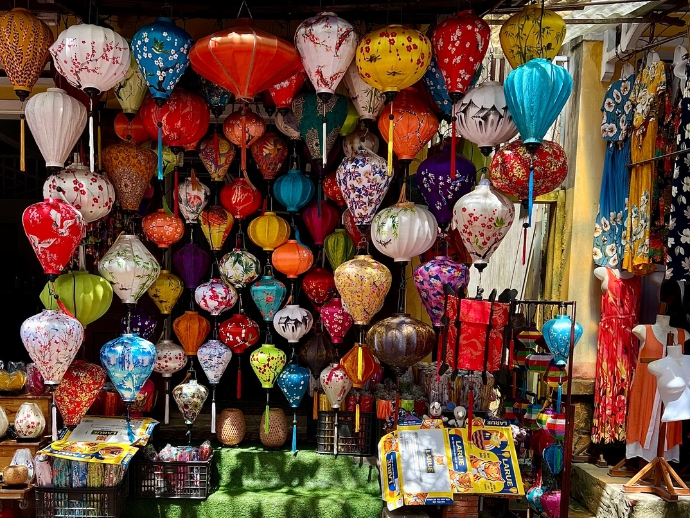
It was a trading port way back in the 15th century and has preserved much of what Chinese, Portuguese, and Japanese traders erected in their architectural style.
There are family temples and museums one can buy tickets to. Lanterns with exquisite drawings hang from wires strung across every street. Shops sell the conical Vietnamese hat and other knickknacks along with the colourful lanterns Hoi An is famous for.
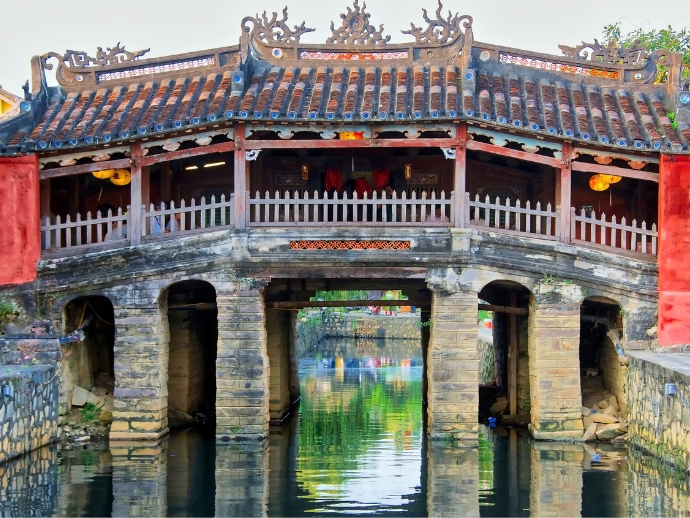
tourist-draw today. Image: Shutterstock/Paul Atkinson.
The Japanese Bridge in Hoi An’s ancient town is linked to the popular myth of Namazu, a monster whose head is in India, body in Vietnam, and tail in Japan. Its movements are believed to cause earthquakes and floods.
Built in the 17th century to “pin down Namazu’s back”, the Japanese Bridge today attracts hundreds of tourists. It has a curved roof that underlines Japanese architecture. Vietnamese-style yin and yang patterns adorn this stunning roof which covers the entire bridge.
Statues of a monkey and a dog sit at the entrance and exit respectively as they represent protection and safety in Japanese culture. A modest little space that sells old propaganda posters from wartime sits on one of the streets in this old town.
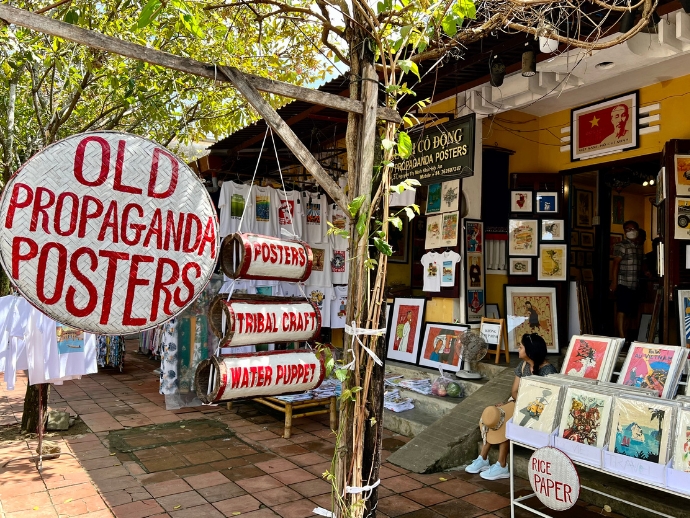
Image: Susheela Menon.
The shop is packed with people who admire the art as well as the messages etched on many of the paintings. The posters present a fair idea of the role played by women at the time. A particular sketch stays in memory, one where a Vietnamese mother stands with a gun in her hand and a baby on her back. Businesses and vehicles have now replaced the guns.
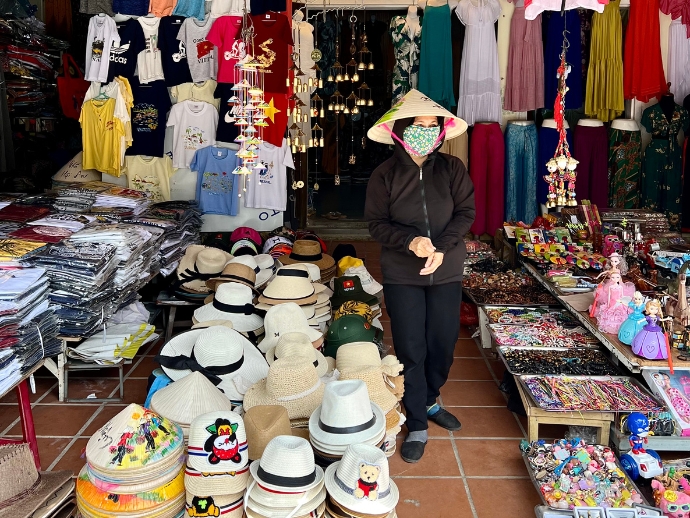
Wherever it is you walk in Hoi An, you see women at the helm — selling bread, managing cash registers, explaining the quality of their leather, convincing customers to try out their garments, serving tea, running boats, and even standing in heavy rain with raincoats to sell umbrellas to those that are caught in the deluge.
The Thu Bon River that defines Hoi An
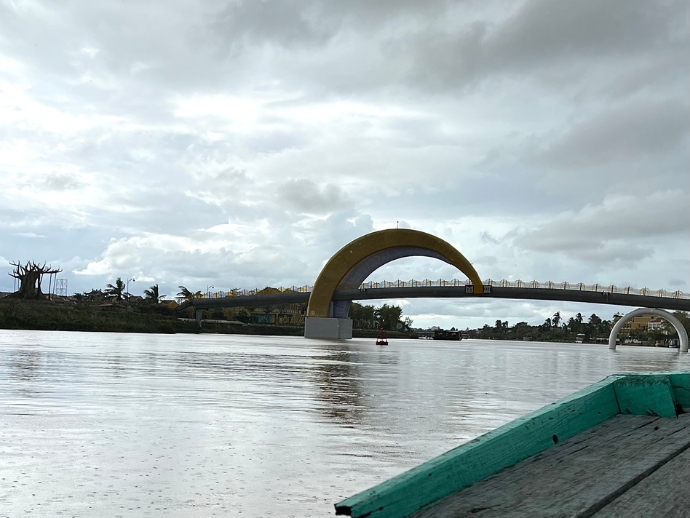
Image: Susheela Menon.
I take a cycle rickshaw ride across town and later jump into a boat that wanders for a while on the majestic Thu Bon River, which nourishes the town.
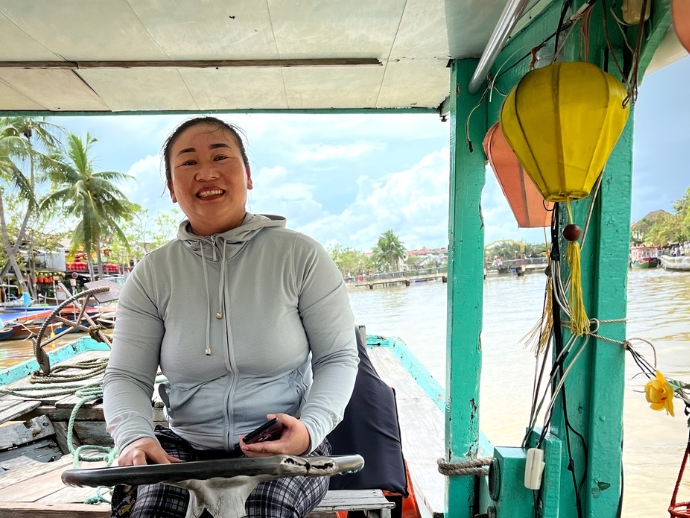
Tin, who is in charge of the boat, tells me she has been a boatwoman for nearly three decades. She asks if I need a poncho but I tell her I like the drizzle. She laughs openly, like the river she criss-crosses everyday. Her eyes light up as she poses for a picture.
I dawdle to the bow and sit in the open.
I remember seeing the river before. It defines the land like nothing else. The Thu Bon can be seen from the skies, moving like a laidback woman.
But now as I watch her up close — a churning turning mass of rippling brown water, speeding with the wind, and swelling with the rain — I sense her impatience.
She runs wild under grand bridges and dances down canals with buildings on both sides. Tin tells me that the river breaks her banks once every year. People heed her fury and move to drier land to escape the floods that the Thu Bon brings every monsoon.
Yet she sustains the town by providing food and livelihood and is worshipped by the locals.
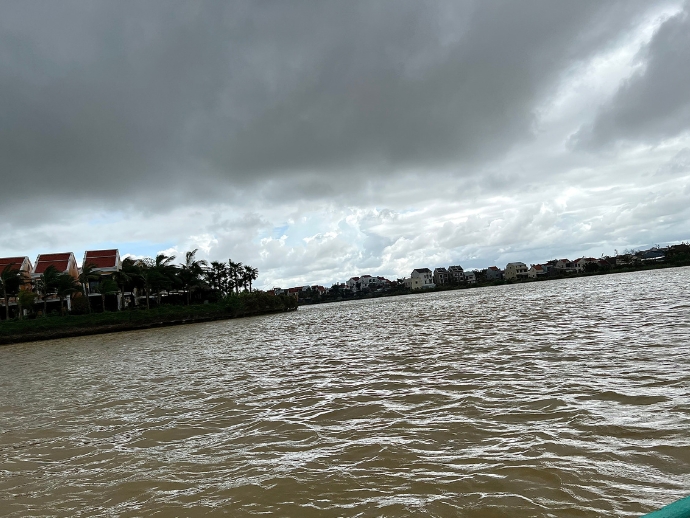
Image: Susheela Menon.
As Tin helps me get off her boat, an old woman with ponchos appears. A cart full of banana pancakes has rolled in, and vendors with fridge magnets and creative greeting cards try their luck with tourists.
It’s a hot day despite the rain.
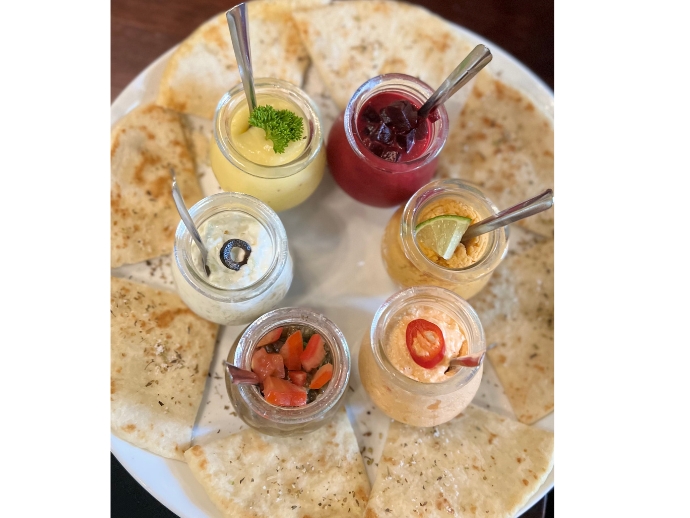
I buy a scoop of ice-cream that tastes like creamy Vietnamese coffee, and look for MIX — a well-liked Greek restaurant that serves delicious dips with warm pita. It proves a good option for a vegetarian in a place that’s predominantly not.
The female energy of the Land of the Blue Dragon
As rain clouds hover above, I take a cab back to Da Nang where the beach awaits me with its whistling breeze, cool sand, and moonlit waves.
It rains a little. I eat a salad and sip a cocktail, watching small airplanes fly through storm clouds.
My flight back could be turbulent, I think.
But then, my eyes fall on the gleaming wet sand where the light of Lady Buddha flickers. I squint at the statue standing on the dark hilltop surrounded by a sacred forest.

Image: Susheela Menon.
She shines against the night, like the full moon in the sky.
The locals say that her presence averts catastrophes. They believe that the peace in her heart protects all.
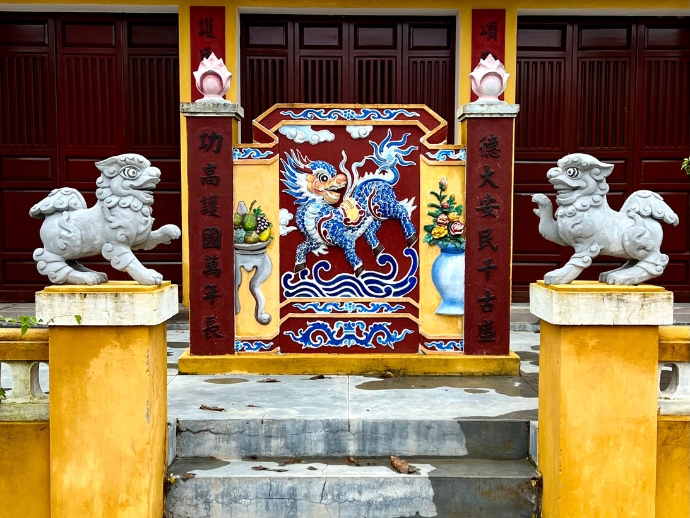
I want to believe it too. From the meandering Thu Bon River and the merciful Buddha to boatwoman Tin and the lady comrades of wartime, the Land of the Blue Dragon — so called because of its proximity to the ocean — exudes female energy like no other country I have seen.
I don’t know of imbalances in the political sphere or the wage gap battle or how the ‘me too’ movement was received in this communist nation, but a day as a tourist is enough for me to acknowledge the undeniable efficiency of Vietnam’s spirited women.
The resort I stay in is managed by a French lady who moved to Da Nang a decade ago. She tells me that Vietnamese women hold the purse strings in most families. They are also those that have come a long way and don’t intend to look back.
Only tourists talk about the war, not the locals.
Here’s then to the wild and whimsical Thu Bon and the Lady Buddha of Son Tra.
Here’s then to the lady comrades who fought to win.
Here’s then to the spirit of the common Vietnamese woman, and to the artless laughter of our boatwoman Tin.
Good to know
GO
April to August
SEE
Lady Buddha, Linh Ung Bai pagoda, Hoang Sa Street, Son Tra Peninsula, Da Nang, Vietnam | Opening hours: 6 am–9 pm daily | Ticket: Free
Japanese Bridge, Nguyen Thi Minh Khai street, Minh An ward, Hoi An, Quang Nam province, Vietnam | Opening hours: 24/7 | Ticket: Free
EAT
MIX Greek restaurant | The complimentary dessert here, made with biscuits and chocolate, will keep your sweet tooth sated | Where: 70 Le Loi, Phuong Minh An, Hoi An, Quang Nam 56000, Vietnam | Opening hours: 11 am–10 pm
SHOP
Leather bags, wallets, and shoes | Clothes | Lanterns | Vietnamese coffee.

Image: Susheela Menon.
Read more.
Vietnam: A journey of war remnants, stunning views, and craft brews
Travelling with kids? Fun activities across Vietnam that young explorers will enjoy!
Vietnam can thrill you with varied adventures but also be one of the safest spots to visit