
Told and retold over centuries through literature, dance, and theater around the world, the Ramayana crossed many boundaries and left a profound, enduring impact on different cultures.

Hindus across the world are celebrating Diwali today. While the festival revolves mostly around festive shopping, card parties, and fireworks today, it is pivotal to remember that at the very heart of these celebrations, is the Ramayana, one of the two greatest Hindu epics in Indian culture.
Counted among the world’s most important ancient literary works, the Ramayana is believed to have been written by Sanskrit poet Valmiki in the 5th century BCE. With all of its 24,000 verses composed in Sanskrit, the story of Rama and Sita has been told and retold for countless generations in India.
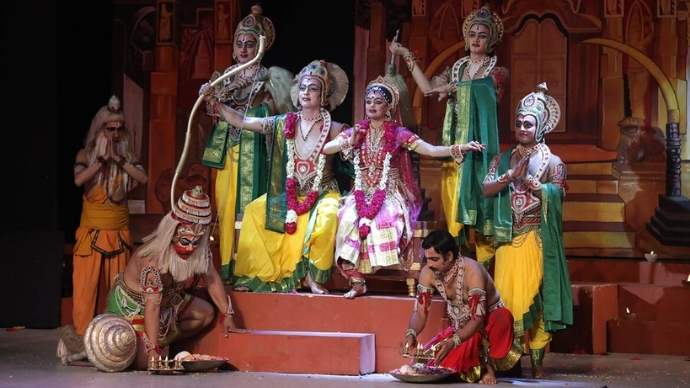
The epic poem is about a prince, Rama, who goes in exile into the forest for 14 years upon the orders of his father together with his wife, Sita, and brother, Lakshamana. But towards the end of the period, tragedy strikes when Sita gets kidnapped by the evil demon king, Ravana. Rama begins his quest to rescue his wife and fights a fierce battle only to bring his wife back home. Diwali is considered to be the day they returned to Ayodhya, which is believed to be the birthplace of Rama and central setting of the great epic.
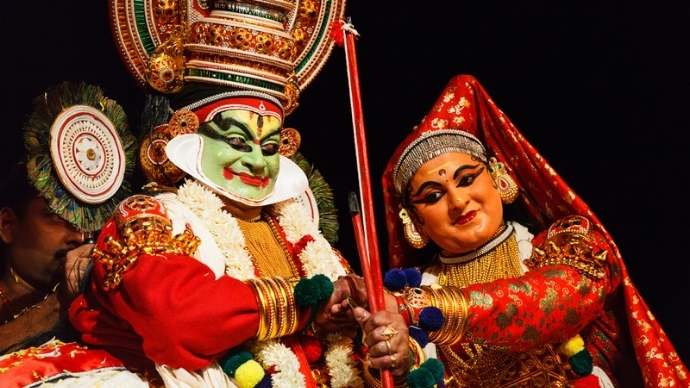
Within India itself, there are many tellings of the Ramayana — some of the most popular being Iramavatram by Tamil poet Kamban (12th CE), the Bengali Ramayana by Krittivasa (14th CE), Ramcharitmanas by Tulsidas (16th CE), and Paumachariya (the Jain Ramayana) Vimalasuri. From comics, films, animated features, to television series, paintings, dance, theatrical performances (Ram Leela), and exhibitions, the epic has grown to be a part of a larger narrative of the world. Courtesy of the widespread of Hinduism across the Southeast Asian region, seven countries have their own unique versions of the Indian legend!
The different Ramayanas of Southeast Asia
Reamker in Cambodia
According to the Veal Kantel inscriptions, the Ramayana is believed to have arrived at Cambodia during the 7th century in the form of a poem. Titled Reamker, meaning “Glory to Rama” in the native language, the Cambodian version gives more significance to Hanuman, Rama’s most loyal ally, through additional scenes. It is often performed through local dance, L’khaon, during festivities.

Phra Lak Phra Lam in Laos
A national epic in Laos, Phra Lak Phra Lam focusses more on the heroism of Rama’s brother, Lakshamana. Rama is believed to be the previous reincarnation of the Buddha, according to the locals. The title of the retelling is named after the two brothers, Lakshamana (Phra Lak) and Rama (Phra Lam).
Kakawin Ramayana in Indonesia
The Javanese version of the legend is called Kakawin Ramayana, and the modifications include the indigenous Javanase deity, Semar, and his three sons, Gareng, Petruk, and Bagong. It is believed that the Indonesian legend was based on the Ravanavadha, a sixth-century retelling of the Ramayana by Indian poet Bhattikavya. Hence, the focus is more on the antagonist, Ravana. The saga is performed here through two dance forms, the Balinese dance, Ramakavaca, and Yogyakarta’s Wayang Wong dance.
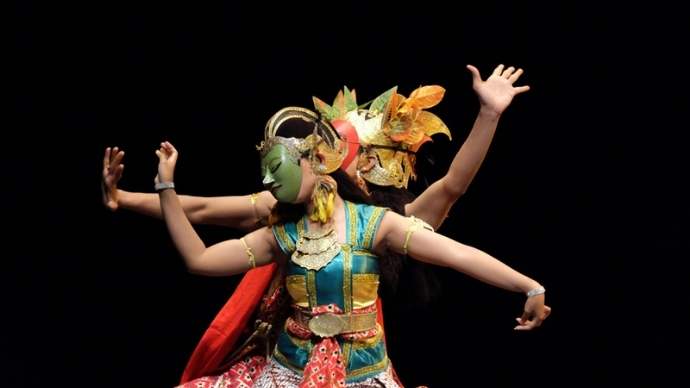
Hikayat Seri Rama in Malaysia
The Malay retelling of the Hindu epic, Hikayat Seri Rama, meaning “Chronicle of the Great Rama,” includes slight modifications and incorporates shadow puppetry! The tale, that focusses more on the smaller characters rather than Rama, is recited through the traditional dance-drama, Mak Yung.
Ramakien in Thailand
In the national epic, Ramakien, Sita is, interestingly, believed to be the daughter of the antagonist Thotsakan (Ravana)! The earliest records of the poem dates back to the 13th century, during the reign of the Sukhothai kingdom, while Ramakien truly came to existence during the Ayutthaya kingdom. Much of the original edition, sadly, lost during the Burmese invasion. The story was later reconstructed under the supervision of King Rama I of the Chakri dynasty, and today, it forms an integral part of Thai culture.

Yama Zatdaw in Myanmar
Yama Zatdaw, is greatly influenced by Thailand’s version of the Ramayana due to the Burmese invasion during the 15th century. This version has some borrowed elements from the Theravada Buddhist culture too.
Maharadia Lawana in the Philippines
It is believed that the Ramayana arrived at Filipino shores between 17th and 19th centuries, along with the Javanese and Malayan traders. Maharadia Lawana, written as an epic poem by the Maranao people, became indigenised and has contrasting differences from the original Sanskrit version.
Significant temples outside India

Ancient temples and historic landmarks around the world stand as testimonies to the establishment of the Ramayana as a multi-cultural, diversified epic. In Cambodia, famous scenes of the epic can be seen on the walls of the Royal Palace and Angkor Wat. The characters from the epic can be seen in the 9th-century Prambanan Temple in Yogyakarta, Indonesia. The ancient temple complex is adorned with panels of narrative bas-reliefs carved along the inner balustrades wall on the gallery around the three main shrines.
In Laos, there are early Hindu temples like Vat Phou in Champassak, telling the tale, while the Batu Caves in Malaysia is most popular for its embellished Ramayana Cave, which boasts psychedelic dioramas of the Indian epic. Wat Phra Kaew, or the Temple of the Emerald Buddha, is the most sacred religious structure in Thailand, the complex of which is encircled with a two-kilometre-long wall decorated with exquisite murals. The story of Thai Ramayana is told across 178 panels that are kept fresh with restorative work every few decades!
Read more.
Now, retrace Lord Ram’s footsteps in Chhattisgarh
These heritage hotels across India are your best bet for a glittering Diwali getaway!