
Matured slowly in handmade amphorae, the amber wine made with local Ribolla grapes at the Gravner vineyard in northeastern Italy is a testament to the fine art of natural winemaking.
We’re at the storied convergence of Italy and Slovenia. The land here is marred by the ravages of two world wars. Tales of that gory past would make anyone shudder. But, who could tell. There’s also the enduring beauty of life, living, creating and crafting.
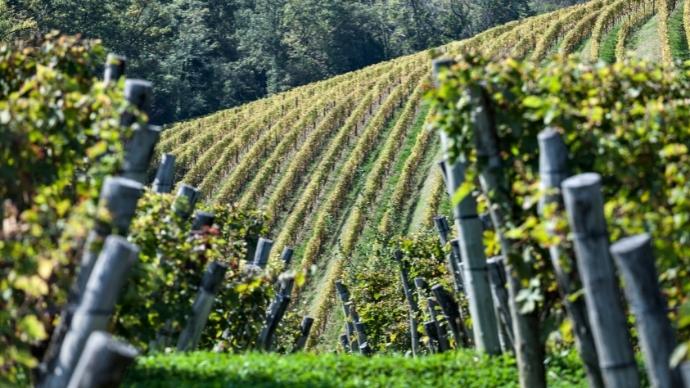
Such is the calmness and appeal of the Gravner vineyards in the Collio Goriziano region, in northeastern Italy. Pocked by man-made ponds, and punctuated with nests to allow for birding, this is a picturesque locale. On the terraces, standing tall, are cypress, apple, olive and rowan trees. This almost zen-like, thriving, bustling biodiverse cultivation spot is a soothing antidote to intensive farming and monoculture. And one man is the towering figure here…the pioneer of natural viticulture, now an abiding philosophy for many winemakers and oenologists.
An ode to terroir
Josko Gravner is known for his deep belief in the harmony of nature and the preservation of natural winemaking. But, what he’s most revered for, is his amber wine made from the native Ribolla grape and the generous use of amphorae, handmade in Georgia.

We call it amber as Josko prefers that to calling it orange wine, which, as he says, could mean the wines may have oxidised. With a current count of 47 amphorae or qvevri, with a capacity of 2,500 litres each, and two native grapes, Ribolla and Pignolo, Josko Gravner has, in many ways, turned back the ticking of the clock.
His is a winemaking style anchored in ancient methods, like following the moon’s cycle, organic farming, low tech and trumping quality for quantity. Some years back, he replaced his international white grape varieties like Sauvignon, Pinot Grigio and Riesling, while also focusing on the overall yield.
These measures resulted in a godly reverence to the local terroir, native grapes of the region and an upholding of the land’s most precious gifts.
What really are orange or amber wines?
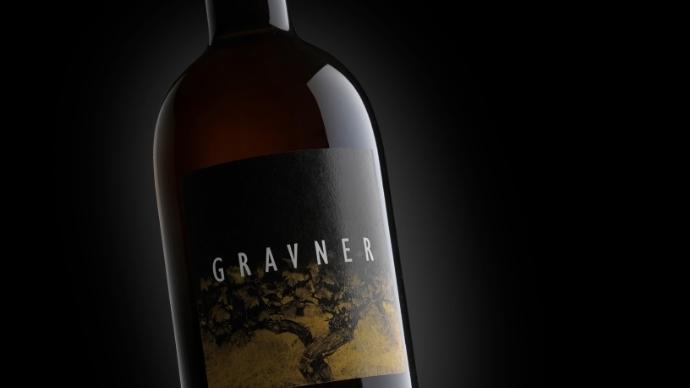
Simply put, they are white wine grapes, treated as red during the winemaking process. Long maceration period with the skins lend to the wines their colour and tannic structure. At Gravner, the rich colour is the result of the wines’ six-to-seven months’ contact in the amphorae with grapes on skins.
How it all began
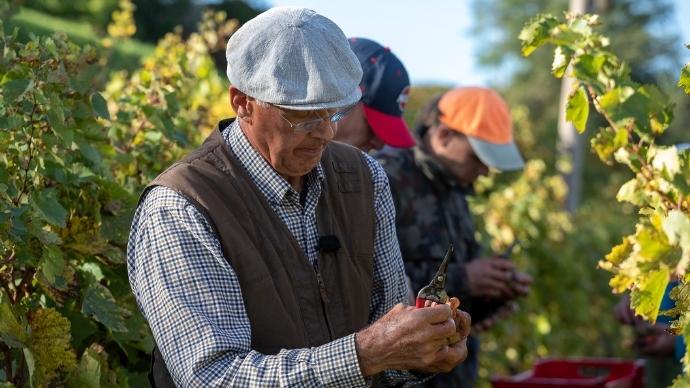
Josko started as young as 14, helping his father in the vineyard, and took over the reins by the age of 21. Steered by the flush of youth and the zeal to leverage modern technology to yield abundant produce, he went headlong, producing crisp white wines in stainless steel.
However, he soon realised the folly of this approach and finally, with a visit to Napa Valley in 1987, where he came up close and personal with modern oenological processes, he returned home totally disillusioned with the methods that were being adopted. He felt that these processes robbed the soul from these wines, which would otherwise shine with the land’s natural character. That was to be the turning point in his career as well as a decisive juncture in his winemaking style.
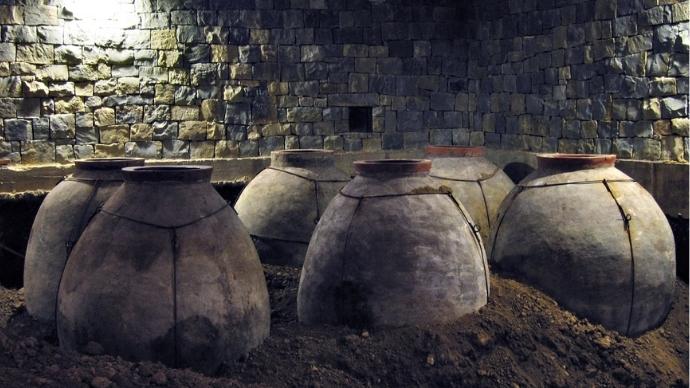
Thus began Josko’s tryst with the ancient wine-producing techniques used in the Caucasus in the 1990s and, by 2004, all the wines had made a switch to amphorae. Not only was this a reversal of the clock, but it would soon revolutionise the way people thought and spoke of wine making, with many vintners themselves slowly gravitating towards it.
A matter of taste
Gravner’s Ribolla is the perfect example of unpacking this native grape’s traits and refining it to great heights of excellence. Complex, nutty, lemony…with equal measure of tannins as well as its inherent freshness, the wines have a great structure and age-worthiness. Pronounced minerality and the depth from long maceration are the hallmark of Gravner’s Ribolla.
The Collio hills are the perfect breeding ground for Ribolla because it is able to grow only in hilly areas. It has a thick skin and copes well with long ripening in the vineyard. Soil is a key factor: layers of marl and sandstone — known locally as ponca, or flysch in specific geological terms — lend salinity and a mineral edge to the wines. Ponca contains marine fossils originating at the bottom of what is now the Adriatic Sea.
The Ribolla wines are aged for five to seven years in the cellar and are only released when deemed ready. These wines have the potential to be aged and enjoyed for many, many years thereafter.
The best vintage has yet to come, or so they believe at Gravner. However, the 2011 vintage is celebrated with great enthusiasm by Josko himself, since the harvest gave over, on November 23rd, a rich bounty of excellent grapes. The wine has 15.5% ABV, is deep amber-gold and has abounding structure, concentration and viscosity. It is ample and plush, yet refined in its structural qualities. Resplendent with the aromas of honey, apricots, poached pears, bitter orange, wild herbs and chamomile, it is a crazy explosion of marmalade and mineral whispers, and yet, holds the promise of more.
And, as you sip from this lovingly nurtured, aged, amphorae enveloped, amber Ribolla, you have your own aha moment. So, this is what they meant by unhurried, slow wine!

Read more.