
With a unique collection of artefacts, DAG’s March to Freedom at Bikaner House offers a refreshingly approachable view of the struggle against colonialism. We think it’s one of the most interesting things to do in Delhi right now, and on only until October 29.
Freedom movement? Surely that’s something for school history textbooks, where you learn about leaders and how they protested against colonial rule. Much has been forgotten about the era, especially what lay beyond the headlines. The days when railway travel had to be advertised to encourage people to use it, when many of today’s national institutions were founded, when durbars were still a thing and postcards the most common form of communication. When all major political parties sat around a table to agree to the way forward for the nation, together.
From being living memory for many to a bygone era for young Indians, the history of struggle against colonialism is now firmly in the past, its legacies notwithstanding. Here’s an exhibition that might change your opinion and make the movement a flesh and blood one as it offers glimpses into the lives of people — often ordinary nameless people. How they worked, what they worked as, who they worked for. Where they lived. Even what they did for entertainment.

As India basks in landmark of the 75th anniversary of independence, DAG’s March to Freedom showcases anticolonial movements through works of art and some artefacts through 160 artworks, from eighteenth and nineteenth century European paintings and prints, to lesser-known works by Indian artists, film posters, sculpture, prints, drawings and figurines.
“For the 75th anniversary of India’s independence, DAG wanted to celebrate this historical moment with a flagship exhibition that highlights our commitment to Indian art and builds on the expansive vision of sharing it,” says Ashish Anand, CEO and MD, DAG.
The show breaks conventions in multiple ways. The exhibits, for one, are not chronological or arranged by schools but instead by eight themes.
‘Battles for Freedom’ investigates the significance of a range of conflicts — established, recently recovered, and previously unconsidered — scattered throughout India’s past, in the ‘march to freedom’. The paintings here offer rarely glimpsed views of battles as seen, or indeed imagined by artists. Note the juxtaposition of heroic victors, the attire of the soldiers, even the profusion of animals on the battlefields.

‘The Traffic of Trade’ situates India and South Asia’s colonial histories within a global history of trade. Yes, ordinary folk engaged in trade are featured, and shipping occupies primacy of place — from humble fishing boats, other grander vessels, their colourful pennants ferrying untold riches. Yes, trade dominated the economies of the time, making some individuals and empires fabulously wealthy while impoverishing others.

‘See India’ considers the role of travel and seeing India, both literally and through circulating images, in conceiving of a nation. Visuals of early railway posters are especially noteworthy, especially considering the magic of rail travel had to be advertised!
‘Reclaiming the Past’ is about the power endowed in the simple act of being able to tell one’s own story. Yes, the administration of the day dictated the writing of the past and encouraged people to see it that way. Any similarities spring to mind?
‘Exhibit India’ is about being able to showcase one’s culture. The culture of the subcontinent was said to have declined from its ‘classical’ age, again according to the government, which led to multifaceted cultural responses, from art to cinema to literature and sculpture to weaving and metalwork.
‘From Colonial to National’ focuses on the different places and spaces in which the anti-colonial struggle took place. What are seen usually as places of oppression — courts, jails and secretariats — were also places where dissent was expressed. ‘Colonial’ era constructions, such as the Viceregal Palace transformed to the ‘national’ Rashtrapati Bhawan.
‘Shaping the Nation’ highlights some of the many individuals who led those efforts over decades. Again, faceless people, oft forgotten, registered their protests against colonial rule in their own ways.
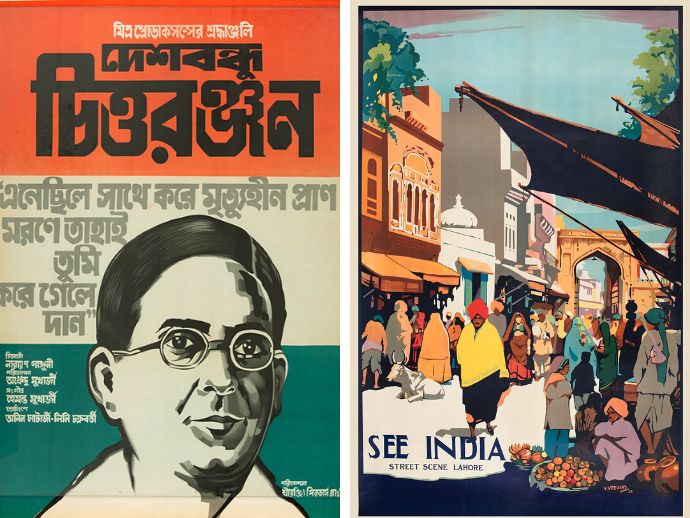
‘Independence’ explores the moment and its aftermath: the joys, sorrows, and multitude of experiences of freedom. While today it is seen as a moment of transition, rightly, it was also a time of loss — many lost homes and even lives. It was time for a new form of government, not easily comprehended at once.
Although each theme introduces a different prism through which one can view and re-interpret this phase of Indian history, one that stands out is the ‘Exhibit India’ section where items of popular culture reflect not only some of the ways in which we make sense of the past but how they can also be ways of registering protest and reclaiming narratives, points out Anand.
“This exhibition draws upon works of art from the DAG collection to tell the story of how independent India came to be,” says historian and curator Dr Mrinalini Venkateswaran, adding, “If you are expecting the ‘usual’ history exhibition, we hope you will be surprised by what you find or find missing.”
She explains, “For those expecting a ‘typical’ art exhibition, we hope to startle you by the eclectic mix of works on display. While we will explore the story through artworks grouped around eight themes, you have the freedom to approach the exhibition as you like. This exhibition offers a space to pause and reflect on our journey towards nationhood. How we accommodate and negotiate with our past changes over time, depending on our present realities. So, what we choose to do today will shape our future.”
As Anand puts it, “We hope that the exhibition narrative and eclectic selection of works prompt viewers to pause and reflect, questioning what they think they know or don’t know about a story that so many of us think of as self-evident truth.”

Of course, this has been a mammoth task, befitting the anniversary it commemorates. “It took the team over a year to sift through our database and put together a diverse selection that covers the core ideas of the show,” reveals Anand.
An especially noteworthy feature, besides the sheer approachability to the subject, is the high degree of interactivity. Not only are several questions posed in each section encouraging the visitor to reflect and ponder, there are also several tactile experiences on offer. If ‘The Traffic of Trade’ offers a world map where you are encouraged to identify the sources of goods being traded to, ‘From Colonial to National’ gives you architectural and drawing tools to design monuments of your choice.
“The activities in March to Freedom are structured around themes with the aim of providing a fun, interactive way of engaging with the questions that the curator brings out in each of the themes while encouraging visitors to come up with newer questions and perspectives to add to the narrative,” explains Anand. “The interactive elements are consciously added bearing in mind the varied interests and knowledge levels of the visitors who may enter the space, especially those who may find history or art history less exciting or ‘boring’ as subjects,” he says.
So irrespective of the kind of visitor you are, this is a great opportunity to familiarise yourself with what the colonial era was like. The exhibition is currently on at Delhi’s Bikaner House till October 29 after a successful run in Kolkata. Anand is optimistic about it travelling to other cities. And yes, there are postcards to express your thoughts and even a rating board for your favourite section.
Read more.
Lodhi Art District: India’s first open-air art museum
Top 10 new and interesting things to do: MUMBAI
Serendipity Arts Festival is coming back with another edition full of art madness!