
With a gender identity policy that lets the crew, pilots, and ground staff choose the uniform they prefer — male or female design immaterial — Virgin Atlantic is cruising towards embracing gender diversity.

Gender identity, gender-fluid fashion, gender expression… These are buzzwords that are rather carelessly strewn about these days. However, Virgin Atlantic—founded in 1984 by British billionaire Sir Richard Branson—is walking the talk. Currently majority-owned by Branson’s Virgin Group, the airline has announced a gender identity policy that lets employees choose whichever uniform they are comfortable in, regardless of the original male or female design.
Embracing gender diversity and self-expression
Virgin Atlantic’s iconic Vivienne Westwood-designed outfits are the red skirt suit and burgundy jackets and trousers. With its new and updated dress code (rather, no code), the airline is nodding firmly towards embracing diversity—in every manner—in the workforce. Virgin will also start compulsory inclusivity training and initiatives for hotels in destinations including the Caribbean, where differences have often faced resistance.
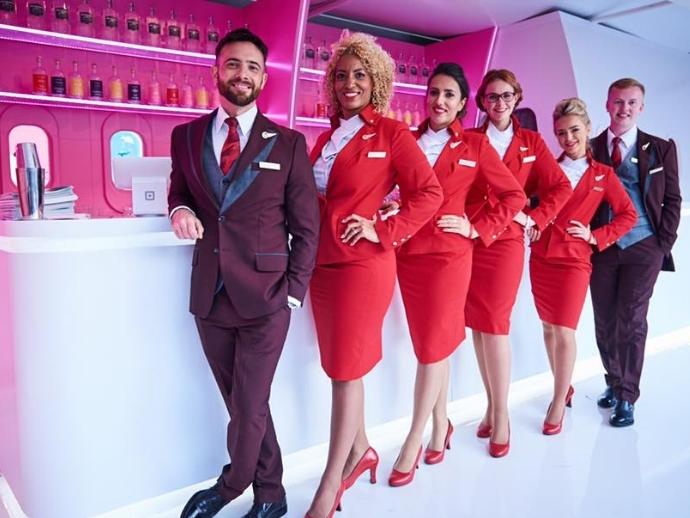
According to Juha Järvinen, Virgin Atlantic’s chief commercial officer, it is imperative that the airline enables people to “embrace their individuality and be their true selves at work”. To that effect, the airline recently also allowed its cabin crew to display tattoos! The first UK-airline to do so, Virgin said that the restrictions were being relaxed in line with the Group’s focus on “inclusion and championing individuality”. Though facial and neck tattoos are still a no-no, those with full-arm tattoos can now wear short-sleeved shirts, instead of the long-sleeved versions. This at a time when tattooed individuals are either not hired by most airlines — or even fired — for their love of inked art.
Empowering individuality, one step at a time
Virgin Atlantic will also start using optional pronoun badges for crew and passengers. These can be requested during check-in to ensure people use their preferred pronouns. Its ticketing systems will also allow those whose passports have gender neutral markers— available in the US, India, and Pakistan—to travel using those gender codes, and the title Mx. Järvinen adds, “We want to allow our people to wear the uniform that best suits them and how they identify, and ensure our customers are addressed by their preferred pronouns.”
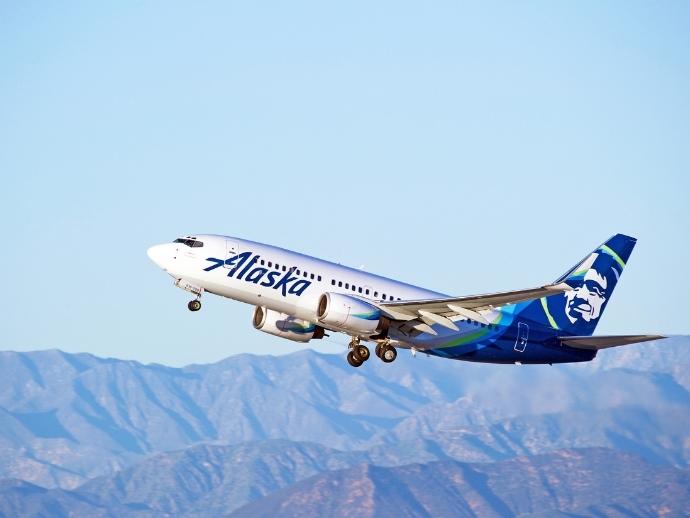
A laudable attempt, though Virgin Atlantic is not the first airline to embrace gender diversity (though it is one of the first major carriers). Earlier in 2022, Alaska Airlines reworked its uniform guidelines, which led to employees being allowed to choose their uniform style and make-up to reflect their identity. Having said that, the fact that a major carrier is recognising — and embracing — gender identity is heartening, to say the least.
To promote its gender-neutral uniform policy, Virgin Atlantic roped in Michelle Visage, of the hit reality TV show Ru Paul’s Drag Race fame. For Visage, the initiative was personally important as according to her “gender identity policy allows people to embrace who they are”.
Not just skin-deep
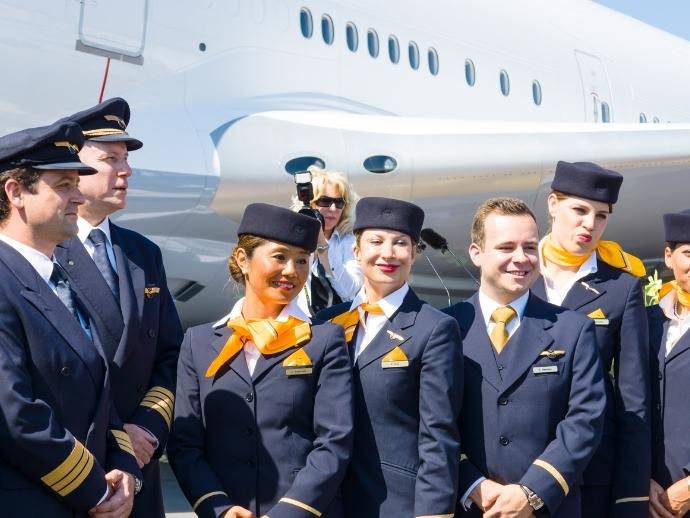
Virgin Atlantic was also one of the first airlines to relax its make-up rules. A couple of years ago, the airline announced that its female crew could be on-duty without make-up. According to Virgin, it was a “significant change”, especially in an industry where female crew are expected to look and dress in a certain manner. Other airlines have also made efforts to reform their guidelines. For instance, in July 2021, Lufthansa stopped using ‘ladies and gentlemen’ while welcoming passengers on-board. A couple of years before that, Norwegian Air allowed female flight attendants to not wear heels while outside the aircraft. It also dropped its mandatory make-up policy. Japan Airlines, in 2020, stopped the till-then mandatory heels and skirts.
Inclusive diversity is what these airlines are practicing, and it is exactly this that perhaps society as a whole needs to recognise.