
Was it the Irish or the Scots? Is it whiskey or whisky? Smooth or peaty? Unravel the mysteries of Irish Whiskey right here.
A popular saying goes, “If you’re enough lucky to be Irish… You’re lucky enough!” No truer words could have been said about Irish whiskey — one of the most underrated spirits in the world that once reigned supreme over the world. It faced near extinction, and then rose again like a phoenix from the ashes.

The ‘luck of the Irish’ is well known, but the origins of the saying are lost in legend, just as the true origins of who made the first whisky. The art of distillation spread from ancient Mesopotamia to Europe with the travelling Moors in the first millennia. Then the monks got involved and since then stories have been abound whether it was the Irish or the Scots who turned to fermenting grain mash, resulting in the first distillations of modern whisky, sometime around 1000 AD.
The first written record of ‘whisky’ appears in the Irish Annals of Clonmacnoise in 1405 with an account of the head of a clan who died after “taking a surfeit of aqua vitae” at Christmas!
Oldest in the world

By the 16th century, Ireland was swimming in whiskey. After all, what better way to use surplus grain for a product that didn’t go off? Inevitably, the Crown put a tax on the spirit, the earliest version of our current excise rules if you please.
We suspect that the warring Gaelic chiefs paid no heed to this rule and that there was plenty of whiskey being made anyway. The Old Bushmills Distillery was the first distillery to be officially licensed in Northern Ireland in 1608, and today holds the title of the oldest licensed whiskey distillery in the world.
Uniquely Irish
By the 18th century, booze had become big business in Ireland and the cash-strapped government imposed more taxes on distilleries — from the amount of spirit being produced to even the capacity of the stills. But it was the 1785 Malt Tax on malted barley that would shape the future identity of the Irish spirit.
Crafty distillers began to add raw, un-malted barley in their mash bills and hence found a way out of paying high duties. This accidental experiment turned out to be a huge contributor to Irish whiskey’s distinctive flavour and texture even today.

For a whiskey to be Irish:
- The spirit needs to be made either in the Republic of Ireland or Northern Ireland.
- It’s most often triple-distilled from un-malted barley that is typically blended with cereal, all grown in Ireland.
- It must be aged in wooden casks for at least three years.
- It can contain no additives except water and caramel colouring.
- It cannot be less than 40% ABV when bottled.
Irish Whiskey versus Scotch Whisky
A thousand years later, the battle of the reigning spirit still rages on, but here are some broad distinctions:
Irish:
- Largely uses un-malted barley.
- Typically triple-distilled.
- Well-known for smoothness.
Scotch:
- Fermented with malted barley.
- Often distilled only twice.
- Popular for a range of flavours from fruity to spicy to peaty.

Image: Shutterstock/Nestor Rizhniak.
And then, the most glaring distinction of them all — the case of the added ‘e’. Up until the late 1800s, everyone was making whisky. When a few more laws changed to make Scotch whiskies more abundant and cheaper, in order to create a clear distinction, the Irish distillers came together and decided to add the ‘e’.
The fall and rise of Irish Whiskey
By the 1930s, a combination of calamities crippled the once booming Irish whiskey industry. The streak of bad luck that began with Ireland’s refusal to switch to King Henry VIII’s religion, continued through the US Prohibition, the Great Depression, Ireland’s War of Independence, and the Civil War.
The Irish appeared too set in their ways and other countries that had adopted Coffey Column Stills that made spirit quicker and cheaper as well as the popularity of blended Scotch whisky all but ended Ireland’s whiskey industry.
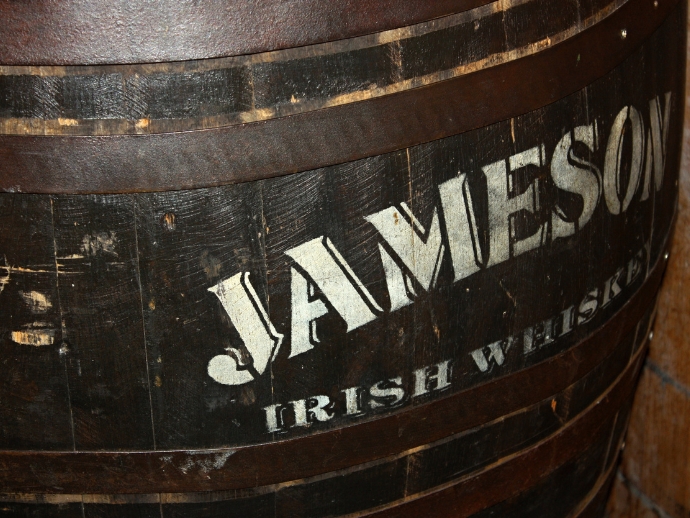
By the mid-1960s, only three Irish distilleries remained: John Power & Son, John Jameson & Son, and the Cork Distillery Company. But even they packed up and left and Dublin found itself with no whiskey-making facilities.
But we are talking about Ireland after all. The Emerald Isle protected by the luck of leprechauns. The Big Three came together and formed the Irish Distillers in 1966, in an attempt to revive the Irish whiskey sales. In 1972, Bushmills joined the group and Irish Distillers became the sole producer of whiskey in Ireland for more than a decade. Soon more closed distilleries reopened and in 2015, The Teeling Whiskey Distillery opened as the first new distillery in Dublin for over 125 years.
The making of Irish Coffee
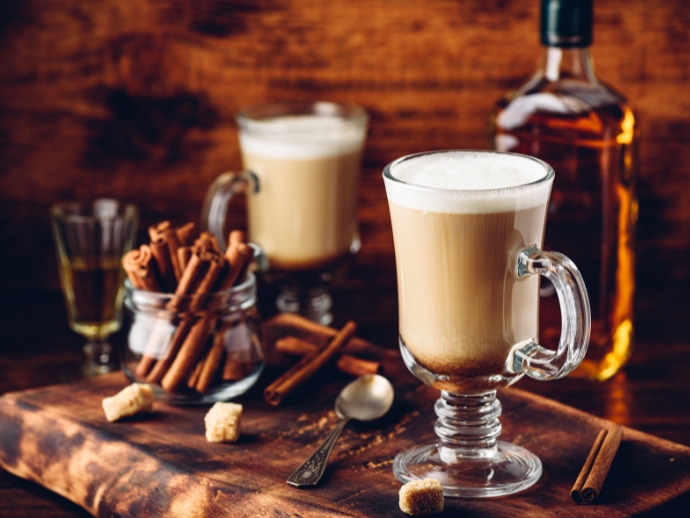
Triple-distilled Irish coffee, with its smooth yet high alcohol content makes the best ingredient for an Irish Coffee. The story goes that one windy winter evening, an Irish chef in Limerick served a group of Americans passengers from a PanAm flying boat, a shot of Irish whiskey in their coffee, and so created the earliest version of what we enjoy today as an Irish Coffee.
Here’s a recipe for you to recreate this at home, preferably on a windy monsoon evening.
Ingredients:
- 2 tsp packed brown sugar
- 120 ml excellent strong, hot coffee
- 45 ml Irish whiskey
- 30 ml heavy cream, lightly whipped
Method
Place the sugar in a warm glass mug. Add the coffee and Irish whiskey and stir until the sugar has dissolved. Carefully float the whipped cream on top by slowly pouring it over the back of a spoon. Drink the Irish coffee through the cream!
Irish Whiskeys in India
If we haven’t convinced you to book that trip to Ireland yet, then perhaps a taste of these Irish whiskeys available in India will.

- Bushmills 10 YO: An award-winning 10-year-old with oaky spices and a generous hit of vanilla.
- Bushmills 12 YO: A smooth, nuanced whiskey that spent 11 years in ex-sherry and ex-bourbon casks and finished in Marsala wine casks.
- Teeling Single Malt: Made with 100 per cent malt whiskeys, this eagerly awaited and most delicious whiskey has intense white grape on the nose, plenty of fruit on the palate, and strawberries on the finish.
- Teeling Single Potstill: The whiskey that brought distillation back to Dublin!
- Jameson Black Barrel: A much richer Jameson with plenty of plummy rich fruits on the palate.
- Jameson Caskmates Stout Edition: Aged in old whiskey barrels that were also used to age stout from Cork’s Franciscan Well brewery, this classic Irish whiskey has notes of cocoa, coffee, and butterscotch.

Read more.
7 easy variations of a Whiskey Sour to impress the crowd
Matters of the spirit: Cheers to a dram of the finest whisky for you!