
Anvitaa Dutt’s Qala on Netflix used Art Nouveau, Dutch artworks, and mansions of Calcutta perfectly to tell its Gothic, fantastical tale.
In 2020, the art-house cinema fans were left fascinated when writer-director Anvitaa Dutt introduced her beautiful directorial debut, Bulbbul, a powerful Gothic tale of witchcraft, sexual abuse, and revenge, set in the pre-independence rural Bengal. Her team of production designer Meenal Agarwal and cinematographer Siddharth Dewan helped blending together her trademarks of the fantastical and reality, while actor Triptii Dimri performed radiantly as her muse. But little did we know the same magic would be recreated in merely two years!
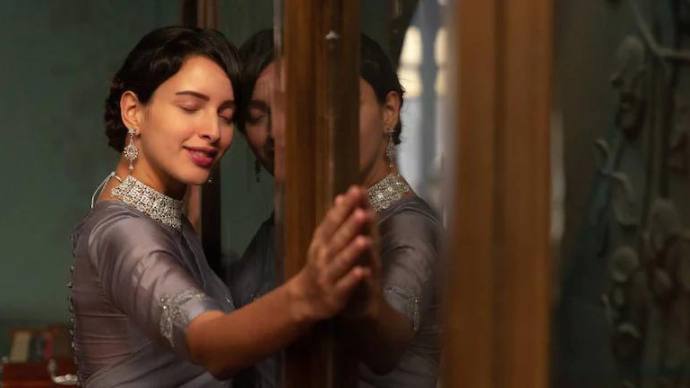
This time, it is Dutt’s sophomore feature on Netflix, Qala, that has been making news and breaking records everywhere. Again, with Dimri as its titular protagonist — a popular singer in 1930s’ Calcutta — and, Agarwal and Dewan behind the camera, she has got many things right. I remember being unapologetically fascinated then, I am unapologetically fascinated now. Just like the rest of the world.

From Art Nouveau to Gothic architecture
But it isn’t just the dream team, the star cast (famed actor Swastika Mukherjee played Qala’s mother, while Babil Khan also made his phenomenal debut with the film) in breathtaking costumes, and the high-stake psychological plot that have, for the second time, managed to grab the audience’s eye. Just like Bulbbul, Qala relies heavily on expressive sets, symbolic lighting choices, and an overall visual design that explores each and every emotion that the lead goes through.

The evocative production design leaning on Victorian Gothic architecture, Art Nouveau, and Dutch Golden Age artworks perfectly depicted this fantastical fable of darkness and decay. Ample usage of shades of emerald, black, and gold; gilded mirrors; elaborate chandeliers; elegant wallpapers; mazes and moths in design for added drama — the sets spoke volume of Qala’s chaotic life and heart.
The feudal mansions of Calcutta
In Bulbbul, Thakur Bari, a dark neo-classical mansion, was at the centre of the story. For the same, the famed 300-year-old Rajbari Bawali was used. On the other hand, the outdoor scenes for Qala were shot in Kashmir’s Gulmarg and the Royal Opera House in Mumbai, while the rest of the movie was majorly shot at two residences — Qala’s ancestral mansion in Himachal Pradesh that Dutt called “the house of oppression”, and her stylish Art Nouveau home in Calcutta, “the house of delirium”.

There’s something about the mansions in the City of Joy from the bygone era. They evoke emotions that go beyond nostalgia, and help you explore glee, grief, and grace all at once. You can choose to stay at The Rajbari Bawali, or The Itachuna Rajbari, another stately feudal mansion nestled in a quaint village in the Hooghly district that is now converted into a heritage homestay. There are also options like Jhargram Palace, Belur Rash Bari, and Baithakkhana Amadpur where you can spend a night or two to experience the grandeur of the feudal mansions of Calcutta.

If you find yourself wandering along the streets of North Kolkata, you will find yourself standing before many such centuries-old mansions. The iconic façade of the Statesman House in Chowringhee Square founded in 1875, is hard to miss. Built in 1785, the ancestral house of Rabindranath Tagore, Jorasanko Thakur Bari is now a museum dedicated to the life and works of the Nobel Laureate. Built in the middle of the 18th century by Raja Nabakrishna Deb, the Sovabajar Rajbari is one of the oldest royal houses of the Kolkata Aristocracies.
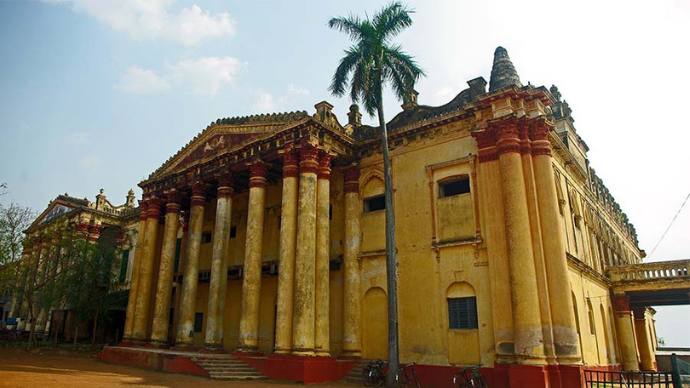
Travel farther north for five hours, and you will arrive at Birbhum’s Hetampur and nearby Rajnagar, where twin mansions and terracotta structures paint a picture of a glorious history. Ranjan Palace, built in 1905, is a sight to behold with its Greek architecture, Corinthian pillars, and porticos.
Read more.
#CityWalks: The storied neighbourhoods of North Kolkata
Indian cinema: Understanding the nuances, diving into nostalgia