
Over a 100 years ago, the whiff of the staple Indian curry reached the kitchens in Japan and soon became their national dish! This culinary love affair between the two nations is only the beginning of a future inspired by a curious history. We decode how…
“A few years ago, I took some culinary students from India all the way to Japan. We tried the classic Indian pani puri filled with Japanese Sake in it,” declares Harry Hakuei Kosato, founder of Sushi and More, one of the largest and perhaps first such multicity sushi businesses in India. Such cross-cultural culinary inventions are rather rare to hear in common conversations. But for Kosato, who’s been right in the nucleus of what they call ‘Indianisation of something Japanese, and Japanisation of something Indian’, such combinations are not an overnight whim. These are in fact born from a longstanding romance of one of the highly worshipped dishes in both the nations – curry.
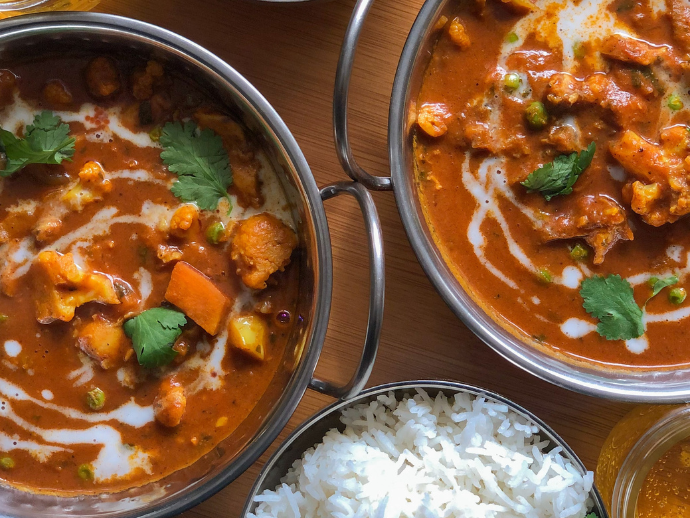
The Indian curry is said to have navigated its way to the kitchens in Japan as long back as over 150 years ago. The warm and homely curry is undisputedly a ubiquitous and powerful recipe made in every part of the country, albeit with many different versions, ingredients and spices. But what binds it is how seamlessly the spices and vegetables or meats in it don’t overlap with each other. Instead, every ingredient dances in rhythm, making the curry a well-seasoned, friendly dish on the table that any palate would hardly say no to.
The curry-ious wave

Curry is one of the national dishes of Japan, reinstates Kosato, who was very recently recognised as the Japanese Cuisine Goodwill Ambassador for India by Japan’s Ministry of Agriculture, Forestry, and Fisheries (MAFF). He adds, “It goes back to the year 1871, when a Japanese boy on a ship going to the US tasted curry onboard. He was the first Japanese to have tried curry, though it was the westernised version recreated by the British.”
Impressed by the depth and flavours of the dish, the boy on his return to Japan brought along the news about curry and its popularity only multiplied in the coming years, making it an inseparable part of the daily diet of the Japanese. But this was only after Japan, under the rule of Emperor Meiji was finally opened to the rest of the world in 1868 and meat consumption was not banned anymore.
The first-of-its-kind and widely loved version of the Indian curry was hence named ‘kare raisu’ nearly pronounced as it reads, made up of vegetables like carrots, onions and potatoes with pork, beef or chicken in it.
But here’s the thing. Unlike an Indian curry, Japanese curries are thicker, creamier and not necessarily a mélange of many types of bold and piquant grounded and/or powdered spices. These reimagined curries are understated but addictive in their own ways, however. Like India, the East Asian country has its own styles of curry powders, too, and interestingly notable few players like S&B Foods and House Foods in Japan have repackaged the way curry mixes are retailed to the households – in form of curry bricks or curry roux. These spice-laden cakes only require you to simply add it to the stew and let it gracefully dissolve into a flavoured curry.
The urbanisation in Japan brought along a never-seen-before passion for curry among the consumers, nudging a young enterprising boy Seisuke Urakami to give shape to House Foods Group in 1920s, one of the longest running curry brands in Japan today. To magnify sales and create increased awareness for this delicacy, Urakami advertised his brand’s curry offerings through live demonstrations, cooking it in front of the buyers and letting them sample it as well. Jump to 2023, “There are more than 20,000 Indian restaurants in Japan,” says Kosato, and the North Indian dish butter chicken is quite a hit on the East Asian palate!
Japanised food reroutes to India
In 2020, India witnessed the return of a familiar face redressed in Japanese sentiments with CoCo Ichibanya in DLF Cyber Hub, New Delhi, a global Japanese curry restaurant chain present in LA, the UK, Singapore, Hong Kong and China amongst others. In a span of two years, the restaurant opened its second outpost in Select CITYWALK, indicating a growing affection and curiosity of India’s palate for the Japanised spin on the Indian curry.
But the revamped Indian curry is not the only dish that found a new home in our country. “If you look at sushi’s popularity in Asian restaurants and delivery kitchens in India currently, it’s huge. It has become easily accessible and affordable,” states Kosato, who also helms the business at Kikkoman Sauce, a Japanese sauce brand with over 100-year old history that makes naturally brewed soy sauce. Kosato’s Indian homegrown brand Sushi & More has clocked over ten years in the food space and plates up an assortment of sushi at nine outlets across three cities of Mumbai, Delhi and Gurugram.
The conversation with Japanese cuisine’s wiz also reveals how Japan’s epicureans eat their share of butter chicken. “We love topping it up with Kikkoman soy sauce. It adds a great flavour to it.”
Kosato’s another take on Japanising something as Indian as naan is by making naan sandwiches with shredded chicken, vegetables, chutney or sauces. “Tandoori chicken is also quite popular in Japan, especially in the Izakaya restaurants that always it on the menu.”
Read more:
East-The Asian Living Room at JW Marriott Bengaluru Prestige Golfshire Resort & Spa
Nom Nom! 13 best restaurants in BKC for every mood and palate