
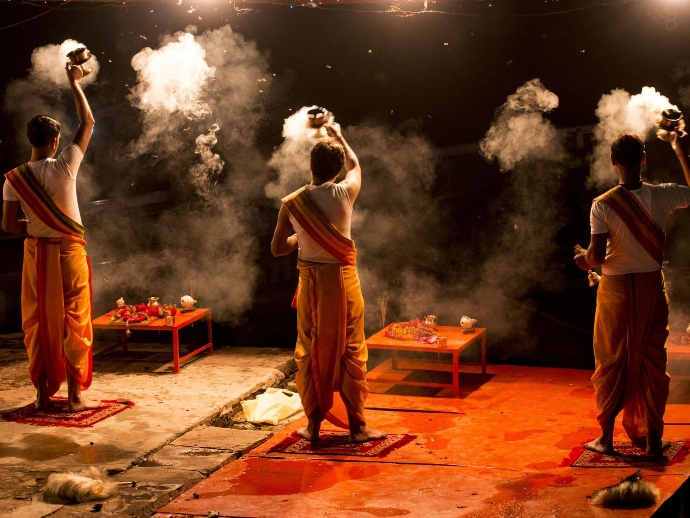
The setting sun, accompanied by religious chants, and the tantalising aroma of local food. Varanasi is a wholesome experience, one that’s incomplete without mouthfuls of Banarasi chaat, thirsty gulps of lassi, happiness-inducing kachoris, and much more. It is no wonder that food is an integral part of a city’s fabric that celebrates life in all its forms.
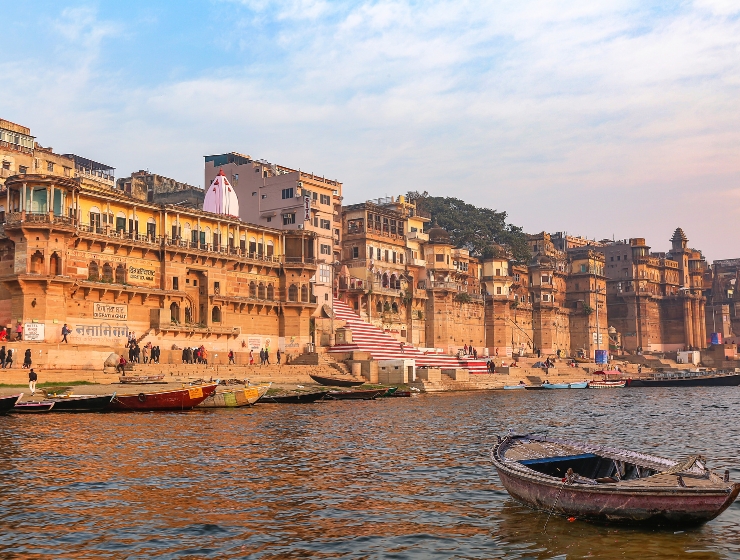
The Kashi Vishwanath Temple loomed in the distance, while the adjacent burning ghat of Manikarnika was ablaze with funeral pyres. The scent of incense and flowers filled the air. I’d been walking for hours, taking in the sights and sounds of the city. The sound of ceremonial “ram nam satya hai” and the chanting of the priests resonated in my ears as I walked through the small winding alleyways.
As I discovered on this walk, haste and quietus are admirably entwined in Varanasi. The atmosphere was electric, and I felt as if I was in a different world. Just as I was slipping between the trance of life and death, Varanasi decided to enchant me with the aromas and flavours of its traditional cuisine which, like a time capsule, transported me back through the centuries.
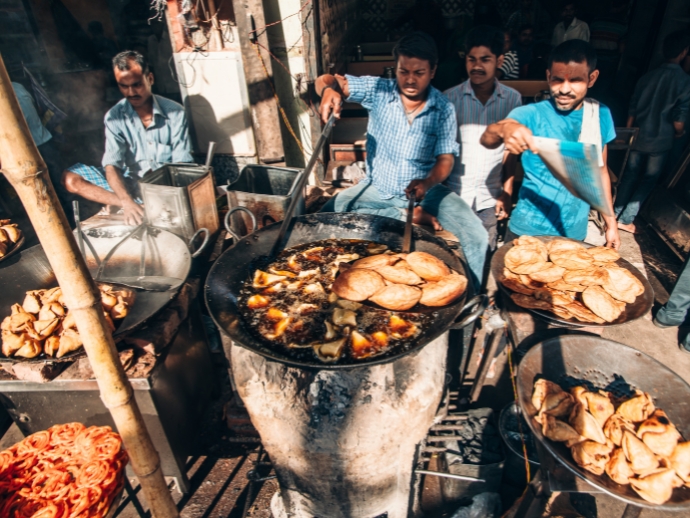
As I walked around the city, I could feel the soul of the place. Being a food enthusiast, I was immediately drawn by the tantalising aromas and flavours of the regional cuisine. So mesmerised by the scents that I decided to walk back to my hotel in Bhelupur. The three-hour walk was an illuminating experience, and I saw a side of Varanasi that I never would have seen had I taken a boat or a Tuk Tuk. I was able to explore the city at my own pace. I recommend this culinary walk to anyone looking for a different way to explore Varanasi.
Blue Lassi Shop, Kachaudi Gali
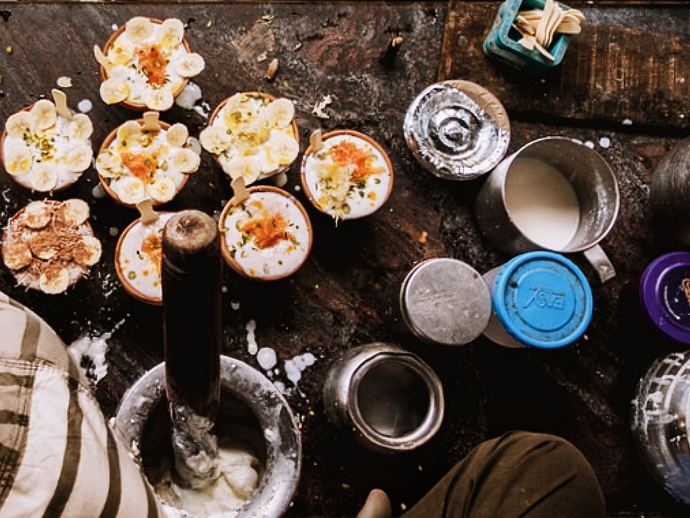
Image: Veidehi Gite.
I arrived at the city’s most famous Blue Lassi Shop after a five-minute walk through Banaras’ overcrowded passageways behind Manikarnika Ghat. The shop is close to Shree Kashi Vishwanath and Kaal Bhairav Mandir, and the street art depicting Lord Shiva reminds you that you’ve arrived. The lassi here isn’t blue, as the shop name suggests, but it’s still excellent.
The shop gets its name from the blue colour of its walls. Saffron, mango, and mixed fruit lassi are some of the most incredible flavours to try at Blue Lassi. I highly recommend the saffron lassi, bursting with saffron strands and dried fruits and tastes divine. While sipping that thick, flavourful lassi, don’t forget to glance at the wall of fame in the backdrop, blanketed with hundreds of pictures of patrons.
Shiva (Bhang) Thandai
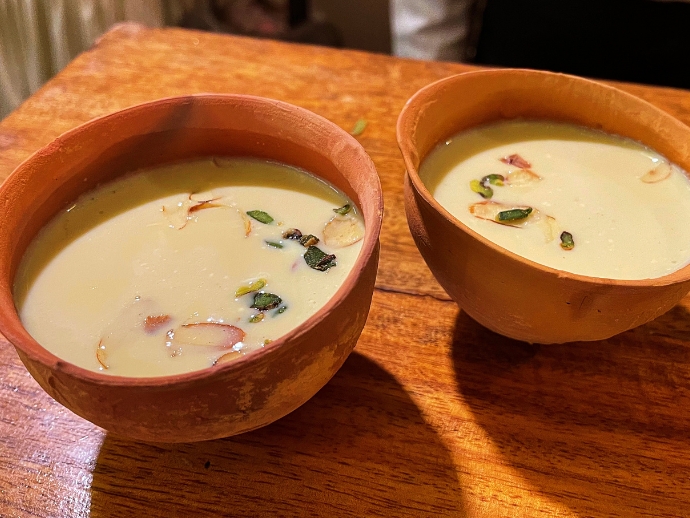
When we stopped at Blue Lassi in Shivanagri for a brief refreshment, little did we know that this would be the start of a very thrilling day! After we finished our lassis, we started walking towards Shiva Thandai, which had been suggested to us by locals. I walked seven minutes from Blue Lassi to Shiva Thandai on Godowlia Road, near Kashi Chaat Bhandaar, to try their famous Bhang Thandai. Bursting with pistachio and almond flakes, it was so flavourful! It exceeded my expectations in every way. It was colourful, delicious, and had a surprising kick to it.
Along the way, we met some new people who suggested we also try Shiva’s Kesariya Badam and Malai Badam Thandais. The standard Thandai ranges between Rs 50 and Rs 100, with an additional charge for the Bhang infusion. Finally, we had a terrific time exploring Shivnagri and sampling the many Thandais on offer. If you’re in Varanasi, I highly recommend you try it! (Yes, bhang consumption is legal in Varanasi)
Subah-E-Banaras ‘Kachori-Chana’ Banaras Chaat
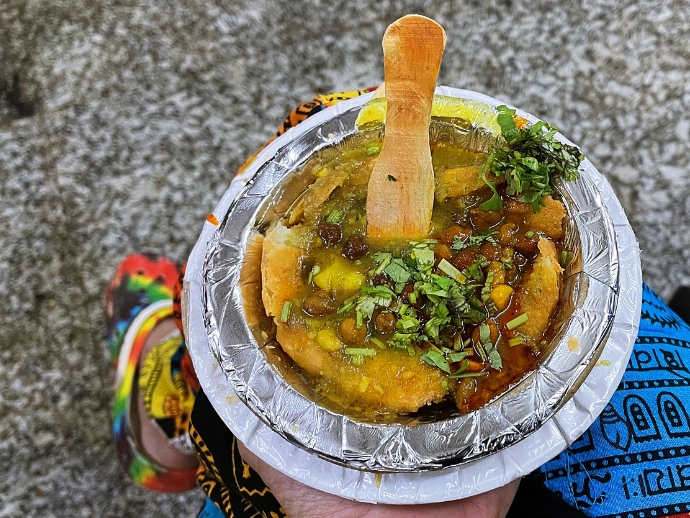
The Bhang Thandai began to take effect, and so did our appetites. When I arrived at Vishalaskhi Katra in Govindpura, I was bewildered and famished. I then approached the police officers on the corner to name the best chaat joint in the area. They directed me to Subah-E-Banaras, a 100-year-old eatery, now run by the fourth generation! The owners are averse to traditional publicity because they want to uphold high standards and sidestep overcrowding. They also don’t want to take on more staff because they use a family recipe. I guess I get it because the kachori chana and tikki chaat I had here were unrivalled.
Despite the small size, a portion of chana curry enhances the flavour of kachori. Banaras believes that by eating kachori-chana with lassi every morning, not only your stomach but also your heart and mind remain active throughout the day. I kept licking my fingers, hoping to guess the ingredients, but in the end, all I did was eat more. Subah-E-Banaras opens at 5 am and closes at 10 pm. However, kachori-chana is best-savoured in the morning and is available almost everywhere in Varanasi.
Raja Ji Ki Chai (Lemon Tea)
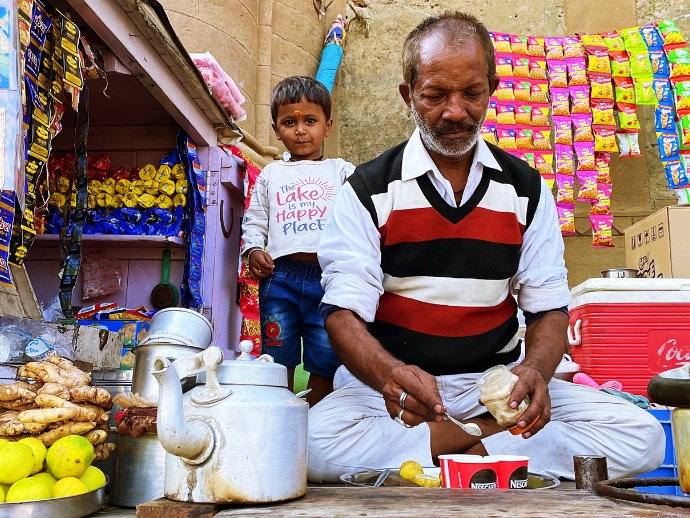
On another occasion, famous Banaras tea sagas brought me to the Raja Ji’s Chai stand on Assi Ghat. “I was born and bred in Banaras,” recalls Radhe Shyam Maurya, the tea stand owner. “How did Raja Ji earn his name?” I inquired. He said sheepishly, “Raja Ji, because I grew up in palatial homes among kings and maharajas. I grew up playing with them, but the ghat provides a lot of peace and quiet, so I relocated here. Only altruistic effort is done here. It is not motivated by self-interest.” When I asked him what makes his tea different in Banaras, he mentioned he uses a family recipe with 6-7 hand-ground spices. He tests several combinations on his own, and if he enjoys the flavour, he passes it on to his customers. A cup of tea costs only Rs 10.
In terms of the sweet-tangy taste, I can say that it immediately stimulated my digestion and made all my senses jump into action. This age-old lemon tea contains rock salt, black pepper, ground jeera, pudina (mint), Mulethi (liquorice), ashwagandha, tea, and sugar, according to a few local students. The tea is served hot with a few drops of lemon juice and two to three Hajmola (digestive tablets) Golis. I’ve been addicted to this lemon tea since I first had it at Raja Ji’s.
Although I may never be able to replicate his highly guarded recipe, I make my version at home that tastes very similar. Try it, and you’ll be astounded at how the acidic flavour of this wonderful chatpata chai stimulates your taste senses. While Radhe Shyam Ji serves his in Nescafe cups, I prefer mine in desi kulhadds.
Choora Matar and Tamatar Chaat
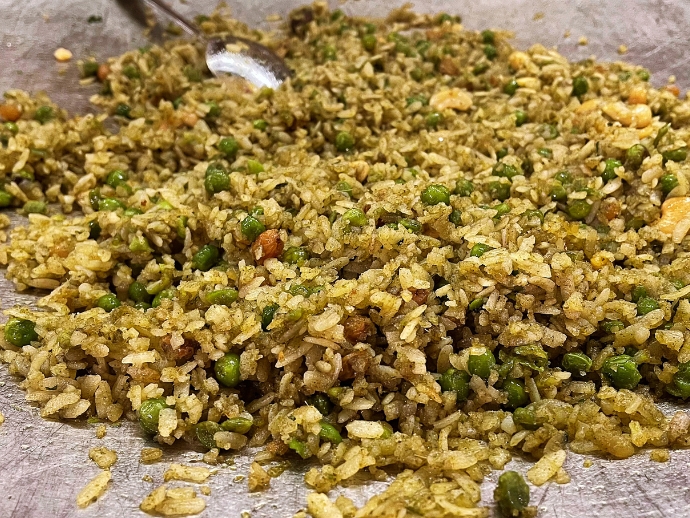
Next, my quest for authentic local cuisine brought me to Guleria Kothi on Guleria Ghat, where I sampled Choora Matar (Peas) and Tamatar (Tomato) Chaat, two of Varanasi’s other morning snack favourites. Choora matar is a Banarasi take on the classic Poha. This particular winter delicacy is only available when the markets overrun with green peas. It’s exceptionally delicious! This choora matar is very different from the typical pohe (flattened rice flakes) as it is made in milk cream and ghee (clarified butter) with garam masala.
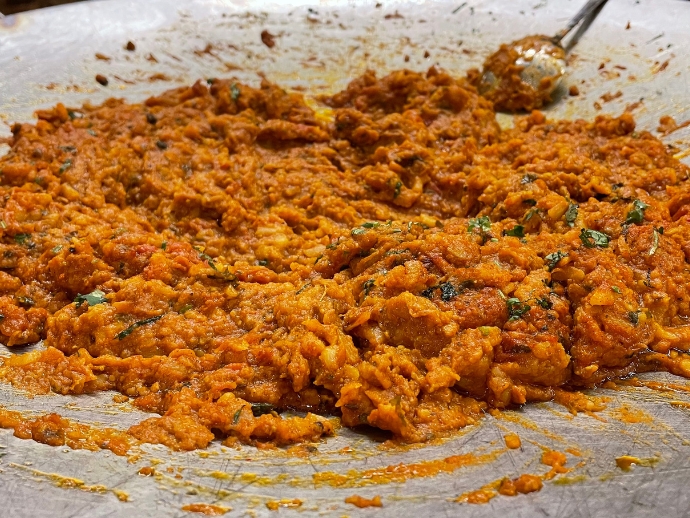
I also tried the famous tamatar chaat, which is a Banarasi version of the dish and rather intriguing. This rich specimen encapsulates the entire span of Banarasi cuisine, which has remained untouched for years. Although one of the oldest stores, Kashi Chaat Bhandaar is the ideal place to try this chaat, what I ate at Guleria Kothi was equally delicious.
The iron griddle sizzled with a puff of steam when the chef added a dollop of ghee and crushed tomatoes. The tomatoes were then simmered with almonds and spices until they were semi-dry. He served this unusual tamatar chaat in an earthen cup alongside a potato croquette. He finished the dish with a spoonful of ghee, sugar syrup, coriander, and sev, a crunchy chickpea snack, and placed a lemon wedge on the side. This tamatar chaat, to my delight, was a fantastic blend of delectable tanginess with a tinge of sweetness. It’s unlikely to be found anywhere else. So, if you’re in town, give it a try.
Finish with a Jalebi or Malaiyo, the Dew Dessert, in Varanasi

I would always eat a handful of crispy Banarasi Jalebis after my meals at various restaurants while they live up to their ghee-dripping drool-worthy reputation. These deep-fried pastries dipped in thick sugar syrup are crunchy, sweet, and wonderfully divine! The original Banarasi jalebi would be more yellow than the regular orange jalebis found elsewhere. A ‘sweet course’ is a way of life in Banaras. So, regardless of what you eat throughout the day, chances are you’ll end your meal with a decadent dessert. Furthermore, it is available throughout the year, contrary to Malaiyo, which is only available during winter.
Malaiyo is a popular dew dessert from Varanasi. It is also known as Malai Makhan or Nimish, which refers to the process of making it. Another variety of this dessert in Delhi is called Daulat ki Chaat. Nimish, according to the locals, can be both savoury and sweet. Malaiyo, on the other hand, is a winter dessert made from milk cream.
Eight hours of preparation time for this dish is what sets it apart. The day before, cow milk is brought to a boil in a large cauldron as the first step in preparation. It is allowed to cool under the stars after adding fresh cream. This is the most momentous stage, when the milk is exposed to dew and left out in the open for four to five hours. The milk is then churned for three hours while still damp in the morning. Cardamom powder, yellow food colouring, and powdered sugar are all used to give it the desired flavour.
Life comes full circle in Varanasi
Varanasi drew me in with its rich history and colourful culture. But little did I know that local food would become an integral part of my journey. Everything tasted like a bite of history, from the creamy lassi to the savoury tamatar chaat to the dew-dessert malaiyo. Every bite and smell, with an accompanied story made me feel closer to the city’s rich past, and I now understand why the locals are so passionate about their food. It was an unforgettable experience to eat food passed down through generations.
But most of all, I enjoyed devouring the ghee, which connects life and death in a truly mesmerising way in a single bite. I could almost feel the energy of lord Shiva’s Kashi pouring through me as I savoured the flavours. And I am grateful that I dared to come and encounter it all. It was an experience that left me with a deep appreciation for the city’s culture, its people, and its regional cuisine. I look forward to returning one day to experience it all over again.
Read more.
Varanasi becomes the first ‘Cultural and Tourism Capital’ of SCO
India Modern: What really makes a classic Indian dish ‘modern’?