
Thyme tea or floral tea; accompanied with fruit desserts or dolma; drinking and savouring tea is an experience par excellence in Azerbaijan.
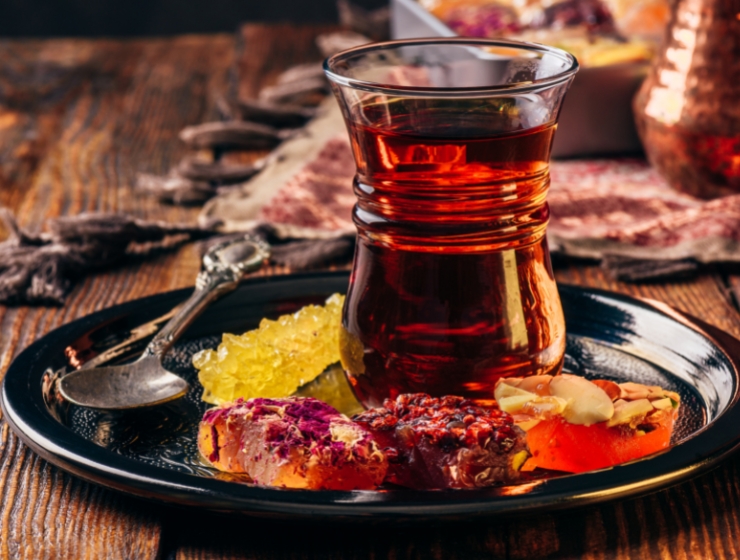
Tea lies at the heart of Azerbaijan’s culinary traditions. Locally known as ‘chay’, the beverage is integral to all aspects of Azerbaijani life, and the locals even have a phrase for it: ‘Çay gəlsin (Let the tea come)!’
No guest is allowed to leave a house till he enjoys at least one hot cuppa with the host’s family. So intertwined is tea drinking with Azeri culture that it even plays matchmaker! When a boy’s family visits a girl’s home for a matrimonial alliance, the guests are served tea in the traditional, round-bottom crystal armudu glasses.
If the girl and her family agree to the match, then her father puts sugar into his glass of tea and drinks it. However, if things don’t work out, then he drinks the tea sans sugar, a signal for the boy’s family that there won’t be a marriage. The centuries-old tradition is called ‘shirin chay’ or ‘sweet tea’ and is followed till this day across the country.
Savour the moment (and the tea) in Azerbaijan
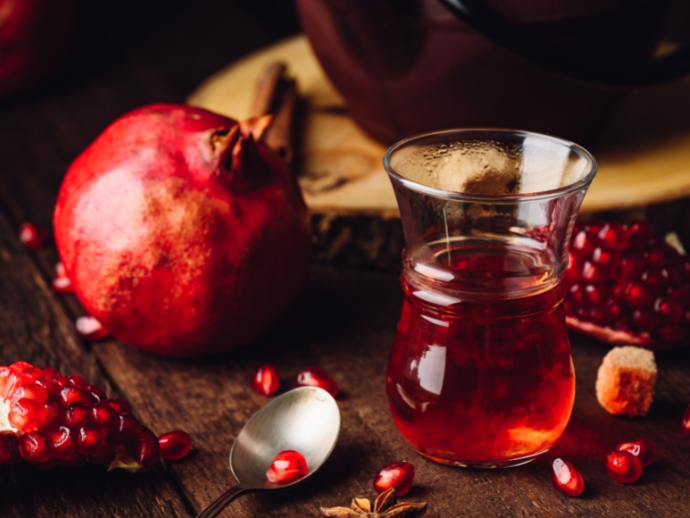
While the Azeri tea brewing ceremony is not as elaborate as, say the British or the Chinese, it is, nevertheless an enjoyable one with an accent on savouring the moment. Black tea, thyme tea, and tea with rose water are popular choices although floral and herbal teas, as well as those steeped in wild plants (cinnamon, quince seeds, corn tassels) are also favoured.
“We drink tea in the morning, after dinner, during the day, with guests at home or during a backgammon game right on the street… Rounds of it are called for when meeting friends, at a celebration or even when bidding adieu to a deceased. Guests are welcomed with tea too,” Salim Haider, owner of a local tea parlour in Baku explains while serving me.
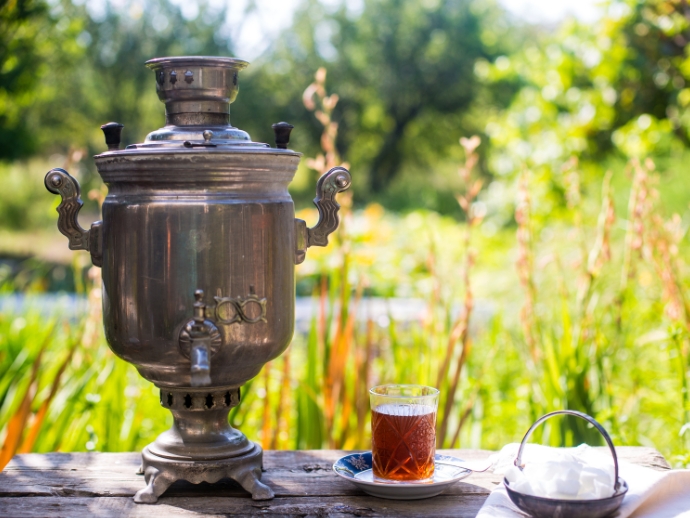
Apparently, tea travelled to Azerbaijan from China during the Middle Ages via the Silk Route that cut through the country. “The Samovar — a large, urn-like, wood-fired container that is used to boil water — is an important part of our traditional tea-making ceremony and we believe it makes the tea more flavoursome. Did you known that the samovars made by copper craftsmen of the Lahij community have been granted the UNESCO Intangible Cultural heritage tag?” asks Haider.
Azerbaijan’s tea heritage since centuries
So entrenched is the tea drinking culture that chaykhanas or tea houses are found everywhere: Across villages, mountainsides as well as capital city Baku. They are almost like an institution, having been a part of Azerbaijan’s culinary landscape since the 16th Century.
Despite the homogeneity of their offerings, however, each tea house has a distinct ambience, modern or medieval. Some are even Soviet-style, their provenance going back to the early 20th Century when Azerbaijan was a part of the Soviet Union. Interestingly, tea houses were earlier visited only by men who dropped in here to socialize, discuss politics, or relax over extended games of backgammon. Gradually, however, women too, became frequent visitors.
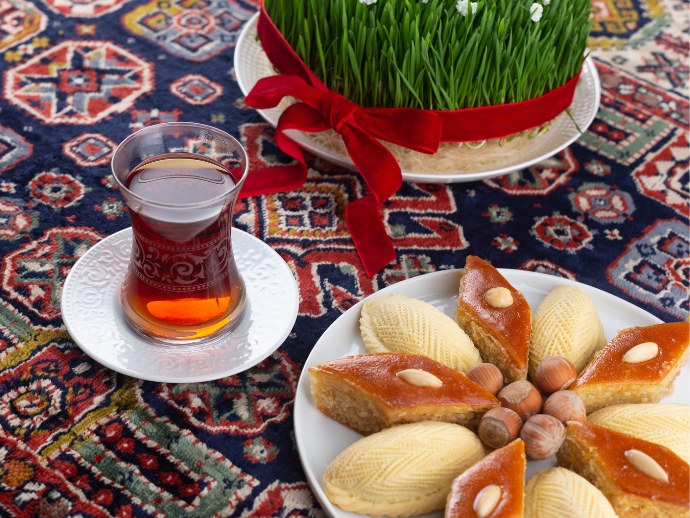
A classic Azerbaijani meal, typically lasting for about three hours, always begins with tea. However, unlike in India, tea is served without milk or sugar here. Instead, lemon wedges, sugar cubes, sweets, and fruit desserts are served separately on tiny plates as per the guest’s choice. Sometimes, a splash of rose water (called qulab) is also added to make the beverage more aromatic and healthy. It also perfumes the air, doing a double whammy as a room freshener!
The snacks served with Azeri tea are equally important, varying from motley pastries to pakhlava (like the Turkish baklava), dolma (bite-sized, tender grape leaves filled with different stuffings including rice and meat), sheki halva or shekerbura (deep fried sugary treats). Afternoon tea is usually accompanied by various mürebbe (preserves), hard cube sugar or rock candy and candies.
In Azerbaijan, ‘drinking tea has no limits’
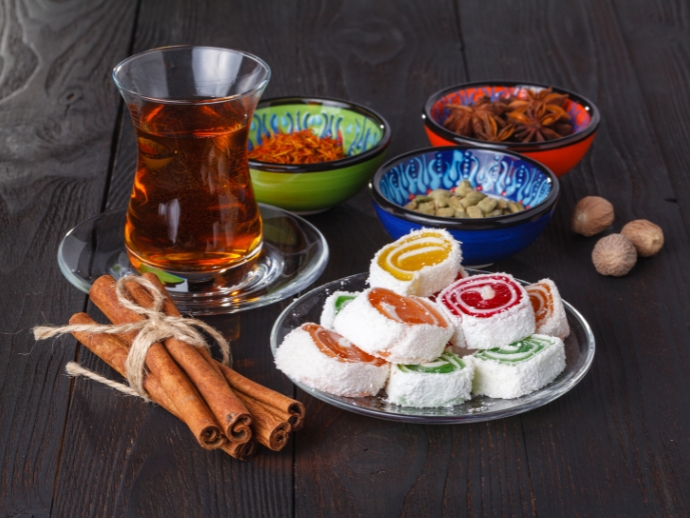
At a local chaykhana in Baku, I feast on local preserves of green walnut, watermelon peel, blackberry, plum apricot, and peach served in gleaming vials with a tiny silver spoon. I’m advised to first put a spoonful of the preserve into my mouth and then take a sip of the hot tea over it. Although a tad cumbersome in the beginning, I quite enjoyed the process once I got the hang of it!
Locals narrate with relish how the custom of putting sugar in the tea goes back to medieval times, when the kings and royals feared being poisoned by their enemies through tea. So, they’d slip in a cube to see how the liquid reacted to it before quaffing it.
Similarly, there’s a reason the locals drink tea in an armudu (meaning ‘pear-shaped’), the glass which mimics a woman’s voluptuous figure. “The tea at the bottom cools down more slowly than at the top, so the temperature of the beverage remains the same as at the very beginning. This allows one to enjoy hot tea till the end!” the local guide informs me.
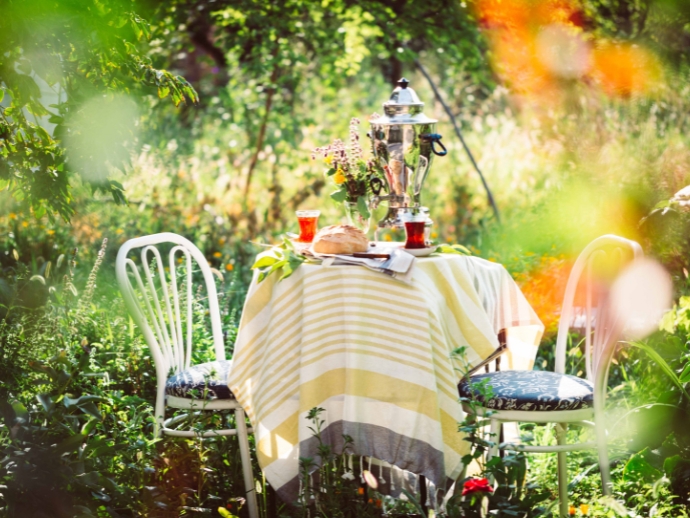
Azerbaijanis say ‘chay nedir, say nedira’ or ‘drinking tea has no limits’. Indeed, after downing cup after delicious cup of this heart-warming concoction, I couldn’t help but agree. On my way back, I picked up several packets of Azeri tea at the airport as mementos. Every time I brew a cup back home, I’m transported to a beautiful Azerbaijani tea house!
Read more.
Easy ways to host afternoon tea: Chef Freny Fernandez of Moner spills the tea this holiday season
For the tea-totallers: 5 unique tea blends in India your pantry needs now